Hyperfocus

How to Be More Productive in a World of Distraction
By Chris Bailey


A practical guide to managing your attention–the most powerful resource you have to get stuff done, become more creative, and live a meaningful life

Our attention has never been as overwhelmed as it is today. Many of us recognize that our brains struggle to multitask. Despite this, we feel compelled to do so anyway while we fill each moment of our lives to the brim with mindless distraction. Hyperfocus provides profound insights into how you can best take charge of your attention to achieve a greater sense of purpose and productivity throughout the day.

The most recent neuroscientific research reveals that our brain has two powerful modes that can be unlocked when we use our attention effectively: a focused mode (hyperfocus), which is the foundation for being highly productive, and a creative mode (scatterfocus), which enables us to connect ideas in novel ways. Hyperfocus helps you access each of the two mental modes so you can concentrate more deeply, think more clearly, and work and live more deliberately every day. Chris Bailey examines such topics such as:

  • identifying and dealing with the four key types of distraction and interruption
  • establishing a clear physical and mental environment in which to work
  • controlling motivation and working fewer hours to become more productive
  • taking time-outs with intention
  • multitasking strategically
  • learning when to pay attention and when to let your mind wander wherever it wants to.

By transforming how you think about your attention, Hyperfocus reveals that the more effectively you learn to take charge of it, the better you’ll be able to manage every aspect of your life.


About the Author


Chris Bailey has been intensively researching and experimenting with productivity since he was a young teenager, in an effort to discover how to become as productive as humanly possible. To date, he has written hundreds of articles on the subject, and has garnered coverage in media as diverse as The New York Times, The Wall Street JournalGQThe Huffington PostNew York MagazineHarvard Business Review, TEDFast Company, and Lifehacker. The author of The Productivity Project, Chris lives in Kingston, Canada.

Emotional Intelligence 2.0

By Travis Bradberry


In today’s fast-paced world of competitive workplaces and turbulent economic conditions, each of us is searching for effective tools that can help us to manage, adapt, and strike out ahead of the pack.

By now, emotional intelligence (EQ) needs little introduction—it’s no secret that EQ is critical to your success. But knowing what EQ is and knowing how to use it to improve your life are two very different things.

Emotional Intelligence 2.0 delivers a step-by-step program for increasing your EQ via four, core EQ skills that enable you to achieve your fullest potential:

  1. Self-Awareness
  2. Self-Management
  3. Social Awareness
  4. Relationship Management

Emotional Intelligence 2.0 is a book with a single purpose—increasing your EQ. Here’s what people are saying about it:

Emotional Intelligence 2.0 succinctly explains how to deal with emotions creatively and employ our intelligence in a beneficial way.”
The Dalai Lama

“A fast read with compelling anecdotes and good context in which to understand and improve.”
Newsweek

“Gives abundant, practical findings and insights with emphasis on how to develop EQ. Research shows convincingly that EQ is more important than IQ.”
–Stephen R. Covey, author, The 7 Habits of Highly Effective People

“This book can drastically change the way you think about success…read it twice.”
–Patrick Lencioni, author, The Five Dysfunctions of a Team


About the Author


Dr. Travis Bradberry is the award-winning coauthor of Emotional Intelligence 2.0 and The Seagull Manager and the cofounder of TalentSmart®. His bestselling books have been translated into 25 languages and are available in more than 150 countries.

Eat That Frog

21 Great Ways to Stop Procrastinating and Get More Done in Less Time
By Brian Tracy


It’s time to stop procrastinating and get more of the important things done! After all, successful people don’t try to do everything. They focus on their most important tasks and get those done. They eat their frogs.

There’s an old saying that if the first thing you do each morning is eat a live frog, you’ll have the satisfaction of knowing you’re done with the worst thing you’ll have to do all day. For Tracy, eating a frog is a metaphor for tackling your most challenging task—but also the one that can have the greatest positive impact on your life.

Eat That Frog! shows you how to organize each day so you can zero in on these critical tasks and accomplish them efficiently and effectively. The core of what is vital to effective time management is: decision, discipline, and determination. And in this fully revised and updated edition, Tracy adds two new chapters. The first explains how you can use technology to remind yourself of what is most important and protect yourself from what is least important. The second offers advice for maintaining focus in our era of constant distractions, electronic and otherwise.

This life-changing book will ensure that you get more of your important tasks done today.


Recommendation


We all have our frogs – important tasks that we’ve put off for whatever reason. The key to success is to eat your frogs quickly, completely and with focused determination. So says Brian Tracy, the master of hard-nosed time management. You’ll find no touchy-feely personal development pabulum here. The message of this book: Action leads to accomplishment. With that simple rule in mind, Tracy rolls out tools and techniques that will get you off your backside and into motion. getAbstract, while uneager to take up noshing on amphibians (well, maybe just the legs, in plenty of garlic butter), strongly recommends this book to anyone caught in the swamp of procrastination.


Takeaways


  • If you want to gain control of your life, change the way you work.
  • Action is the key to accomplishment.
  • People who do better do things differently. They do the right things right.
  • Eating the frog means identifying your most important task and tackling it with single-minded focus until it is completed.
  • Launch directly into your most important tasks.
  • Your ability to focus on your most important task will determine your success.
  • People fail because they aren’t absolutely clear about their goals.
  • The best rule for success is to think on paper. Write down your goals.
  • Every night, make a list of what you want to accomplish the next day. Have a master list, a monthly list, a weekly list and a daily list.
  • Identify the one skill that, if you developed it, would have the biggest impact on your career success.

Summary


Amphibian on Toast

If you eat a live frog each morning you will know that you have already experienced the worst thing that will happen to you that day. You probably have frogs hidden on your desk and on your to-do lists. Your frogs are the tasks that you know are priorities, but that you’ve put on the back burner for whatever reason. It’s time to learn how to snack on those difficult problems. The good news is — it’s a high-protein diet.

“An average person who develops the habit of setting clear priorities and getting important tasks completed quickly will run circles around a genius who talks a lot and makes wonderful plans but gets very little done.”

OK, you don’t need to eat real frogs to be a success in business. But you do need to tackle critical projects and problems creatively and effectively. Here’s a plain and simple truth: The ability to focus in a single-minded fashion to accomplish the most important task before you is the prime determinant of your success. It’s that clear. The complication comes in, however, when you lack clarity about your true goals and objectives.

“The ability to concentrate single-mindedly on your most important task, to do it well and to finish it completely, is the key to great success.”

Lack of clarity can be a killer, because it impairs action, and action is the secret to success. Like everyone, you probably feel overwhelmed at times with too much to do and not enough time to get it all done. Select the most important challenge — that big, old frog slobbering in your in-basket — and address it effectively. Successful people launch directly without hesitation into the major task that confronts them at any point in the day.

“Simply put, some people are doing better than others because they do certain things differently and they do the right things right.”

How do you develop this clarity? Well, it’s impossible without developing good work habits. Indeed, about 95% of your success in life will depend on the habits you cultivate. Good habits will be your best friends and bad ones will be your worst enemies.

Winning is a Habit

You require three qualities to develop successful habits. You will need to make choices. You will need discipline and you will need determination. For example, one essential habit is learning to think on paper.

“The key to success is action.”

Would you be surprised to learn that only about 3% of adults have bothered to put their goals on paper?

Here’s how you can get what you want out of life:

  • Decide precisely what you want.
  • Write this goal down.
  • Set a deadline by which you plan to achieve it.
  • List what you will need to do to achieve your goal.
  • Turn the list into a plan. Organize it by priority and sequence.
  • Take action immediately. Do anything, but don’t hesitate.
  • Promise yourself to make some small step toward your goal each and every day.

“You can get control of your time and your life only by changing the way you think, work and deal with the never-ending river of responsibilities that flows over you each day.”

After that, it’s mostly a matter of continuing to push forward until you attain your goal. While acting is better than procrastinating, action without planning leads to failure and disappointment, so learn to plan daily.

Always work from a list. Draft your list the night before work so your subconscious mind will work on it all night long while you sleep. Create different lists for different purposes. Have a master list. Create a list for the coming month at the end of each month, make a weekly list in advance for the coming week and, of course, you need a daily list.

“Many people confuse activity with accomplishment.”

Remember the 10/90 rule: investing 10% of your time in planning before beginning a project will help you use the other 90% of the time more effectively.

Time-Management, Pareto Style

In 1895, Italian economist Vilfredo Pareto realized that 20% of people made 80% of the money, while 80% of the people had little money. He soon discovered that this ratio applied to all economic activity. The top 20% of your activities will generate 80% of your profits. Twenty percent of your customers will account for 80% of your sales. This pervasive fact is now known as Pareto’s Rule. The rule means that if you have a to-do list of 10 items, two of those items will generate 80% of the return you get from your entire list. Now, when you look at your list, you will be tempted, of course, to clear up a few small things first so you can check them off and have a sense of accomplishment. However, those items may not be significant to your economic activity. And that’s a problem.

“Clarity is the most important concept in personal productivity.”

What to do? Well, remember that the hardest part of any task is getting started. Time management is really just taking control of the sequence of events that affect your life. Effective people discipline themselves to address the most important task first, always. That is, they discipline themselves to eat that frog. Ummmmmmmm, good!

Long-Term Thinking

To succeed, think for the long term. Before you begin a project, ask yourself, “What is the consequence of not doing this task?” Be willing to delay short-term gratification in order to achieve better long-term results. Of course, reconsider if taking on a task causes you more trouble in the long run. As motivational speaker Dennis Waitley puts it, “Failures do what is tension-relieving while winners do what is goal-achieving.” Keep in mind, the root word for motivation is motive. To succeed, you must give yourself a motive for the choices you make.

The ABCs of Success

Is success really as simple as ABC? Well, no. You have to add a “D” and “E” as well. Use the ABCDE method as a powerful tool for establishing your daily priorities.

“Clearly written goals have a wonderful effect on your thinking. They motivate you and galvanize you into action.”

Here’s how it works:

  • Make your list.
  • Place an A, B, C, D or E before each item on that list.
  • Complete the tasks in alphabetical order.

An “A” task is one that you must do as soon as possible or face serious consequences. “B” items are tasks you should do, but ones that carry mild consequences. A “C” task would be nice to do, but carries absolutely no consequences at all. A “D” task is something you can delegate to someone else, so your goal is to delegate all of them to free your time for things only you can do. An “E” task is one you can eliminate altogether. It may have seemed important once, but it isn’t any more. Yes, you may have more than one “A” task. That’s fine. Simply number them sequentially…A-1, A-2, A-3 and so forth. Practice the ABCDE method daily, and you will be surprised by its positive impact on your work life.

Key Result Areas

To become more effective, ask yourself why you’re on the payroll. Most people aren’t sure. Obviously, you have been hired to get results. Most jobs have key results, specific things that must be done. To improve your performance, identify your job’s key result areas. Here, for example, are the key result areas for a salesperson at a typical organization:

  • Prospecting.
  • Making presentations.
  • Closing business.
  • Sales service for existing accounts.
  • Administrative duties and paperwork.

“The hardest part of any important task is getting started on it in the first place.”

Identify your key result areas and make sure you allocate the appropriate resources to handle them. Then, grade yourself in each key result area. Your weakest performing key result area defines the ceiling of your performance of your other skills (a manager who cannot delegate will find that impairs his or her ability to move forward in other skills). Your weakest key result area is an anchor that keeps you from sailing on with your other skills and assets.

“Time management is really life management.”

However, if you improve your weakest key result area, you will improve your overall performance. Everyone has weaknesses. Identify yours and strengthen them. Ask yourself, “What is the one skill area I could improve that would have the greatest impact on my career?” Becoming more computer savvy? Learning a new language? All business skills are learnable, simply target the area in which you need improvement and move forward.

The Law of Forced Efficiency

You probably don’t like the idea of forcing things. The Law of Forced Efficiency relates to the idea that any job will expand to fill the time you allow for it. If you have two days, it will take you two days (or perhaps more). However, the flip side is also true: If you have only one day to complete a two-day job, somehow you find the time to do it. One corollary to the Law of Forced Efficiency is the realization that you will simply never have enough time to do everything you want to do. To cope with this sad circumstance, continually ask yourself:

  • What is my highest value activity?
  • What is it that only I can do that, if done well, will have a significant impact?
  • What is the highest and best use of my time, right now?

The answers to these questions will help you to manage your time. As Goethe said, “The things that matter most must never be at the mercy of the things that matter least.”

Identify Your Key Constraints

You have goals and you haven’t achieved them yet. So what is holding you back? Answering that question can be a critical building block for a more successful tomorrow.

In fact, you must determine the answer.

Constraints always affect the completion of a job. Identify these limiting factors, your key constraints, and the rest of your work will go much more smoothly. If you can resolve your choke point, you can make every other process flow more naturally.

Here, the 80-20 rule applies: 80% of your problems will stem from 20% of the obstacles that you face. So which ones should you concentrate on? Ask, “What within me is holding me back?” Don’t blame someone else. Take responsibility, identify what you need to do to improve.

Becoming Your Own Cheerleader

Change is always a challenge; to meet the challenge of becoming more effective, you will need support from the world’s greatest cheerleader — you! So grab your pom-poms, do a cheer and remember:

  • Become an eternal optimist — When you really rely on yourself, you no longer have the luxury of moping, feeling sorry for yourself or copping an attitude. Respond positively to other people’s behaviors, words and actions. Steer a steady course, unaffected by the countless, maddening, trivial setbacks of daily life.
  • Always talk to yourself positively — Say things like, “I like myself”, “I am confident”, “I am strong”, over and over again creating positive affirmations that become self-fulfilling prophecies.
  • Resolve to remain cheerful and upbeat — Optimists look for the good in any situation, they search for the lesson and believe that difficulties come not to obstruct them, but to instruct them.
  • Visualize your goals —Imagine yourself sitting in that corner office, with your name on the door.

Eating the frog means having the positive attitude and the will to do the most difficult task first. Because you can’t do everything, indulge in creative procrastination — put off the things that do not carry a consequence. Break large tasks down into a series of simple ones. Work with a sense of urgency. And remember that all you have to do to succeed in business and in life is learn to eat that frog every day.


About the Author


Brian Tracy talks to about 250,000 people each year about personal and professional development. His careers ranged from sales and marketing to investments and real estate development prior to founding his own firm, Brian Tracy International. He is the author of Get Paid More and Promoted FasterMaximum Achievement and other books, as well as numerous best-selling audiocassette programs, including How to Start and Succeed in Your Own Business.

The 7 Habits of Highly Effective People

Powerful Lessons in Personal Change
By Stephen Covey


*New York Times bestseller—over 40 million copies sold*
*The #1 Most Influential Business Book of the Twentieth Century*

One of the most inspiring and impactful books ever written, The 7 Habits of Highly Effective People has captivated readers for nearly three decades. It has transformed the lives of presidents and CEOs, educators and parents—millions of people of all ages and occupations. Now, this 30th anniversary edition of the timeless classic commemorates the wisdom of the 7 Habits with modern additions from Sean Covey.

The 7 Habits have become famous and are integrated into everyday thinking by millions and millions of people. Why? Because they work!

With Sean Covey’s added takeaways on how the habits can be used in our modern age, the wisdom of the 7 Habits will be refreshed for a new generation of leaders.

They include:
Habit 1: Be Proactive
Habit 2: Begin with the End in Mind
Habit 3: Put First Things First
Habit 4: Think Win/Win
Habit 5: Seek First to Understand, Then to Be Understood
Habit 6: Synergize
Habit 7: Sharpen the Saw

This beloved classic presents a principle-centered approach for solving both personal and professional problems. With penetrating insights and practical anecdotes, Stephen R. Covey reveals a step-by-step pathway for living with fairness, integrity, honesty, and human dignity—principles that give us the security to adapt to change and the wisdom and power to take advantage of the opportunities that change creates.


Recommendation


Stephen R. Covey repackages ancient wisdom, modern psychology and 20th century science and wraps the mix in a distinctively American can-do program of easy-looking steps calling mostly for self-discipline. The result is a worthwhile manual for self-improvement – although some readers may find the prescriptions easier to agree with than to act upon.


Takeaways


  • Focus on developing character, not personality.
  • You are what you habitually do, so adopt productive habits.
  • Excellence is a habit, not an aptitude.
  • You are free because you can determine how you respond to circumstances.
  • Choose sound principles – integrity, dignity, quality, service, patience, perseverance, caring, courage – and endeavor to live by them.
  • Write a personal mission statement to clarify your principles and set your goals.
  • Think of what you want people to say about you at your funeral; try to deserve it.
  • Build trust in your relationships.
  • Balance the attention you give to each of your roles. Allot your time to attend fairly to each of your responsibilities and relationships.
  • Understand that you have the ability to improve your habits and your life.

Summary


The seven habits of highly effective people are:

  1. They take initiative. “Be proactive.”
  2. They focus on goals. “Begin with the end in mind.”
  3. They set priorities. “Put first things first.”
  4. They only win when others win. “Think win/win.”
  5. They communicate. “Seek first to understand, then to be understood.”
  6. They cooperate. “Synergize.”
  7. They reflect on and repair their deficiencies. “Sharpen the saw.”

Much of the business success literature of recent decades focused on developing a good personality. This emphasis is misplaced. Developing a sound character is more important and more productive. Your personality can emerge naturally when your character is rooted in and formed by positive principles. Forcing yourself to display a personality that is inconsistent with your character is like wearing a mask. It is deceptive, manipulative and ultimately destructive.

“In fact, until we take how we see ourselves (and how we see others) into account, we will be unable to understand how others see and feel about themselves and their world.”

To develop a sound character, you need a sound paradigm, a solid new way of seeing things. Before the theory of germs established a new paradigm, for example, surgeons didn’t wash their hands. When patients died of infections, no one understood why. Sterile operating rooms came about as the result of a new paradigm, a new way of seeing how disease worked.

“Principles are guidelines for human conduct that are proven to have enduring, permanent value.”

Today, many people have a deterministic paradigm. They believe that their genetic makeup determines how they will act, or that their parents’ failures permanently weakened their own chances and formed them irremediably, or that their environment or experience have curtailed their freedom to change. In fact, determinism is a paradigm. To forge a strong character, abandon determinism and accept a paradigm of freedom. This new paradigm allows you to see that you can change, that character is a habit and that a habit is what you do consistently. If you act consistently in a new way, you will form and become a new, improved character.

Certain basic principles and values make people more effective. They are fairness, equity, integrity, honesty, human dignity and worth, excellence, a spirit of service, patience, perseverance, nurturance, caring, courage, encouragement, and the can-do attitude that recognizes boundless potential. The person whose character grows from these classic principles is a leader who, having mastered him or her self, can inspire and help others. Character is habit. As Aristotle said, we are what we habitually do. To develop the habit of acting on these principles you must:

  • Know – Understand what you want to do and why you want to do it.
  • Develop skills – Become able to do it.
  • Desire – You must want and will yourself to do it.

“In choosing our response to circumstance, we powerfully affect our circumstance.”

The most important work is the inner work. When you master your interior self, you will master what is outside of you. Many people mistakenly concentrate on production, on making a measurable, visible difference in the world outside. They neglect production capability, the source of power that makes production possible. They are like the fellow who runs several hours a day and boasts of the extra years he’ll live but neglects to notice that he is spending all of his extra time running. He may gain extra years, but he won’t be able to do anything more with them, and the time he spends running might better be spent developing deeper relationships with his spouse, family and friends.

Habit 1: Be Proactive

Highly effective people take the initiative. They are proactive. They don’t impose limits on themselves that prevent them from acting. They recognize that they have the freedom to determine the kind of character they will have because they can decide how they will act. They may not be able to control their circumstances, but they can decide whether to use those circumstances or be abused by them. They live by the “principles of personal vision.”

“The most effective way I know to begin with the end in mind is to develop a personal mission statement or philosophy or creed.”

Viktor Frankl was a prisoner in a Nazi concentration camp. His entire family, except for one sister, was murdered in the camps. As horrific as his circumstances were, Frankl recognized that he was free, because he could decide how he would think and act in the midst of the horror. Even when he was a starving prisoner, he visualized himself lecturing in a classroom, telling students about the horror and what he learned from it.

His mental discipline made him stronger than the camp guards. He inspired fellow prisoners and even some of the guards themselves. Frankl was proactive. He took the initiative and accepted responsibility for his fate. He recognized that his fate was his to decide. He didn’t have the power to walk away from the camp, but he had the power to master it.

“By centering our lives on timeless, unchanging principles, we create a fundamental paradigm of effective living.”

Begin to be proactive by speaking the language of initiative and responsibility:

  • Not, I can’t do anything – but, let’s think about some possibilities.
  • Not, that’s just me – but, I can change the way I am.
  • Not, he drives me up the wall – but, I can choose how I’ll let him affect me.
  • Not, I can’t or I have to – but, I will decide and I will choose.

“Effective management is putting first things first.”

Proactive people operate in the realm of the possible. They see what they can do and do it. By taking responsibility and acting, they expand the realm of the possible. They get stronger as time passes. They become able to do more and more. They begin by committing to change something interior and may eventually change the world around them.

Habit 2: Begin with the End in Mind

Think carefully about your goals. Many people spend a lifetime pursuing a goal that proves meaningless, unsatisfying or destructive. You see them on the covers of tabloid magazines, rich, famous, busted for drugs or watching their marriages fall apart. Power, money and fame were the goals that they wanted and achieved, but at what price? Effectiveness is not just a matter of reaching a goal but rather of achieving the right goal. Imagine yourself sitting in the back of the room at your funeral. Imagine what people could honestly say about you based on the way you are now. Do you like what you hear? Is that how you want to be remembered? If not, change it. Take hold of your life. Implement “personal leadership.”

Begin by drafting a personal mission statement that outlines your goals and describes the kind of person you want to be. Think carefully about this mission statement. Examine yourself. See yourself as you really are. Are you self-centered? A workaholic? Money-grubbing? Decide what you need to change and what you want to become. Write the statement. Make a commitment to yourself. Keep that commitment.

Habit 3: Put First Things First

You have the power to change who you are, but that means changing how you act. Never let your most important priorities fall victim to the least important. Many people spend their time reacting to urgent circumstances and emergencies, and never invest the necessary effort to develop the ability to prevent emergencies, to exercise “personal management.” They confuse the important with the urgent. The urgent is easy to see. The important is harder to discern. Emphasize planning, avoiding pitfalls, developing relationships, cultivating opportunities and getting adequate recreation. Don’t think about cramming a lot of business into your schedule but rather about making sure that you spend the necessary time on important things. Think of your various roles as a spouse, a parent, a manager, or a community volunteer. Give each role an appropriate allotment of time on your schedule. Don’t rob Peter to pay Paul; make sure each role gets its due.

Habit 4: Think Win/Win

In marriage, business or other relationships, exercise “interpersonal leadership” to make both parties winners. Two wins makes everyone better off; two losses places everyone in a worse situation. A win/lose relationship creates a victor and leaves someone injured. Highly effective people strive for win/win transactions, which make it profitable for everyone to cooperate because all the parties are better off in the end. Any other kind of transaction is destructive, because it produces losers and, therefore, enemies and bad feelings, such as animosity, defeat and hostility. Highly effective people become highly effective by multiplying their allies, not their enemies. A good alliance is win/win.

Habit 5: Seek First to Understand, Then to Be Understood

Communication is a two-way street. To develop win/win relationships, find out what the other parties want, and what winning means to them. Don’t assume you know. Listen. Always try to understand what the other people want and need before you begin to outline your own objectives. Do not object, argue or oppose what you hear. Listen carefully, and think about it. Try to put yourself in the other party’s shoes.

“Think effectiveness with people and efficiency with things.”

Good lawyers make it a practice to write the strongest possible case they can from their opponent’s point of view. Only when they understand the best possible arguments for the opposition do they begin to draft the case from their client’s point of view. This tactic is equally valuable in personal relationships or business arrangements. Always understand what the other party needs and wants, and why. Then, when you outline your own objectives, put them in terms that respond directly to the other party’s goals. That is acting upon the “principles of empathetic communication.”

Habit 6: Synergize

Cooperation multiplies the power of one. In fact, “creative cooperation” may yield a force greater than the sum of the parts, just as an arch can support a greater weight than two pillars can hold. The arch multiples the power of both pillars. The buzzword to describe this kind of relationship is “synergy,” which means bringing together a whole that is greater than the sum of the parts.

“Real self-respect comes from dominion over self.”

Effective synergy depends on communication. Many people make synergy impossible by reacting from scripts. They don’t listen, reflect and respond but instead hear and react reflexively. Their reactions may be defensive, authoritarian or passive. They may oppose or they may go along – but they don’t actively cooperate. Cooperation and communication are the two legs of a synergistic relationship. Listen, reflect, respond and actively cooperate.

Habit 7: Sharpen the Saw

In an old yarn, a man is sawing a log. The work is going slowly and the man is exhausted. The more he saws, the less he cuts. A passerby watches for a while and suggests that the man should take a break to sharpen the saw. But the man says he can’t stop to sharpen the saw because he is too busy sawing! A dull saw makes the work tiresome, tedious and unproductive. Highly effective people take the time they need to sharpen their tools, which are, in fact, their bodies, souls, mind and hearts. It’s time for “self-renewal.”

Effective people take care of their bodies with a program of exercise that combines endurance, flexibility and strength. It’s easy to plan such a program, and you don’t have to join a gym to implement it. Effective people care for their souls with prayer and meditation, if they are inclined to a religiously-grounded spirituality, or perhaps by reading great literature or listening to great music. Never neglect this spiritual dimension; it provides the energy for the rest of your life.

“Most people do not listen with the intent to understand; they listen with the intent to reply.”

Mental repair may mean changing your habits, such as the habit of watching television. Television watching encourages passive absorption of values, attitudes and dispositions that dull the mind. Read, work puzzles, do math or engage in some challenging activity to keep your mind alert, active and engaged.

The heart refers to emotions, which depend greatly on others. Work to develop your heart, your emotional connections and your engagement with other people. Communicate, listen and be undemanding. In everything you do, try to make others better off and put them first. By doing so, you’ll transform yourself into a highly effective person.



About the Author


The late Stephen R. Covey was vice-chairman of Franklin Covey Co., and taught Principle-Centered Living and Principle-Centered Leadership. Covey founded the Covey Leadership Center. He wrote several bestsellers, including  The 7 Habits of Highly Effective People which has become a business classic.

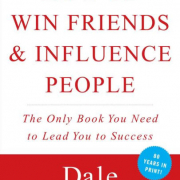
How to Win Friends and Influence People

By: Dale Carnegie


You can go after the job you want—and get it!

You can take the job you have—and improve it!

You can take any situation—and make it work for you!

Dale Carnegie’s rock-solid, time-tested advice has carried countless people up the ladder of success in their business and personal lives. One of the most groundbreaking and timeless bestsellers of all time, How to Win Friends & Influence People will teach you:

-Six ways to make people like you

-Twelve ways to win people to your way of thinking

-Nine ways to change people without arousing resentment

And much more! Achieve your maximum potential—a must-read for the twenty-first century with more than 15 million copies sold!


Recommendation


In the book that gave birth to the self-help genre, writer and lecturer Dale Carnegie spells out his plan for getting what you want from other people by changing your behavior. He expounds on the fundamentals of dealing with people and becoming a great leader. Carnegie developed these principles by drawing from examples of persuasive people in history, such as Abraham Lincoln, and from his own experiences. Since Carnegie wrote his book in 1935, many of his examples may seem obsolete or outmoded today, but his basic principles are timeless, eminently useable and presented in an easy-to-read and personal style.


Takeaways


  • Be genuinely interested in other people.
  • Don’t criticize, condemn or complain about people.
  • Encourage others to talk about themselves.
  • If you make a mistake, acknowledge it quickly.
  • Before criticizing someone else, talk about your own mistakes first.
  • Praise all improvements, no matter how slight.
  • If you want to change others, start with yourself first.
  • To feel important is one of the strongest human desires. Always make others feel important and never undermine anyone’s sense of importance.
  • Remember people’s names. A person’s name is the sweetest and most important sound in any language.
  • Express your ideas in a dramatic way. Use illustrations and showmanship to get your ideas across.

Recommendation


“Fundamental Techniques in Handling People”

To master the art of winning friends and influencing people, first learn and practice the three basic principles of dealing with people. Constantly remind yourself of the importance of these tenets. Review them, and consider how to apply them to your life. Employ them whenever you can, and even ask a friend, your partner or a business associate to remind you when you violate one of these precepts. As you practice, you should review your progress and keep notes showing when you have used each of these methods.

Principle 1: Be Nice

The first and foremost basic principle of handling people is to be nice. To this end, you shouldn’t criticize, condemn, or complain about people. Instead of judging people or disparaging them, you should try to understand them and to figure out why they do what they do. This way, you can be supportive, show sympathy, and be tolerant and kind. People like others who treat them in this way. Individuals respond positively to such an approach.

“Criticisms are like homing pigeons. They always return home.”

You may need to exercise self-control to refrain from expressing your negative feelings about someone else, but do so. In fact, if you have the desire to change others, it’s more profitable to refocus your concentration on yourself.

Principle 2: Find Out What They Want

A second fundamental technique is recognizing what others want and giving it to them. People have several aspirations. Some of their most common desires include health and the preservation of life, food, sleep, money and the goods and services money can buy, sexual gratification, the well-being of their children, and a feeling of importance.

“Remember that a person’s name is to that person the sweetest and most important sound in any language.”

Most of these wants are usually fulfilled, except the desire to feel important, though that is a very strong basic desire. It’s the yearning that motivates individuals to wear the most fashionable styles, drive the most modern cars and seek success.

The way to understand a person’s basic character is to know what triggers his or her feeling of importance. Once you know that information, you can make that person feel important. At the same time, avoid saying or doing anything that undermines an individual’s sense of importance.

“Make the other person feel important, and do it sincerely.”

For example, when offering feedback to an employee, use incentives rather than criticism to motivate him or her. Remember, nothing kills a person’s ambitions more effectively than criticism from a superior. Offer praise where you can, and be hesitant to find fault. However, avoid insincere flattery, as this doesn’t work well. Generally, people will see it as shallow and selfish. Instead, provide honest and sincere appreciation.

Principle 3: Help Them Get What They Want

The third fundamental principle is to stimulate an eager want in others. This principle works because all individuals are interested in getting what they want. So if you want to increase your influence over other people, find out what they want to accomplish and help them achieve it. To do this, it helps to understand their point of view and examine a situation from their perspective, as well as your own.

“Six Ways to Make People Like You”

To get people to like you, pay attention to others and show you are concerned about their well-being. Follow these six fundamental rules:

The First Rule

Become genuinely interested in other people. By doing so, you can gain the attention of others and secure their cooperation again and again. By showing a sincere interest in others, you, as a manager, can deepen your employees’ loyalty to your company as well, since people see you as a representative of your organization.

The Second Rule

Make a good first impression by smiling. This is important, since actions speak louder than words, and a smile helps to show people that you like them. It demonstrates that you are glad to see them and that you want to be friendly. Of course, a smile shouldn’t be an insincere grin. People resent such false and mechanical expressions. But a heartfelt smile that comes from within will help attract people to you.

The Third Rule

Learn people’s names. You can develop a simple technique to achieve this. When you meet someone for the first time, find out that person’s name as well as some facts about his or her family, business, or interests. Visualize this information as a picture in your mind. Then, when you see that person again, you will remember it. The power of recall is critical because people value their names highly, as reflected in the way many companies are named after their founders or the way donors give large bequests to organizations that name libraries, museums or other buildings after them.

The Fourth Rule

Be a good listener, and encourage people to talk about themselves. It is especially flattering to pay exclusive attention to the person who is speaking to you, rather than looking around to see who else might be there. Listening is also a very important skill for someone in customer service. For example, if a client comes to complain, just listening attentively can help diffuse that customer’s anger. It may even make the person’s grievances disappear.

The Fifth Rule

Talk in a way that interests others. Speak about their hobbies and passions. Theodore Roosevelt mastered this skill. He was well-versed on a wide variety of topics. When he expected to meet with an important dignitary, he would study up on that person’s interests. This habit enabled Roosevelt to wow people with his wealth of knowledge. He knew that “the royal road to a person’s heart is to talk about the things he or she treasures most.”

The Sixth Rule

Find a sincere way to make others feel important. For example, ask yourself what characteristics about other people you can honestly admire. The psychologist William James said that, “the deepest principle in human nature is the craving to be appreciated.”

“The only way to get the best of an argument is to avoid it.”

By showing your appreciation for others, you help nurture their feelings of self-importance. However, you need to be sincere when you show your gratitude so compliments don’t come across as insincere flattery.

“How to Win People to Your Way of Thinking”

Follow 12 techniques for convincing other people to believe what you are telling them. Consciously try to apply each method in your conversations:

  1. The only way to win an argument is to avoid it – Generally, disagreements only make others defensive, and a person who feels he or she has lost a dispute loses face. Once you get drawn into an argument, you can’t win, because if you lose it, you lose, and even if you win it, you lose. Thus, avoid engaging in a quarrel.
  2. Show respect for other people’s opinions – You don’t want to make others think you disagree with them with careless words, looks, intonations or gestures. When you challenge other people’s views, you make them want to strike back, not change their mind.
  3. Admit when you are wrong – If you make a mistake, acknowledge it quickly. Making such an admission is especially helpful when you know that others are thinking that you are wrong and want to say as much. It is easier to listen to self-criticism than criticism from others, and generally when you admit a mistake, other people are more likely to be forgiving and supportive. When you don’t, they are likely to be more critical and frustrated.
  4. Even if you are angry, begin in a friendly way – Use honey to make the medicine go down. You can’t win over someone who feels negativity toward you. But by soothing that feeling, you can start to bring that person around to your point of view.
  5. Get the other person to say “yes” in the beginning – Begin by discussing issues on which you both agree. Once you receive a “no” response, you will face a hurdle that you need to overcome, since your fellow discussant wants to remain consistent. Thus, it helps to start off with questions that will evoke a “yes” or a statement that will bring about agreement. Once the person is in the habit of saying yes, you can broach the harder questions.
  6. When dealing with complaints, let your clients do the talking – Allow them to say everything they want to say. As you listen, you will learn more about their business and their problems, and you will be in a better position to help. Listen patiently with an open mind, be sincere, and encourage your clients to express their concerns and ideas fully.
  7. Seek cooperation – Let the other party feel responsible for generating an idea. People have more faith in the suggestions that they themselves propose.
  8. See things from the other person’s point of view – Put yourself in the other person’s place so you can better understand what he or she wants and needs. This can be especially helpful if you are trying to sell someone a product or a course of action. This will help you understand what motivates the other person.
  9. Sympathize with what the other person thinks or wants – This way, even if you disagree or would do something differently, you show that you understand and empathize. Say something like: “I don’t blame you one iota for feeling as you do. If I were you I would undoubtedly feel just as you do.”
  10. Appeal to people’s higher aspirations and nobler motives – People usually have two reasons for doing something: the real reason and one that sounds good. Since people are idealists at heart and like to think they act out of good motives, you will have better luck in changing people by appealing to these positive intentions.
  11. Express your ideas in a dramatic way – By dramatizing your plans, you make them more powerful and persuasive. Use strong illustrations and showmanship to get your ideas across. This approach works well because merely stating a truth isn’t enough; the truth has to be vivid.
  12. Use a challenge to motivate others – This technique works because successful people love the chance to prove their worth. For example, the industrialist Charles Schwab once drew a large figure 6 on the floor of a mill to note how many items the day-shift employees made. The next day, when the night-shift staffers came in, they drew a 7 on the floor to show they had performed even better. That inspired the day-shift workers to toil even harder and place a 10 on the floor when they left. By expressing what he wanted, Schwab encouraged his staff to work more productively and more diligently. This tactic was more effective than if he had just asked his employees for improved work.

“Be a Leader”

If you are in a leadership position, employ nine important principles to motivate people to change without giving offense or arousing resentment:

  1. If you have to discuss a fault or a concern with someone, begin with sincere praise and honest appreciation.
  2. If someone makes a mistake, raise awareness of his or her mistakes indirectly.
  3. Before condemning another person, reveal your own mistakes first.
  4. Instead of giving someone a “direct order,” ask questions, such as “What do you think of this?” to let employees propose their own suggestions.
  5. Never put someone in a position where they lose face.
  6. Give improving employees praise, no matter how slight their progress.
  7. “Give the other person a fine reputation to live up to.”
  8. Offer employees encouragement, and make their fault seem easy to rectify.
  9. Make other people feel happy about trying out your suggestions.

About the Author


Dale Carnegie was a well-known inspirational teacher and author who wrote a series of popular self-help books that sold millions of copies in the 1930s and 1940s. His books became the basis for a series of seminars and training programs and addressed the topics of self-improvement, salesmanship, corporate training, public speaking and interpersonal skills. How to Make Friends and Influence People was first published in 1936. It became an instant hit and remains hugely popular today. Carnegie’s other books include How to Stop Worrying and Start Living, How to Develop Self-Confidence and Influence People by Public Speaking, How to Enjoy Your Life and Your Job, and The Quick and Easy Way to Effective Speaking. Dale Carnegie died on November 1, 1955.