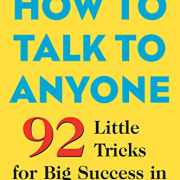
How to Talk to Anyone

92 Little Tricks for Big Success in Relationships
By Leil Lowndes


What it boils down to is a more skillful way of dealing with people.

The author has spent her career teaching people how to communicate for success. In her book How to Talk to Anyone (Contemporary Books, October 2003) Lowndes offers 92 easy and effective sure-fire success techniques– she takes the reader from first meeting all the way up to sophisticated techniques used by the big winners in life. In this information-packed book you’ll find:

    • 9 ways to make a dynamite first impression
    • 14 ways to master small talk, “big talk,” and body language
    • 14 ways to walk and talk like a VIP or celebrity
    • 6 ways to sound like an insider in any crowd
    • 7 ways to establish deep subliminal rapport with anyone
    • 9 ways to feed someone’s ego (and know when NOT to!)
    • 11 ways to make your phone a powerful communications tool
    • 15 ways to work a party like a politician works a room
    • 7 ways to talk with tigers and not get eaten alive

In her trademark entertaining and straight-shooting style, Leil gives the techniques catchy names so you’ll remember them when you really need them, including: “Rubberneck the Room,” “Be a Copyclass,” “Come Hither Hands,” “Bare Their Hot Button,” “The Great Scorecard in the Sky,” and “Play the Tombstone Game,” for big success in your social life, romance, and business.

How to Talk to Anyone, which is an update of her popular book, Talking the Winner’s Way (see the 5-star reviews of the latter) is based on solid research about techniques that work!

By the way, don’t confuse How to Talk to Anyone with one of Leil’s previous books, How to Talk to Anybody About Anything. This one is completely different!


Recommendation


“Language most shews a man: Speak, that I may see thee.” The great English dramatist and poet Ben Jonson wrote these words in the seventeenth century. They are as true today as they were then. People evaluate you by the words you use and the way you use them. Of course, people also make judgments based on your body language, dress style, attitude, facial expressions and similar criteria that immediately register at a subconscious level. This outstanding book will put you well on your way to becoming a more attractive personality as it reveals the secrets that drama and speech coaches, sales trainers, communication consultants, psychologists and other behavioral experts employ to help their clients become more charismatic, dynamic and appealing. The famous journalist and social critic H.L. Mencken once wrote, “Before a man speaks, it is always safe to assume that he is a fool. After he speaks, it is seldom necessary to assume it.” This cynical maxim may be true for many – but certainly not for those who study this book. It is chock-full of wonderful insights and proven techniques – a whopping 92 in all – that you can use to become the type of person that others admire.


Takeaways


  • Successful people are not always the smartest, most attractive or best educated.
  • Often, they succeed because they know how to get along well with others.
  • People respond to each other on a subconscious level. Research indicates that “as many as 10,000 units of information flow per second” between individuals.
  • Numerous proven techniques can increase your attractiveness and dynamism.
  • People learn everything they need to know about you within the first few seconds of meeting you. Meanwhile, you are also forming powerful first impressions.
  • You send out clear signals about how you feel without saying a word.
  • “Fine-tune your smile.”
  • To make people feel great about you, focus your conversation on them.
  • Many people are as frightened to make small talk as they are to appear on the stage.
  • You will come across as a far more intelligent speaker if you simply find substitutes for a few “overworked words” such as “smart, nice, pretty or good.”

Summary


“Clever Hans, the Counting Horse”

In Europe during the halcyon years before World War I, “Clever Hans, the counting horse,” was, without a doubt, the most talked-about sensation on the continent. A brilliant entertainer with a unique act, Hans could somehow supply accurate answers to math questions that audience members posed to him. He did so by quickly tapping out the correct answers to any problem – addition, subtraction, multiplication and division – with a hoof. The horse’s owner, Herr von Osten, was always by his side while Hans performed these seemingly miraculous feats – but he never spoke to the horse or signaled to him in any way.

“There are two kinds of people in this life: Those who walk into a room and say, ‘Well, here I am!’ And those who walk in and say, ‘Ahh, there you are’.”

No one had ever seen such an amazing animal! Expanding beyond math, Hans “learned the alphabet.” By tapping his hoof a certain number of times for each letter, he would answer questions from audience members concerning the latest news, or subjects such as geography and history. Hans always answered every question correctly. Eventually scientists and other leaders organized a special commission to investigate the “human horse.” They asked von Osten to leave the hall for their test. Then, they had Hans perform his usual math and language wizardry in front of a crowd. But the horse still did not miss an answer, tapping out correct responses to numerous questions from the leader of the commission. No one could stump the brainy Hans.

“No man would listen to you talk if he didn’t know it was his turn next.”

The public insisted that investigators form another commission. Members organized a second test in which the questioner whispered questions in Hans’s ear so no one else could hear. This time, Hans could not answer even a single question correctly. Instead of being brilliant, the horse was revealed as a dummkopf! Can you guess how the commission’s members proved that Hans was a fraud? Von Osten had taught the horse to read the audience members’ “body-language signals.” As Hans tapped his hoof, people in the audience would exhibit clear signs of tension – straining forward, holding their breath – until the horse reached the correct number. Then they would all relax, at which point von Osten had taught Hans to stop tapping immediately. Hans was “clever” – but not because he was a math genius or geography expert. He simply knew how to take cues for his actions from the subtle responses of the people around him. “Know your audience” is one of the primary rules of effective communications. Hans the horse was able to learn this important lesson. Can you?

Teach Yourself to Become Charming and Attractive

The most accomplished public speakers, actors, politicians and salespeople were not born charismatic. They worked hard to learn how to speak effectively, to be appealing, and to charm and persuade others. How did they achieve their goals? The answer is simple: They each applied certain remarkably helpful rules of personal communication and, thus, developed themselves into winning and attractive personalities. Yes, such rules exist. Furthermore, they are easy to learn and employ. You can use these secrets and tricks to re-create yourself almost magically into a person of great charm and poise, someone everyone will admire and want to be near.

“How to Intrigue Everyone Without Saying a Word”

First impressions are the most lasting. “The way you look and the way you move” provide 80% of the information people use to form their initial impressions of you. To make sure people get an overwhelmingly positive impression when they first meet you, use the following tips:

  • Smile slowly – Don’t smile as soon as you meet someone. People will assume that you do this with everyone. Instead, wait a second or two, look long and deep at the person you are meeting, then smile big. This brief delay signals that you are not smiling because it is socially desirable, but because you see something special in this particular person that you really like.
  • “Sticky eyes” – Show people that you truly can’t take your eyes off of them. Maintain perfect eye contact while you speak with them.
  • “The big baby pivot” – When you meet someone, pivot directly toward him or her with a “total-body turn,” flash a genuine smile, and show the undivided and very special attention you would give to a young child who has just crawled up into your lap.

“How to Know What to Say After You Say, ‘Hi'”

Many people, including senior executives, motivational speakers and great performers, hate to make small talk. But it is an art that you easily can muster if you follow these tactics:

  • The “mood match” – Don’t speak with someone else until you first sample his or her mood. Once you have, make sure that your opening words “match that mood.” This is particularly important for salespeople.
  • “Wear a ‘whatzit'” – Starting a conversation with a stranger is not easy. One way to get the ball rolling is to wear something distinctive that he or she is sure to comment upon – a novel tie-tack, a piece of antique jewelry, or a special lapel pin or button.
  • The “swiveling spotlight” – People love to speak about themselves. Imagine a giant spotlight that rotates to light up your counterpart. Keep the spotlight – and focus – on that person and not yourself. He or she will think you are great for doing so.

“How to Talk Like a VIP”

You can always recognize important people by the commanding, intelligent way they speak. They have confidence, choose the proper words and don’t use clichés. Follow their lead:

  • “Kill the quick ‘me too!'” – To really impress, avoid immediately matching someone else’s account of a personal experience or preference – say, a love of sailing – with your own story. Let your shared interest come out gracefully during the conversation.
  • “Comm-YOU-nication” – Slip the word “you” into your discourse as often as you can. This focuses the content on the other person, and gains his or her attention and approval.
  • Avoid euphemisms – Always speak directly and to the point. The use of “nicey-nice” words makes you appear equivocal and weak.

“How to Be an Insider in Any Crowd”

To be able to converse well with others, cure yourself of “Silent Outsider Syndrome.” Use the special words and phrases that are common parlance to the people or group that you want to join:

  • “Learn a little ‘jobbledygook'” – People will be impressed with you if you speak in terms they routinely use. Pick up the lingo by listening to others to find out what their special words and phrases mean so you can use them appropriately.
  • Hit their “hot buttons” – Each professional group has its own provocative issues – for example, doctors get feisty about their relationships with hospitals. Find out what these issues are, then mention them to spice up your exchanges.
  • “Read their rags” – The best way to gain inside knowledge about a specific field is to read the trade journals that report on it. An hour or two in the library can work wonders to improve your conversational prowess.

“How to Sound Like You’re Peas in a Pod”

In general people are more comfortable with those who have similar values or interests. Your job is to provoke “sensations of similarity” in the thoughts of those you want to get to know:

  • “Join the movement” – Does your conversational partner make herky-jerky movements, or languid and graceful ones? Subtly match that person’s movements to make him or her feel more comfortable with you on a subliminal basis. But don’t go overboard or you are almost sure to offend.
  • “Echoing” – What special words and phrases does your conversational partner use to describe something? “Echo” your partner and use those words yourself.
  • “The premature ‘we'” – When you pepper your sentences with the word “we,” you establish a subconscious bond with other people involved.

“How to Differentiate the Power of Praise from the Folly of Flattery”

Back in the 1930s, Dale Carnegie extolled the virtues of praise in his classic bestseller How to Win Friends and Influence People. The power of praise is just as strong today, but praise that does not appear genuine is certain to backfire, so proceed carefully using these helpers:

  • “Grapevine glory” – To praise someone without seeming to be an apple-polisher, speak highly of that person, but not directly to him or her. Instead voice your compliment to that person’s closest friend or associate. Rest assured that the message will get delivered.
  • “Accidental adulation” – Sneak praise into an otherwise mundane sentence: “Because you are so knowledgeable concerning…, I’m sure you can set the agenda.”
  • “Killer compliments” – Use them whenever you can. For example, you can say something like, “You are the most honest person I know.”

“How to Direct-Dial Their Hearts”

You may look great, stand tall, dress in style and feel confident – but how do you project these qualities when you speak over the phone? Ensure that you:

  • “Pump up the volume” – When you speak over the phone, “turn your smiles into sound.” Be animated and project a positive image through your tone of voice.
  • “Name shower” – Repeat the other person’s name over and over. A person’s name is their favorite word.
  • “Oh wow, it’s you” – Always answer your calls in a professional way, then switch to a very sunny, happy demeanor as soon as the caller identifies themselves.

“How to Work a Party Like a Politician Works a Room”

Always put the “politician’s six-point party checklist” to work when you attend a function:

  1. “Who will be there?” – After all, that’s why you’re going, right?
  2. “When should I arrive?” – The best advice is to get there early.
  3. “What should I take with me?” – At a minimum, you’ll need your business cards.
  4. “Why is the party being given?” –Be sure and get the true reason.
  5. “Where is the collective mind?” – Will it be a party of financiers or environmentalists?
  6. “How am I going to follow up?” – Follow up to confirm the contacts you have made.

“How to Break the Most Treacherous Glass Ceiling of All”

Gaffes, intemperate or insensitive comments can kill any chance you have to get ahead. To avoid doing damage, keep these strategies in mind:

  • “See no bloopers” – Never comment on the “slips, fumbles and faux pas” of others.
  • “Savor the favor” – If someone offers to do a good deed on your behalf, wait a little before you try to collect it.
  • “Chance encounters are for chitchat” – You have been trying for weeks to schedule an appointment to speak to the boss about increasing your salary. But don’t bring it up when you run into them in a checkout line. If you do, you’ll never get the raise.

Planned Communication – and Presentation – Makes All the Difference

You cannot get ahead unless you know how to speak to people so they will want to listen. Fortunately, learning this skill is within anyone’s grasp. Study how successful people accomplish this important goal – and then do what they do. It’s really as simple as that.


About the Author


Leil Lowndes writes and lectures extensively on communication, and acts as a personal communications coach for Fortune 500 company executives and employees.
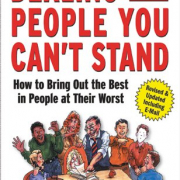
Dealing With People You Can’t Stand

How to Bring Out the Best in People at Their Worst
By Rick Brinkman


The classic guide to bringing out the best in people at their worst—updated with even more can’t-standable people!

Dealing with People You Can’t Stand has been helping good people deal with bad behavior in a positive, professional way for nearly two decades.

Unfortunately, as the world becomes smaller and time more compressed, new difficult people are being made all the time. So Kirschner and Brinkman have updated their global bestseller to help you wring positive results from even the most twisted interactions you’re likely to experience today.

Learn how to get things done and get along when you’re dealing with people who have the uncanny ability to sabotage, derail, and interfere with your plans, needs, and wants. Learn how to:

    • Use sophisticated listening techniques to unlock the doors to people’ s minds, hearts, and deepest needs
    • Apply “take-charge” skills that turn conflict into cooperation by reducing the differences between people
    • Transform the destructive behavior of Tanks, Snipers, Know-It-Alls, Whiners, Martyrs, Meddlers, and other difficult types of people

Whether you’re dealing with a coworker trying to take credit for your work, a distant family member who knows no personal bounds, or a loud cell phone talker on line at the grocery store, Dealing with People You Can’t Stand gives you the tools for bringing out the best in people at their worst.


Recommendation


You know these people from the office: the dominating Tank, the undermining Sniper, the explosive Grenade and the smarmy Know-It-All. For your sake, here’s hoping you only have one or two of them running around your cubicle farm. Unfortunately, the work world is fraught with complainers, cheats, toadies and downers. To avoid becoming a downer yourself, you need coping strategies. Authors Dr. Rick Brinkman and Dr. Rick Kirschner describe 10 difficult, if slightly contrived, personalities and provide communications techniques for dealing with them. This is not a textbook, being slim on attributions and facts. It is, rather, a feel-good handbook of simple suggestions for using tactics and popular psychology to deal with someone you’d actually rather strangle. Given that choice, conversation is a better strategy. This light but well-intentioned book is for human resources professionals, managers with problem employees and you, if you’re feeling particularly homicidal about that knuckle-cracking, gum-popping slacker in the next cubby.


Takeaways


  • You can take one of four approaches when coping with difficult people: do nothing, walk away, change your attitude or change your approach in dealing with them.
  • People respond to different situations with varying degrees of assertiveness.
  • People operate in a normal zone of emotions ranging from aggression to passivity.
  • Most people are either focused on completing a task, doing the task correctly, building relationships or getting recognition for their contributions.
  • When people’s priorities change, their problems change.
  • The intensity with which a person focuses on building relationships and gaining recognition can lead to problem behaviors.
  • When workers are intent on doing their jobs right, they can become perfectionists.
  • A person who is focused on getting the job done may try to exert too much control.
  • If you master certain communications skills, you can convert confrontational situations into cooperative opportunities.
  • Proper phone and e-mail use can enhance communications and reduce potential miscues.

Summary


Take Charge Communications

People do not always get along with each other, but you don’t have to be the victim of a difficult person. Take charge of seemingly impossible personalities by developing communications techniques that make them alter their behavior towards you when you have to deal with them.

“Gain control over your attitude toward the problem people in your life, and accept them as they are.”

Most dislikable behavior stems from being too timid or too aggressive. With that in mind, identify the personality types of the problem people in your corner of the corporate world. Then use appropriate communications strategies to defuse and positively re-direct their troubling tendencies.

The Cast of Characters

The first step begins with trying to identify problem personality types, who include the following:

  • Tanks – They epitomize aggressive, in-your-face behavior and are often angry and confrontational. They dominate any meeting or social situation.
  • Snipers – Their specialty is making others look foolish to diminish their effectiveness and credibility.
  • Know-It-Alls – They do not like to be contradicted, especially in front of a group, and will react defensively if threatened.
  • Think-They-Know-It-Alls – These folks are attention-getters who try to gain recognition by flaunting their supposedly authoritative knowledge. They make sure to pick unfamiliar topics so you might not know if they really are experts.
  • Grenades – Their behavior is unpredictable. They have disproportionate reactions to seemingly meaningless events. No one knows when they’ll go off.
  • Yes People – They crave appreciation and recognition. To achieve it, they take on too many obligations until their time is depleted. At that point, they become hostile since they have pre-empted their own flexibility and leisure time with these chores.
  • Maybe People – They avoid decisions and delay so long that events happen without their input. They often miss the boat entirely.
  • Nothing People – They are basically uncommunicative and function at the most basic emotional social level. Just think of someone who never, ever got that first cup of coffee.
  • No People – They are negative to the point of never trying anything new. If you want someone to tell you that it is futile to even try, here’s your candidate.
  • Whiners – They strive for perfection and it makes them miserable. All they want is consolation, solace and solutions, but those had better be perfect, too.

“Every behavior has a purpose, or an intent, that the behavior is trying to fulfill.”

This cast of characters can ruin the atmosphere of any workplace or social situation. To cope with these individuals, you could do nothing and suffer in silence; find a new job or change your attitude to accommodate and neutralize negative personalities. Learn new communications techniques to make problem personalities change their behavior out of a desire to gain your positive attention and feedback and, perhaps, to stop being miserable.

“To communicate effectively with other people, you must have some understanding of what matters most to them.”

Changing anyone’s actions is difficult, but to cope with problem people, first identify the source of each person’s bad behavior by focusing on a basic human trait: aggression. Difficult people show varied levels of aggressiveness, ranging from the desire to dominate a situation to open belligerent attacks. A problem person’s degree of aggressive behavior probably depends on the situation and personalities involved. Diagnose aggression by listening to how loudly someone speaks and what message they deliver. Observe whether their aggression is focused toward others or themselves.

“Criteria are the filters on our point of view, the standards by which we measure ideas and experiences to determine if they are good or bad.”

What drives a problem personality in a work situation? In many cases, difficult people plow through the office obliviously offending others – they are simply too focused on getting the job done or too intent on controlling their co-workers. If these forces are balanced and their priorities remain focused, work can proceed in a normal fashion.

“When you take back the advantage of time, you can use it to deal with your emotional response to what you’re reading.”

Remain alert to the professional circumstances of the people around you. When their lives shift, their priorities can change and so can their behavior.

Identify problematic personality types by watching what they do. Tanks, Snipers and Know-It-Alls focus on control. They accomplish domination by embarrassing others (the Sniper), hogging a conversation (the Know-It-All) or being outright aggressive (the Tank). When they focus intently on doing their jobs right, some problem people become perfectionists, including the Whiner, the No People and the Nothing People. This does not make them easier to live with, as you might imagine.

Gaining Control

Even obnoxious people operate within a range. When they cross the line into offensiveness, its time to seek reform. Use specific techniques directed to each negative personality type to gain control of the situation.

Tanks

When Tanks move in to dominate a project, you should not acquiesce or just sit back and accept criticism. Instead, politely, but insistently, interrupt the attack, move back to addressing the main point which prompted the encounter and stick up for yourself. Make your point in a way that commands respect.

Snipers

Neutralize Sniper attacks by showing others that the barrage is unprovoked. If a Sniper makes a specific criticism, address it. Perhaps suggest working together for the common good. Then, the Snipers won’t be able to undercut your work without chopping up theirs.

Know-It-Alls

Dealing with Know-It-Alls requires some fact checking and preparation since they operate from the premise that they know more than anyone else. Your job is to prove them wrong. First, acknowledge the merits of their viewpoints or their mastery of a subject, however meager. This requires humility, but it works. As a closing tactic, advance your position indirectly by presenting your argument in a “what-if” format or as a hypothetical situation. Convert these people into useful partners by approaching them as mentors who can help develop your career.

Think-They-Know-It-All

A related, but less threatening type is the Think-They-Know-It-All. These people basically crave attention. Neutralize them by asking for more specifics about their proposals (often, they don’t have any) and providing honest feedback about their ideas. Once you show that their ideas are weak, the cycle will be broken.

Grenades

Defuse them by shifting power from them to a manager or co-worker. First you must get their attention. Then, determine what provoked the outburst, express sympathy and try to understand why their feelings got hurt. This should cool the situation enough to break off the interaction and end the confrontation. Make a follow-up plan to prevent future dramas.

Yes People

They are overextended. In an effort to get approval, they agree to tasks that they have no time to complete or are not qualified to do. They mean well, but cannot finish the job. Tell them that they can reject an assignment without a stigma or official disapproval. Your honesty will be rewarded if they can learn time management with the goal of assuming less work, but honoring the commitment to complete their remaining tasks.

Maybe People

They want to get along with everybody, but lack the decisiveness to create and implement a plan. Instead, their timid decision making abilities put them in decision Neverland. To break this cycle, respect their comfort zone, since they cannot be forced into making decisions without suffering trauma. Gradually move them into a discussion that clarifies their options and forces any conflicts into open discussion. Help them adopt a logical decision making system, even something as simple as creating a list of the pros and cons of a given choice.

Nothing People

They often has the answers, but must be coaxed to present them. This may require time. Use open-ended questions to elicit the information you need or use humor to establish a dialogue. As a last step in dealing with truly intransigent silent workers, ask where the situation is leading and explain how a dead-end can hamper their future.

No People

The goal in dealing with No People is to progress from negativity to problem solving. Ask them to ponder a problem and pose a solution. An open-ended approach works best since it opens the door for a positive approach to emerge.

Whiners

Complaining workers, such as Whiners, may make valid points disguised as a hail of problems. Set them up as problem-solving partners who can address a specific problem since they know the main obstacles. This shifts their information into a solution-building mode. Convert Whiners into positive influences by showing them the merits of solving problems.

Best Practices for Telephone and E-mail Use

Sometimes you must deal with problem types on the telephone or by e-mail. Use these specific techniques to communicate more efficiently on the telephone:

  • Take notes – Write down key points during phone conversations and repeat them or incorporate them into a follow-up letter.
  • Stand up – When using the phone, control the emotional tone of your voice by standing. Headsets allow you to walk around the room to stay calm and alert.
  • Breathe – Use deep breathing to reduce tension and focus your thoughts.

“Every difficult person that crosses your path, when placed in a positive frame of reference, presents you with the golden opportunity to develop your communications skills.”

While e-mail is touted for its speed, that can also be its undoing. Written correspondence once required forethought, research and organization. A handwritten letter connoted personal style, right down to the quality and color of the paper. That is still true of formal invitations, for example. But e-mail has re-oriented written communication. It values speed, which can be a downfall for people who dash off emotional messages.

“When you look through the lens of understanding, you can also observe that there are patterns to what people focus their attention on in any given situation.”

When communicating via e-mail, avoid quick comments or quips. Focus on your content and how you convey it. While professional writers have extensive experience composing at the keyboard, most people should research and reflect on what they write. Be sure that you:

  • Re-read e-mails before you hit send – Spell checking is a great tool, but it can change spellings and meanings. Once an un-proofed note is sent, the damage is done. This can have a negative impact on your credibility.
  • Don’t vent in an e-mail – You’ve been to an ugly meeting and you’re upset, but don’t fall prey to going back to your desk and venting on the keyboard. If you do, don’t send the note. Write it and save it. Read it later. Take advantage of the numbing effect of time in ameliorating many unpleasant situations.
  • Think twice before forwarding – Forwarding an emotional note implicitly endorses or criticizes its content. If that is your intention, fine. But if not, beware. Those who forward angry notes may inadvertently launch a separate discussion about taking a note out of context or involving people who don’t know about the matter at hand.

“No one cooperates with people who seem to be against them.”

When you respond to an e-mail, quote it in your response. That keeps the discussion on track and allows other people – even problem people – to add their layers of comments or facts.


About the Author


Dr. Rick Brinkman and Dr. Rick Kirschner began their careers as holistic physicians who addressed the emotional and mental aspects of wellness and healing. They co-authored Life by Design, Making Wise Choices in a Mixed Up World, as well as video and audiotapes. Their clients include AT&T, Hewlett-Packard, Texaco, the U.S. Army and the Young Presidents Organization.