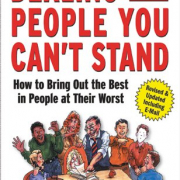
Dealing With People You Can’t Stand

How to Bring Out the Best in People at Their Worst
By Rick Brinkman


The classic guide to bringing out the best in people at their worst—updated with even more can’t-standable people!

Dealing with People You Can’t Stand has been helping good people deal with bad behavior in a positive, professional way for nearly two decades.

Unfortunately, as the world becomes smaller and time more compressed, new difficult people are being made all the time. So Kirschner and Brinkman have updated their global bestseller to help you wring positive results from even the most twisted interactions you’re likely to experience today.

Learn how to get things done and get along when you’re dealing with people who have the uncanny ability to sabotage, derail, and interfere with your plans, needs, and wants. Learn how to:

    • Use sophisticated listening techniques to unlock the doors to people’ s minds, hearts, and deepest needs
    • Apply “take-charge” skills that turn conflict into cooperation by reducing the differences between people
    • Transform the destructive behavior of Tanks, Snipers, Know-It-Alls, Whiners, Martyrs, Meddlers, and other difficult types of people

Whether you’re dealing with a coworker trying to take credit for your work, a distant family member who knows no personal bounds, or a loud cell phone talker on line at the grocery store, Dealing with People You Can’t Stand gives you the tools for bringing out the best in people at their worst.


Recommendation


You know these people from the office: the dominating Tank, the undermining Sniper, the explosive Grenade and the smarmy Know-It-All. For your sake, here’s hoping you only have one or two of them running around your cubicle farm. Unfortunately, the work world is fraught with complainers, cheats, toadies and downers. To avoid becoming a downer yourself, you need coping strategies. Authors Dr. Rick Brinkman and Dr. Rick Kirschner describe 10 difficult, if slightly contrived, personalities and provide communications techniques for dealing with them. This is not a textbook, being slim on attributions and facts. It is, rather, a feel-good handbook of simple suggestions for using tactics and popular psychology to deal with someone you’d actually rather strangle. Given that choice, conversation is a better strategy. This light but well-intentioned book is for human resources professionals, managers with problem employees and you, if you’re feeling particularly homicidal about that knuckle-cracking, gum-popping slacker in the next cubby.


Takeaways


  • You can take one of four approaches when coping with difficult people: do nothing, walk away, change your attitude or change your approach in dealing with them.
  • People respond to different situations with varying degrees of assertiveness.
  • People operate in a normal zone of emotions ranging from aggression to passivity.
  • Most people are either focused on completing a task, doing the task correctly, building relationships or getting recognition for their contributions.
  • When people’s priorities change, their problems change.
  • The intensity with which a person focuses on building relationships and gaining recognition can lead to problem behaviors.
  • When workers are intent on doing their jobs right, they can become perfectionists.
  • A person who is focused on getting the job done may try to exert too much control.
  • If you master certain communications skills, you can convert confrontational situations into cooperative opportunities.
  • Proper phone and e-mail use can enhance communications and reduce potential miscues.

Summary


Take Charge Communications

People do not always get along with each other, but you don’t have to be the victim of a difficult person. Take charge of seemingly impossible personalities by developing communications techniques that make them alter their behavior towards you when you have to deal with them.

“Gain control over your attitude toward the problem people in your life, and accept them as they are.”

Most dislikable behavior stems from being too timid or too aggressive. With that in mind, identify the personality types of the problem people in your corner of the corporate world. Then use appropriate communications strategies to defuse and positively re-direct their troubling tendencies.

The Cast of Characters

The first step begins with trying to identify problem personality types, who include the following:

  • Tanks – They epitomize aggressive, in-your-face behavior and are often angry and confrontational. They dominate any meeting or social situation.
  • Snipers – Their specialty is making others look foolish to diminish their effectiveness and credibility.
  • Know-It-Alls – They do not like to be contradicted, especially in front of a group, and will react defensively if threatened.
  • Think-They-Know-It-Alls – These folks are attention-getters who try to gain recognition by flaunting their supposedly authoritative knowledge. They make sure to pick unfamiliar topics so you might not know if they really are experts.
  • Grenades – Their behavior is unpredictable. They have disproportionate reactions to seemingly meaningless events. No one knows when they’ll go off.
  • Yes People – They crave appreciation and recognition. To achieve it, they take on too many obligations until their time is depleted. At that point, they become hostile since they have pre-empted their own flexibility and leisure time with these chores.
  • Maybe People – They avoid decisions and delay so long that events happen without their input. They often miss the boat entirely.
  • Nothing People – They are basically uncommunicative and function at the most basic emotional social level. Just think of someone who never, ever got that first cup of coffee.
  • No People – They are negative to the point of never trying anything new. If you want someone to tell you that it is futile to even try, here’s your candidate.
  • Whiners – They strive for perfection and it makes them miserable. All they want is consolation, solace and solutions, but those had better be perfect, too.

“Every behavior has a purpose, or an intent, that the behavior is trying to fulfill.”

This cast of characters can ruin the atmosphere of any workplace or social situation. To cope with these individuals, you could do nothing and suffer in silence; find a new job or change your attitude to accommodate and neutralize negative personalities. Learn new communications techniques to make problem personalities change their behavior out of a desire to gain your positive attention and feedback and, perhaps, to stop being miserable.

“To communicate effectively with other people, you must have some understanding of what matters most to them.”

Changing anyone’s actions is difficult, but to cope with problem people, first identify the source of each person’s bad behavior by focusing on a basic human trait: aggression. Difficult people show varied levels of aggressiveness, ranging from the desire to dominate a situation to open belligerent attacks. A problem person’s degree of aggressive behavior probably depends on the situation and personalities involved. Diagnose aggression by listening to how loudly someone speaks and what message they deliver. Observe whether their aggression is focused toward others or themselves.

“Criteria are the filters on our point of view, the standards by which we measure ideas and experiences to determine if they are good or bad.”

What drives a problem personality in a work situation? In many cases, difficult people plow through the office obliviously offending others – they are simply too focused on getting the job done or too intent on controlling their co-workers. If these forces are balanced and their priorities remain focused, work can proceed in a normal fashion.

“When you take back the advantage of time, you can use it to deal with your emotional response to what you’re reading.”

Remain alert to the professional circumstances of the people around you. When their lives shift, their priorities can change and so can their behavior.

Identify problematic personality types by watching what they do. Tanks, Snipers and Know-It-Alls focus on control. They accomplish domination by embarrassing others (the Sniper), hogging a conversation (the Know-It-All) or being outright aggressive (the Tank). When they focus intently on doing their jobs right, some problem people become perfectionists, including the Whiner, the No People and the Nothing People. This does not make them easier to live with, as you might imagine.

Gaining Control

Even obnoxious people operate within a range. When they cross the line into offensiveness, its time to seek reform. Use specific techniques directed to each negative personality type to gain control of the situation.

Tanks

When Tanks move in to dominate a project, you should not acquiesce or just sit back and accept criticism. Instead, politely, but insistently, interrupt the attack, move back to addressing the main point which prompted the encounter and stick up for yourself. Make your point in a way that commands respect.

Snipers

Neutralize Sniper attacks by showing others that the barrage is unprovoked. If a Sniper makes a specific criticism, address it. Perhaps suggest working together for the common good. Then, the Snipers won’t be able to undercut your work without chopping up theirs.

Know-It-Alls

Dealing with Know-It-Alls requires some fact checking and preparation since they operate from the premise that they know more than anyone else. Your job is to prove them wrong. First, acknowledge the merits of their viewpoints or their mastery of a subject, however meager. This requires humility, but it works. As a closing tactic, advance your position indirectly by presenting your argument in a “what-if” format or as a hypothetical situation. Convert these people into useful partners by approaching them as mentors who can help develop your career.

Think-They-Know-It-All

A related, but less threatening type is the Think-They-Know-It-All. These people basically crave attention. Neutralize them by asking for more specifics about their proposals (often, they don’t have any) and providing honest feedback about their ideas. Once you show that their ideas are weak, the cycle will be broken.

Grenades

Defuse them by shifting power from them to a manager or co-worker. First you must get their attention. Then, determine what provoked the outburst, express sympathy and try to understand why their feelings got hurt. This should cool the situation enough to break off the interaction and end the confrontation. Make a follow-up plan to prevent future dramas.

Yes People

They are overextended. In an effort to get approval, they agree to tasks that they have no time to complete or are not qualified to do. They mean well, but cannot finish the job. Tell them that they can reject an assignment without a stigma or official disapproval. Your honesty will be rewarded if they can learn time management with the goal of assuming less work, but honoring the commitment to complete their remaining tasks.

Maybe People

They want to get along with everybody, but lack the decisiveness to create and implement a plan. Instead, their timid decision making abilities put them in decision Neverland. To break this cycle, respect their comfort zone, since they cannot be forced into making decisions without suffering trauma. Gradually move them into a discussion that clarifies their options and forces any conflicts into open discussion. Help them adopt a logical decision making system, even something as simple as creating a list of the pros and cons of a given choice.

Nothing People

They often has the answers, but must be coaxed to present them. This may require time. Use open-ended questions to elicit the information you need or use humor to establish a dialogue. As a last step in dealing with truly intransigent silent workers, ask where the situation is leading and explain how a dead-end can hamper their future.

No People

The goal in dealing with No People is to progress from negativity to problem solving. Ask them to ponder a problem and pose a solution. An open-ended approach works best since it opens the door for a positive approach to emerge.

Whiners

Complaining workers, such as Whiners, may make valid points disguised as a hail of problems. Set them up as problem-solving partners who can address a specific problem since they know the main obstacles. This shifts their information into a solution-building mode. Convert Whiners into positive influences by showing them the merits of solving problems.

Best Practices for Telephone and E-mail Use

Sometimes you must deal with problem types on the telephone or by e-mail. Use these specific techniques to communicate more efficiently on the telephone:

  • Take notes – Write down key points during phone conversations and repeat them or incorporate them into a follow-up letter.
  • Stand up – When using the phone, control the emotional tone of your voice by standing. Headsets allow you to walk around the room to stay calm and alert.
  • Breathe – Use deep breathing to reduce tension and focus your thoughts.

“Every difficult person that crosses your path, when placed in a positive frame of reference, presents you with the golden opportunity to develop your communications skills.”

While e-mail is touted for its speed, that can also be its undoing. Written correspondence once required forethought, research and organization. A handwritten letter connoted personal style, right down to the quality and color of the paper. That is still true of formal invitations, for example. But e-mail has re-oriented written communication. It values speed, which can be a downfall for people who dash off emotional messages.

“When you look through the lens of understanding, you can also observe that there are patterns to what people focus their attention on in any given situation.”

When communicating via e-mail, avoid quick comments or quips. Focus on your content and how you convey it. While professional writers have extensive experience composing at the keyboard, most people should research and reflect on what they write. Be sure that you:

  • Re-read e-mails before you hit send – Spell checking is a great tool, but it can change spellings and meanings. Once an un-proofed note is sent, the damage is done. This can have a negative impact on your credibility.
  • Don’t vent in an e-mail – You’ve been to an ugly meeting and you’re upset, but don’t fall prey to going back to your desk and venting on the keyboard. If you do, don’t send the note. Write it and save it. Read it later. Take advantage of the numbing effect of time in ameliorating many unpleasant situations.
  • Think twice before forwarding – Forwarding an emotional note implicitly endorses or criticizes its content. If that is your intention, fine. But if not, beware. Those who forward angry notes may inadvertently launch a separate discussion about taking a note out of context or involving people who don’t know about the matter at hand.

“No one cooperates with people who seem to be against them.”

When you respond to an e-mail, quote it in your response. That keeps the discussion on track and allows other people – even problem people – to add their layers of comments or facts.


About the Author


Dr. Rick Brinkman and Dr. Rick Kirschner began their careers as holistic physicians who addressed the emotional and mental aspects of wellness and healing. They co-authored Life by Design, Making Wise Choices in a Mixed Up World, as well as video and audiotapes. Their clients include AT&T, Hewlett-Packard, Texaco, the U.S. Army and the Young Presidents Organization.

Relationships 101

What Every Leader Needs To Know
By John Maxwell


In this essential and illuminating book, top business strategist Dev Patnaik tells the story of how organizations of all kinds prosper when they tap into a power each of us already has: empathy, the ability to reach outside of ourselves and connect with other people. When people inside a company develop a shared sense of what’s going on in the world, they see new opportunities faster than their competitors. They have the courage to take a risk on something new. And they have the gut-level certitude to stick with an idea that doesn’t take off right away. People are “Wired to Care,” and many of the world’s best organizations are, too.

In pursuit of this idea, Patnaik takes readers inside big companies like IBM, Target, and Intel to see widespread empathy in action. But he also goes to farmers’ markets and a conference on world religions. He dives deep into the catacombs of the human brain to find the biological sources of empathy. And he spends time on both sides of the political aisle, with James Carville, the Ragin’ Cajun, and John McCain, a national hero, to show how empathy can give you the acuity to cut through a morass of contradictory information.

Wired to Care is a compelling tale of the power that people have to see the world through each other’s eyes, told with passion for the possibilities that lie ahead if leaders learn to stop worrying about their own problems and start caring about the world around them. As Patnaik notes, in addition to its considerable economic benefits, increasing empathy for the people you serve can have a personal impact, as well: It just might help you to have a better day at work.


Recommendation


Executives often know little about the people who buy their companies’ products and services. This is not surprising. To study people, you must care about them. However, most companies eliminate empathy from their operations. In essence, they proceed as if they have calculating, survival-bent reptile brains. Profits drive everything. This is an odd disconnect because corporate livelihoods depend on people – not lizards – and people’s brains are hardwired to be empathetic. Dev Patnaik (writing with Peter Mortensen) shows why firms that connect empathetically with their customers do better financially. He insists today’s cold-hearted, bottom-line business world has room for caring companies, and he points to IBM, Nike and Harley-Davidson as examples. The fact that empathy is also a strong business strategy is icing on the cake. As Patnaik explains on his blog, “Empathy isn’t about having a visionary leader. It’s about making customer information an easy, everyday and experiential part of working at your company.”


Takeaways


  • People are naturally empathetic. This tendency is hardwired into the human brain.
  • Because of their “mirror neurons,” human beings react in a simultaneous and sympathetic manner to other people’s pleasure and pain.
  • Although empathetic people create corporations, many businesses operate in a nonempathetic manner.
  • It is as if they possess cold-blooded reptilian brains, not naturally empathetic (due to the limbic system) mammalian brains.
  • Nonempathetic corporate leaders care only about profits, not about their customers.
  • Consequently, they do not try to learn anything meaningful about their consumers.
  • Many times this results in the development of products that don’t appeal to customers.
  • Empathetic business leaders care about their customers and study them.
  • Thus, they come to understand intuitively what will appeal to them most strongly.
  • As IBM, Nike and Harley-Davidson demonstrate, this kind of empathy pays off in the marketplace.

Summary


Humans Are Hardwired for Empathy

When he played linebacker for the New York Giants in the 1980s and early 1990s, Lawrence Taylor was a fearsome competitor and an awesome physical presence on the field. He played like a man among boys, smashing quarterbacks with gusto. Taylor enjoyed knocking down other players. On November 18, 1985, the Giants played the Washington Redskins, their division rivals, in a high-profile, televised Monday night football game. As usual, Taylor was all over the opposing players. They could not stop him.

“Learning to empathetically connect with customers can go a long way toward helping businesses prosper in the long term.”

In the second quarter, Taylor landed a particularly vicious hit on Redskins’ quarterback Joe Theismann, who crumpled to the ground like a rag doll, his right leg splayed out at a sickeningly unnatural angle; his leg had shattered in 12 places. He would never play football again. Normally after a big hit, Taylor would taunt the player lying on the grass, his finger in the man’s face. Not this time. Instead, Taylor beckoned wildly to the Redskins’ bench for help. Agitated, he “grabbed his helmet’s facemask in anguish,” pacing in circles, and constantly checking on Theismann, staying by him until the medics carted him away. Taylor had always exalted in demolishing opposing football players, but not this time. What accounted for his dramatic change in demeanor when he viciously knocked Theismann out of football for good? The answer: mirror neurons.

Mirror Neurons and the Limbic System

The human nervous system’s mirror neurons fire in automatic response to other people’s actions. These neurons enable humans to replicate the actions of others in their own minds, as if the brain interprets someone else’s motions as taking place internally. Mirror neurons are vital for learning. For example, watching someone perform a physical feat – say, hit a baseball – makes the same neurons that instantly light up in the ballplayer’s brain simultaneously light up in your brain. Thus, on a subconscious level, you are able to learn simply by watching. Mirror neurons enable people to experience the lives of others emotionally, through empathy. Thus, boxing fans physically wince when a heavyweight fighter knocks out his opponent. The fans react as if they each were the person on the ground. This is why Taylor went into such a panic after driving Theismann into the football field. “It was…as if he had been on the receiving end of his own hit.” On a subconscious level, Taylor emotionally empathized with Theismann’s horrific distress. For Taylor, it was just like his own leg was suddenly destroyed, his own professional football career ended.

“We all prefer to buy products from businesses that show real knowledge of our needs.”

Mirror neurons are only one of the elements in the human body’s amazing neural architecture that predisposes people toward empathy. The limbic system, the part of the brain that controls memory and emotion, is another. Reptiles have no limbic system, and, hence, no emotions. Their primitive brains have one mission: physical survival at all costs. They “are literally unable to care.” Thanks to mammals’ fully developed limbic system, human beings experience emotions. So, people care. Indeed, empathy for others is intrinsic to human physiological make-up.

Most Companies Are Like Lizards

Despite human beings’ basic hardwiring for empathy, most of the organizations that people create – including businesses – carefully eradicate emotion and empathy from their operations. Like reptiles, corporations focus only on survival, defined by profits, growth and shareholder value. As a result, businesses become “ethically neutral beasts.” When employees go to work, they often must “check their humanity at the door.” Corporate goals take precedence over everything else. Is it any wonder that many such organizations fall out of touch with their customers, the empathetic human beings that they intend to serve? Not surprisingly, such businesses often cannot remain competitive. Customers eventually stop buying from corporations whose actions show a lack of caring, no matter how much the companies’ ads claim that they love their customers.

“Our brains have developed subtle and sophisticated ways to understand what other people are thinking and feeling.”

Fortunately, not all businesses are “heartless” and reptilian. Some companies are empathetic and care about their customers. They try to learn all about their clients – who they are, what matters to them, what they care about and what makes them tick. They conduct their research in the most natural way possible, by spending time with their consumers. The people who try to shape companies to be empathetic as part of their basic culture find ways to learn what their customers like and dislike in comprehensive, penetrating detail. Then, they design and manufacture products and create services accordingly. Customers almost always love what empathetic companies produce and they show it through intense loyalty. The following profiles cover three companies that exemplify empathy for their consumers: IBM, Nike and Harley-Davidson.

IBM

During the early 1990s, computer giant IBM was in trouble. Its core mainframe market was no longer growing. Costs were out of whack. IBM vitally needed innovative leadership. Enter Lou Gerstner, former president of American Express and ex-CEO of RJR Nabisco. A technophobe, he had no experience with technology firms, but he was an expert at developing products that appeal to consumers. Many analysts did not believe that his experience would translate at a business-to-business firm like IBM. They believed that Gerstner should have broken IBM up into smaller firms and said that massive, unwieldy IBM could not survive in a marketplace dominated by niche players – Microsoft (software), Oracle (business data software) and Intel (microprocessors).

“Deep within the human brain lies the ability to look at what other people are going through and map their situation back to our own.”

Gerstner disagreed. He believed that IBM had become a great firm because of its huge size and formidable breadth of operations, not in spite of them. To him, its primary strength was the ability to develop singular computing solutions for its diverse customers across the globe. Gerstner commissioned a new “solutions for a small planet” advertising campaign that showed computer users from every walk of life, including Czech nuns and elderly Parisians, benefiting from IBM’s technological expertise, network know-how and superior equipment. His strategy worked. Within two years, the company was experiencing sizable growth in numerous business categories.

“Mirror neurons are the reason that when you watch a gory movie, you wince at any act of violence – your brain reacts as though you’re getting attacked.”

Why was Gerstner so insistent that IBM not be split apart? His empathy for IBM’s customers led him to want to keep all of the company’s resources united. Before he became IBM’s CEO, Gerstner was a primary IBM customer as head of American Express. The credit card giant depended on a “massive global information infrastructure,” an extremely complex computer network and sophisticated software that had to interface perfectly with a huge telecommunications system. At Amex, Gerstner learned that only a giant, multifaceted firm like IBM could develop and maintain such a comprehensive system. He knew that Amex and other companies depended on IBM’s “one-stop shop” approach. He was adamant that they would be able to continue to count on IBM.

“The quickest way to have empathy for someone else is to be just like them. For companies, the answer is to hire their customers.”

Gerstner focused on IBM’s customers. He pressed managers to tell him exactly what they were saying. In 1993, Gerstner launched a three-month program called “Operation Bear Hug.” He sent 50 IBM senior managers and 200 of their staffers to meet with at least five top customers each. He instructed them to listen to the buyers’ concerns and complaints – no selling allowed. Gerstner read every one of their short reports on these sessions. He became IBM’s “chief explaining officer,” telling customers how IBM could meet their needs and he turned IBM around. He put customers on a pedestal and empathized with them.

Nike

It is no surprise that Nike has a special feel for, and affinity with, its customers. University of Oregon track coach Bill Bowerman and some of his top runners founded the company with the sole purpose of designing and providing the best possible athletic shoes for people like themselves. Nike’s headquarters are a runner’s paradise. Many employees at the Beaverton, Oregon, head office run on the company’s campus during their lunch hours and other times during the workday, with Nike’s encouragement. Because so many employees are runners, they intuitively understand what other runners look for in athletic shoes and gear. They have an instinctive feel for what athletes want. Thus, Nike is able to conduct the most ideal form of market research: simply asking employees what they want in athletic shoes and clothing.

“We are far more predisposed to lapses in ethical behavior when we fail to put ourselves in other people’s shoes.”

Nike executives gather information constantly, and do all they can to stay close to their customers and share their ideas and feelings. For example, designer Dave Schenone devotes a great deal of time to hanging out with high school athletes across the U.S. He attends their track meets and cross-country races. He shops at the stores they like. Schenone wants to learn what young athletes think, what they like and what matters to them. He “walks in their shoes” so he has empathy for them. This pays off when he helps design new products. As Dale Carnegie wrote, “If you want people to be interested in you, take a genuine interest in other people.” That is what makes Nike special. Its leaders care about athletes, even duffers and amateurs.

Harley-Davidson

Though U.S. car manufacturers have been hugely unprofitable over the past two decades, Harley-Davidson, the iconic American motorcycle company, has experienced double-digit sales growth. Why? The answer is basic: Virtually nothing separates the company from the people who buy its motorcycles. The company doesn’t call them “customers”; it calls them “riders.”

“The differences between the people inside a company and the people they serve don’t have to be dramatic to cause significant problems.”

Former Harley-Davidson services head Lara Lee explains, “We don’t spend a lot of time talking about ‘what consumers want.’ So far as we’re concerned, we are them and they are us.” Most Harley employees, from engineers to accountants, also are Harley owners and riders. Cars, called “cages,” are items of derision at the company. Such vehicles can park only at the back of the headquarters building in Milwaukee. The building features countless banners, photos, signs and even motorcycle gas tanks handsomely painted with brilliant images. Everything about Harley celebrates the riders’ lifestyle. In exchange, Harley owners feel only contempt at the idea of riding a foreign-made motorcycle. Members of the Harley Owners Group (HOG), who are all customers, act as evangelists for the company. Any business would find such consumer loyalty priceless. Harley creates loyalty by deeply respecting its customer base: the riders.

Seeing the Customers’ World View

Companies that stay close to their customers and care about them as individuals are called, “Open Empathy Organizations.” Their managers and personnel develop a special intuition about what customers want that surpasses traditional market research. In firms like Nike and Harley, no meaningful distinction separates employees and customers. Of course, this is not possible at all firms, but corporate leaders can and should make sure their workforce views the world as seen by the customers who depend on their products and services.

“People discover unseen opportunities when they have a personal and empathetic connection with the world around them.”

Getting out where customers are and seeing things through their eyes is vital for businesses. Unfortunately, many businesses pursue formal market research, dry business reports, strategic plans and marketing forecasts instead of customer contact. This places an artificial barrier between companies and their customers. “Business happens out in the real world: in stores, on streets and in homes.” Empathy – caring about your customers – makes abstract data meaningful. It provides the context for informed decisions about product and marketing development.

“Empathy can start at the top…but it needs to reach everyone to have an enduring impact.”

Empathy is not just a marketing or business-growth strategy. It also provides companies and their employees with a noble mission: making customers happy and improving their lives. Plus, empathetic companies are ethical companies. Empathy gives jobs meaning and has the power to transform occupations into careers and, indeed, into callings. Empathy energizes employees. It makes them part of something larger than themselves. Think not? If you visit the headquarters of Nike, IBM or Harley-Davidson, you will find tangible proof of the incredible value of an empathetic work force. Empathy in business – as in life – makes all the difference.


About the Author


Dev Patnaik is the founder and head of a San Francisco growth strategy firm. He teaches “Needfinding” at Stanford University. Peter Mortensen is in charge of communications activities at Patnaik’s firm. He is a Wired blog contributor.

Delivering Happiness

A Path to Profits, Passion, and Purpose
By Tony Hsieh


In this, his first audiobook, Tony Hsieh – the widely admired CEO of Zappos, the online shoe retailer – explains how he created a unique culture and commitment to service that aims to improve the lives of employees, customers, vendors, and backers. Using anecdotes and stories from his own life experiences, and from other companies, Hsieh provides concrete ways that companies can achieve unprecedented success. Even better, he shows how creating happiness and record results go hand-in-hand.

He starts with the “Why” in a section where he narrates his quest to understand the science of happiness. Then he runs through the ten Zappos “Core Values” – such as “Deliver WOW through Service”, “Create Fun and A Little Weirdness”, and “Build a Positive Team and Family Spirit” – and explains how you and your colleagues should come up with your own.

Hsieh then details many of the unique practices at Zappos that have made it the success it is today, such as their philosphy of allocating marketing money into the customer experience, thereby allowing repeat customers and word-of-mouth be their true form of marketing. He also explains why Zappos’s number-one priority is company culture and his belief that once you get the culture right, everything else – great customer service, long-term branding – will happen on its own.

Finally, Delivering Happiness explains how Zappos employees actually apply the Core Values to improving their lives outside of work – and to making a difference in their communities and the world.


Recommendation


Tony Hsieh (pronounced “shay”) became a multimillionaire in 1998, at age 24, by selling his first internet start-up firm to Microsoft for $265 million. Then he sold his online shoe retailer Zappos to Amazon in 2009 for $1.2 billion. This personable entrepreneur may sound like an enthusiastic cheerleader, but clearly he knows a lot about making a business grow and he’s worked hard to learn a lot about happiness. His vision encompasses a distinctive brand, a pipeline for developing talent and a creative corporate culture, all built on collegial fun and customer service. Hsieh details some of the secrets of his success, including how he and his team (a hard working crew whose surnames he never mentions) made Zappos so strong. Hsieh sees “delivering happiness” as a philosophy anyone can apply to business and all other areas of life (while wearing good shoes, of course).


Takeaways


  • Tony Hsieh excelled at school. Even as a child, he had a drive to make money.
  • After Harvard, Hsieh went to work for Oracle, but he quickly grew bored.
  • In 1996, he and his college roommate began a web business called LinkExchange. Tony was 24 when they sold it to Microsoft in 1998 for $265 million.
  • In 1999, Tony’s investment fund helped finance Zappos; he became its CEO in 2000.
  • Zappos struggled, but remained committed to its “Brand, Culture and Pipeline” ethos.
  • The brand is built on customer service; the culture emphasizes collegiality, fun and cohesion; and the pipeline trains employees for rapid advancement.
  • In 2008, Zappos topped $1 billion in gross sales. The following year, Amazon acquired Zappos for $1.2 billion.
  • As CEO, Hsieh now devotes himself to the concept of “delivering happiness.”
  • He follows three happiness frameworks. The first gives staffers control of their careers. The second builds relationships with customers via service and connection.
  • The third offers the joy of professional pursuit, “flow” and a “higher purpose.”

Summary


Click here to add your own text


About the Author


Tony Hsieh is CEO of Zappos.com, Inc. He is a frequent public speaker.

Fish!

A Proven Way to Boost Morale and Improve Results
By Stephen C. Lundin & Harry Paul & John Christensen


The powerful parable that has helped millions to see their lives and work in a new way — now revised and updated to celebrate 20 years of working with greater purpose!

It’s a rainy day in Seattle, and on the third floor of First Guarantee Financial, people have stopped believing they can make a difference. To new manager Mary Jane Ramirez, the challenge of bringing life back to her unenthusiastic and unmotivated team seems impossible — until she discovers an incredibly successful workplace down the street, where the employees are so alive and passionate that people stop just to watch them work!
FISH! is the remarkable story of what happens when Mary Jane seeks the help of these unlikely business “experts” and learns their secret: four simple practices that, when applied daily, help anyone to be more energized, effective, and fulfilled.

Filled with inspiration and timeless wisdom that will resonate with anyone in any field or career level, FISH! is one of the most popular business parables of all time. People in organizations around the world use its practical lessons to improve customer service, build trust and teamwork, bolster leadership, and increase employee satisfaction. They also use the lessons to strengthen personal relationships, and to live with greater purpose and happiness. FISH! will help you discover the amazing power that is already inside you to make a positive difference — wherever you are in life.


Recommendation


Mary Jane Ramirez has just been put in charge of Hell. That’s how bad her new assignment seems, before she stumbles upon the inspiring management secrets of The Pike Place Fish Market. This effective little tale introduces readers to “Fish!” – the authors’ prescription for boosting employee morale and productivity. The fish-tossing, joke-cracking camaraderie of the market serves as the workplace ideal in this book, which is easy to read but carries a lasting punch. getAbstract recommends this book to executives, change agents, managers, staff members, and students. Whether you are trapped in a bad working environment or trying to improve a mediocre one, this book will inspire you to get up and change your surroundings. Fish! will be one of the most influential books you read all year.


Takeaways


  • After her husband’s sudden death, Mary Jane Ramirez found herself living in a new city, managing the worst performing unit of First Guarantee Financial.
  • Ramirez knew that she had to turn the unit around, or risk losing her job.
  • Poor employee morale and shoddy customer service were the problems in the unit.
  • Ramirez found the methods to inspire her employees at The Pike Place Fish Market.
  • The “Fish!” philosophy recognizes that work often is not exciting, but people are.
  • The Pike Place Market has four secrets that create a positive, productive environment.
  • Secret One: You always have a choice about how you do your work.
  • Secret Two: Play!
  • Secret Three: Make their day.
  • Secret Four: Be present.

Summary


Mary Jane and the Toxic Waste Dump

Mary Jane Ramirez lived in Southern California with her husband Dan and their two children, Stacy and Brad. Everything was good. Then one day Dan came home with a dream job offer from Microrule, a Seattle-based company.

Soon thereafter, the family moved to Seattle. Dan settled into his new position and Mary Jane went out to find work. She landed a pretty good job herself. She was a supervisor at First Guarantee Financial. Even the kids were happy.

“The boss went to one of those touchy-feely conferences on spirit in the workplace, and he’s all fired up.”

One day while at work, Mary Jane got a phone call that Dan had been rushed to the hospital with a burst aneurysm. Dan died before Mary Jane had a chance to get to the hospital. The family had been in Seattle less than a year.

Mary Jane settled back into work but she still thought of Dan and the life they were going to have together in Seattle. Even two years after his death, she still felt a surge of emotion whenever she thought about him. She knew that it was important to move on, but she couldn’t help think that life shouldn’t be this hard.

“When we choose to love the work we do, we can catch our limit of happiness, meaning and fulfillment every day.”

Luckily, Mary Jane’s work life was good. She was a respected supervisor and her team’s reputation was excellent. People knew they could count on her employees. Mary Jane thought about her team when she had to go down to the third floor. The third floor was known as the “toxic waste dump,” because it seemed so devoid of life. The employees there were known as unresponsive, unpleasant, slow and negative.

“The danger is that if our quest for ideal work focuses us on the future, we will miss the amazingly wonderful life that is available today, in this moment.”

Mary Jane was taken by complete surprise when her boss told her she was being promoted to manager of the operations group on the third floor. After the initial shock wore off, a sense of dread swelled inside of her. She knew that she was the third person to have been “promoted” to that job in two years.

The Third Floor

The first five weeks Mary Jane spent on the third floor were difficult. She became convinced that the floor earned its reputation. She compiled an inventory of the obvious “zombie” activities carried out by her staff:

  • She saw Bob let the phone ring seven times before unplugging it.
  • Martha placed requests for expedited processing under her out basket by “mistake.” * Employees slept in the break room.
  • The customer service phones rang unanswered as late as 9:30 a.m. because staff members came in late.

“Life is too precious just to be passing through to retirement.”

This was just a sample of the behavior of the 30 employees she managed.

Mary Jane knew that the employees she managed were similar to her in one major respect. Most of them needed the job. She then thought even more deeply about their motives. Most of them, she thought, were there for three reasons: salary, security, and benefits. She scoffed at the idea of security in the workplace. She asked herself several questions about her employees:

  • Do they “know that the security they cherish might be just an illusion?
  • Do they realize the extent to which market forces are reshaping the industry?
  • Do they understand that we all need to change in order for this company to compete in a rapidly consolidating financial services market?”

“There is always a choice about the way you do your work, even if there is not a choice about the work itself.”

Sadly, she thought, no. But even more importantly she knew that she had no idea how to make them understand.

Mary Jane was about to go out to lunch when her new boss, Bill, called her on the phone. He had just returned from a leadership group meeting where the third floor was singled out as the company’s biggest management problem. The big boss himself called it a “toxic energy dump.” Bill wanted to know if she had solved the problem yet? He asked her to come up to his office at 2:30 p.m. to discuss the problem.

“We can choose the attitude we bring to our work.”

She had no idea what she would say at her meeting with her boss. The only thing Mary Jane could think about were the words “toxic energy dump.” Her own job was clearly on the line. She decided the only reasonable thing to do at that moment was go to lunch.

The Pike Place Fish Market

Mary Jane decided to forgo the cafeteria and instead go for a walk down Pike Place to the world-famous fish market. She was startled to find a “large crowd of well-dressed people clustered around one of the fish markets.” Before she could leave, she heard a fish monger yell out, “Good afternoon yogurt dudes!” Suddenly dozens of smiling people were hoisting yogurt cups into the air. “My goodness,” Mary Jane thought, “What have I stumbled upon?”

“The compelling reason to move forward comes from inside.”

The next thing Mary Jane saw was a fish flying through the air. One worker picked up a salmon, threw it 20 feet to a co-worker, and shouted, “One salmon flying away to Minnesota.”

Mary Jane looked around and saw another worker teasing a small boy with the mouth of a fish head, making the fish “talk.” She was astounded by the energy, by the joy of the workers and the laughter of the customers.

“We might as well clean up our toxic energy dump because there is no guarantee the next job will be any different.”

Then she met Lonnie. “First time down here?” he asked her. Despite her inner voice telling her not to tell a perfect stranger about her problems at work, she told him. When she finished, Lonnie told her that working at the fish market saved his life. He said his life was quite a mess before he started working there. He also told her something surprising, that the fish market was as dreary as her toxic waste dump when he first started. He told her there was a secret to the fish market. He asked her to come again if she wanted to learn more. He didn’t want to be impolite, but he had customers he had to get back to.

The Secret of Fish!

Mary Jane ate lunch with Lonnie the next day. He said that all work has boring parts, but the secret to doing exciting work was not the work but you. The most important lesson she could learn from the fish market, he said, was, “There is always a choice about the way you do your work, even if there is not a choice about the work itself.”

“Choosing your attitude and acting like a victim are mutually exclusive.”

Mary Jane understood. It was all about attitude. She remembered childhood dinners at her grandmother’s house and how her grandmother got all the grandchildren to help with the dishwashing. No one liked to clean dishes, but her grandmother made it so much fun that you felt left out if you didn’t help. Lonnie told her the fish market’s secret had three other elements, but attitude was the core of the philosophy.

Play!

The next time Mary Jane went to the fish market she brought her children. Lonnie treated them to a good time, but he actively involved her children in working at the market. After a while, they sat down to talk. When Mary Jane asked Lonnie when he would tell her the other secrets, he told her to ask her kids about their time at the fish market. When she did, her son Brad told her the second secret: Play! Lonnie told Mary Jane that with a little effort all businesses could learn to be serious about business but still have fun with the way they conducted business. She thought that the fish market reminded her of a “playground with adult kids at recess.” She knew that she could try to get the third floor to play!

Make Their Day

Lonnie told her that the third secret was being customer-centered. The customers should feel just as good about the work environment as the workers, so the third secret was: Make their day. The key to making the customers’ day, Lonnie said, was engaging them. At the fish market, the workers engage the customers by smiling, welcoming people to join in the fun, and throwing fish. Mary Jane thought this secret was going to be harder to introduce at First Guarantee, but she believed the third floor could do it.

Be Present

Lonnie told her the fourth secret over hot chocolate and sweet rolls at a cafe across the street from the fish market. The fourth secret, also customer-centered, required employees to be fully engaged in their work. But there was more, employees needed to focus on the customer while they were fully engaged. Mary Jane understood what Lonnie told her. She related her experience at a local supermarket where the employees where fully engaged and having a good time at work. The only problem was that they were fully engaged but with each other, but not her. The fish market’s fourth secret was: Be present. Mary Jane now had the complete fish philosophy. The only thing left was for her to take it back and try it out.

Implementation

Mary Jane decided that the best way to implement the fish philosophy was for the people of the third floor to see it in action. She organized her staff into two groups for field trips to the fish market. Then, she organized staff meetings to discuss what they learned. Her employees told her they wished the third floor could be as much fun as the fish market. She approved, and then outlined the fish philosophy to them. She asked everyone to think about the four elements over the weekend and to bring their thoughts to the next staff meeting on Monday.

“Working here has literally saved my life.”

Monday morning Mary Jane was not surprised to hear that many of her staff members visited the fish market over the weekend. She was secretly pleased. At the meeting, she asked for feedback. An employee named Stephanie said, “We might as well clean up our toxic energy dump because there is no guarantee the next job will be any different.” Mary Jane agreed that if the fish guys could do it, the third floor could do it, too.

The group decided to break into four teams. Each one took responsibility for implementing one element of the fish philosophy. Each team was given six weeks to prepare a presentation on their implementation ideas.

The Play Team presented first. They divided their presentation into two elements, benefits of play and implementing play. The benefits of play were placed on small circles on the floor of the meeting room and a game of “musical circles” was played, like the children’s game, musical chairs. When the music stopped, whoever was standing on a circle had to read its contents. After everyone played, the team members presented their ideas for implementation.

The Make Their Day Team presented next and told the group that they conducted a customer survey to find out what customers disliked about the third floor. The truth was startling. Then, that team also presented implementation ideas.

The Present Moment Team started with inspirational readings and explained that their team meetings had forced them to become present in their personal lives. The simple message was:

  • The past is history
  • The future is a mystery
  • Today is a gift
  • That is why we call it the present.

Finally, the Choose Your Attitude Team reported three benefits to choosing your attitude. The team then presented each person a book called Personal Accountability: The Path to a Rewarding Life. The team announced future group discussions of the book, and made plans to share other books if those discussions proved rewarding. They closed the meeting by writing out the challenge facing everyone as they left the conference room: The choice is yours.


About the Author


Stephen C. Lundin, runs a corporate membership seminar series for the Institute for Creativity and Innovation at the University of St. Thomas in Minneapolis. Harry Paul is a senior vice president with the Ken Blanchard Companies, where he coordinates special projects and manages the internal speakers’ bureau. John Christensen is CEO of ChartHouse Learning Corporation, the leading producer of corporate learning films, including FISH!, the video.

The Starbucks Experience

5 Principles for Turning Ordinary Into Extraordinary
By Joseph Michelli


WAKE UP AND SMELL THE SUCCESS!

You already know the Starbucks story. Since 1992, its stock has risen a staggering 5,000 percent! The genius of Starbucks success lies in its ability to create personalized customer experiences, stimulate business growth, generate profits, energize employees, and secure customer loyalty-all at the same time.

The Starbucks Experience contains a robust blend of home-brewed ingenuity and people-driven philosophies that have made Starbucks one of the world’s “most admired” companies, according to Fortune magazine. With unique access to Starbucks personnel and resources, Joseph Michelli discovered that the success of Starbucks is driven by the people who work there-the “partners”-and the special experience they create for each customer. Michelli reveals how you can follow the Starbucks way to

    • Reach out to entire communities
    • Listen to individual workers and consumers
    • Seize growth opportunities in every market
    • Custom-design a truly satisfying experience that benefits everyone

involved

Filled with real-life insider stories, eye-opening anecdotes, and solid step-by-step strategies, this fascinating book takes you deep inside one of the most talked-about companies in the world today.

For anyone who wants to learn from the best-and be the best-The Starbucks Experience is a rich, heady brew of unforgettable user-friendly ideas.


Recommendation


Starbucks executives claim that the company’s customer-friendly, socially responsible policies amount to a new business model, and author Joseph A. Michelli generally agrees. Certainly the company has been innovative and wildly successful. Unfortunately, Michelli’s decaffeinated, artificially sweetened account of Starbuck’s retailing prowess often reads as though the writer is giving a boost to the company’s PR department – and the book cover design doesn’t help, with its Starbucks signature colors, logo (dutifully trademarked, as is every mention of every cup of Frappucino) and inset of the brown, corrugated paper the company uses for cupholders. Some of Michelli’s examples of Starbucks’ caring policies are banal – opening early or providing a free cup of tea are not major innovations, nor are they transferable examples. Yet the book usefully illustrates how far good service and community relations can go. Each chapter provides a readers’ guide and sidebars about how to apply Starbucks principles to your business.


Takeaways


  • Founder Howard Schultz opened the first Starbucks in Seattle in 1971, offering strong coffee, attractive store and product design, and a welcoming atmosphere.
  • Each week about 35 million customers go to Starbucks.
  • A $10,000 investment in Starbucks stock in 1992 would be worth $650,000 today.
  • Starbucks’ first principle is “make it your own”: Employees take pride in their work.
  • The second principle is “everything matters.” Quality control is key.
  • The third principle is “surprise and delight.” Provide unexpected bonuses and perks.
  • The fourth principle is “embrace resistance.” Critics are not enemies, they’re friends.
  • The fifth principle is “leave your mark.” Starbucks aims to make the world better through socially and environmentally responsible policies.
  • Employee morale is higher at companies that are involved in their communities.
  • Starbucks uses a triple bottom line, measuring its social and environmental impact as well as its profits.

Summary


More than Free Refills

In 1971, Starbucks Coffee, Tea and Spice opened in Seattle, where it attracted customers by giving them more than the usual free refill on a 50-cent cup of burnt coffee. Unlike other chains, it offered high-quality beans, careful preparation, attractive store and product design and “the charm and romance of a European coffeehouse.” Since then, the company has opened 11,000 stores in 37 countries. Some 35 million customers visit Starbucks weekly and some of its best customers come in as often as 18 times per month. Today, Starbucks buys about 4% of all the coffee sold worldwide.

“Starbucks is one of the truly exceptional American success stories, a company that so dominates its market that there isn’t even a close second.”

Starbucks went public on the NASDAQ in 1992. The company has grown so much that if you had invested $10,000 then, it would be worth $650,000 today – and Starbucks continues to expand. It opens a new store somewhere in the world every day of the year. Starbucks has 500 stores in Japan, including the busiest Starbucks in the world, in Tokyo. In some places, it has opened stores across the street from one another.

“Starbucks executives continue to respectfully and willingly share profits with their people.”

Every store is company-owned; none are franchised. Starbucks’ successful growth formula includes focusing on its employees, its products, the experience of its customers and its relationship with local communities.

The Starbucks Experience

Starbucks has become a top global brand by adhering to the following five key principles:

  1. “Make it your own” – Customize the experience.
  2. “Everything matters” – Focus on every aspect of the job. Never, ever lose your focus on your customer’s experience and point of view.
  3. “Surprise and delight” – Do the unexpected to make buying a cup of coffee enjoyable.
  4. “Embrace resistance” – Learn from your mistakes.
  5. “Leave your mark” – Do your job so that your customers remember you.

The Partner Ethos

Two aspects of Starbucks’ corporate culture are central to its success:

  1. Employees are partners – Starbucks calls its employees “partners” and encourages them to become involved in the company, and to contribute ideas about building the business and improving the product.
  2. Leaders transmit the culture – Managers are responsible for relaying Starbucks’ culture directly to employees.

“Customers aren’t looking for best friends; they just want a positive connection.”

From the beginning, Starbucks executives have believed in profit sharing. Because employees receive company stock, they feel a direct link between the chain’s profits and their own. In an unusual move, the company also offers medical insurance to part-timers who work more than 20 hours a week. Many fast food companies hire people part time, but few give them benefits. In another move that is rare in the food service industry, Starbucks gives unexpected $250 bonuses to hourly employees who met certain criteria.

“True leaders show staff that their individual uniqueness gives them a special way to connect with others.”

Partners receive extensive training in the company’s products and service standards, including how to greet customers and shape their stores’ atmosphere. Starbucks spends more on worker training than on advertising – and the expense pays off in terms of employee retention and customer satisfaction. Although the fast-food industry in general suffers from a high employee turnover rate, Starbucks’ rate for its 100,000 employees is 120% less than the industry average. According to one industry publication, Starbucks workers have an 82% job satisfaction rate, compared to a 50% satisfaction rate for other fast-food workers.

“The more an employee knows about a product – its origins, its properties – the greater the difference that employee can make in a customer’s life.”

A company Mission Review Committee handles employee concerns quickly and efficiently. For example, an employee group asked the committee about extending paid parental leave for those who adopt children. Within two weeks, Starbucks enacted a two-week leave for new adoptive parents.

Principle One: “Make It Your Own”

Starbucks founder Howard Schultz is often quoted as saying that he is not in a coffee business, but in a people business that serves coffee. Connecting with customers and their communities is his main focus. Starbucks teaches this approach to its workers in a company pamphlet called the Green Apron Book, which emphasizes these five principles:

  1. “Be welcoming” – One barista said she keeps note cards on her customers including information about the drinks they like, their families and even the names of their pets.
  2. “Be genuine” – Partners must be active listeners and good observers. Noticing that a new customer looked as though she was about to cry, a barista offered her a toffee nut latte, “Because who doesn’t like that?” The next day she received a thank you note and flowers from the customer, who said the barista’s kindness was literally a lifesaver.
  3. “Be considerate” – On the corporate level, this means instituting environmentally friendly policies such as using wind energy, reducing carbon dioxide emissions and contributing to clean water projects globally. Partners join community projects, such as tree planting.
  4. “Be knowledgeable” – Partners learn about coffee through tastings, internal publications and classes. The store gives each one a pound of coffee every week to ensure that they use the product they sell. Some partners become “Coffee Masters” by completing a three-month program of special training and testing.
  5. “Be involved” – When the staff at one store realized that they had many deaf customers, they decided to take lessons in American Sign Language. At other stores, employees have suggested redesigns that improve the work flow.

Principle Two: “Everything Matters”

Retail businesses rise or fall on the details. Therefore, Starbucks focuses on every aspect of its business, including image, employee concerns, product quality, customer experiences and the company’s reputation.

“Starbucks management makes a point of listening and responding to ideas and suggestions from partners.”

In 1991, Starbucks created an in-house architecture group to design its stores. This unit oversees lighting, furniture, fixtures, artwork, music, aromas, colors, the menu boards and the shapes of the counters. The company has different designs to suit different locations, depending on traffic patterns and other requirements: Some are sleek and modern, while others match the local architecture. Starbucks uses store design to build its brand. One enthusiastic customer claims, “Starbucks could very well operate without even selling coffee. They could charge an entrance fee and offer nothing else but a room and mellow Bob Marley music softly playing in the background, and people would still come.”

“From the perspective of Starbucks’ management, few things affect the reputation of a business more than a resounding ‘Everything Matters’ approach to quality.”

Cleanliness is a large part of the customer experience, and all Starbucks stores post cleanliness checklists and follow certain cleaning routines. At least one worker must come out from behind the counter every 10 minutes to check the environment, a requirement that one barista said she particularly liked: “It gives us a chance…to make sure everything is clean and orderly, and we become more involved with our customers.”

“While great leaders spend most of their time looking at big-picture, strategic opportunities, they cannot overlook the systems and training necessary to ensure the quality of every aspect of the company’s products, services and processes.”

Clean restrooms are particularly important to Starbucks; said one customer from New York City, where public restrooms are rare: “Trust me, no matter what the music, the flavor of the day or the wireless availability, Starbucks’ success is all thanks to the free and clean toilets.”

Starbucks pays attention to packaging. When the company noticed that customers often asked for double cups so they could carry their coffee without burning their fingers, it spent two years developing an environmentally friendly cup sleeve out of recycled paper. The company also introduced a takeout cup that uses recycled materials.

“In essence, the Starbucks management approach teaches that quality business relationships are essential to long-term growth and survival.”

Furthermore, Starbucks discovered a way to package coffee so it still tastes fresh for up to six weeks. This both reduced waste and enabled the company to ship its coffee around the world.

Principle Three: “Surprise and Delight”

People love surprises. When the Rueckheim brothers introduced Cracker Jack candy-covered popcorn at the World’s Columbian Exposition in Chicago in the late 1800s, the snack was reasonably popular. But sales skyrocketed when they advertised that every box held a secret prize. Psychologists note that predictability provides security and safety, but the unexpected reduces boredom. People in today’s culture have developed an appetite for the exceptional and the spectacular. Many companies try to avoid surprising their customers, but Starbucks uses surprises to build customer and employee loyalty.

“Whereas many corporate executives dread dealing with complaints, Starbucks’ management actually invites dissenters in for problem-solving discussions.”

For example, the company shipped its ice cream to 6,000 locations by Federal Express to celebrate National Ice Cream Month. Since Starbucks ice cream is sold only in supermarkets, being able to get it for free at Starbucks stores was a novel treat. Starbucks has given away books by poets who live in coffee-producing areas. In some places, Starbucks stores post signs noting which products are kosher, while in others it displays the work of local artists – depending on what the community responds to and needs.

Principle Four: “Embrace Resistance”

You can’t please everyone. Starbucks copes with criticism and problems by addressing mistakes and working to prevent them from happening again. It takes responsibility for lapses in quality control and makes changes when necessary. The company worked closely with some of its critics to develop coffee-buying guidelines that call for good working conditions for farmers and that minimize pollution. Because it buys so much coffee, Starbucks has become a global force and must concern itself with conditions in the developing countries that produce coffee.

“We all seem to be waiting for the new wrinkle, the twist, the unexpected magical prize at the bottom of the sticky box.”

Because they are on the front lines, Starbucks store managers are the first to hear most criticism. For example, the first Starbucks store in Beijing, China, was the target of significant public opposition. Within a few months, government officials wanted to revoke its lease. After a series of meetings, the manager altered the store configuration to allow more people to sit down to drink their coffee, rather than ordering drinks to go. (In the U.S. 80% of Starbucks customers order drinks for take-out.) To emphasize its community involvement, the company donated $5 million to a Chinese educational fund.

Principle Five: “Leave Your Mark”

To carry out its stated principles of social responsibility and community involvement, Starbucks requires managers to have transparent dealings with vendors, open communication with partners and high standards for product providers. Corporate policies mandate environmentalism, volunteerism and philanthropy. The company’s mission statement says it will be an innovative change agent and that it will develop flexible solutions to problems. It acknowledges the importance of meeting its fiscal responsibilities and treating its employees well.

“The trick for management is to get employees to see the bigger picture and understand that small components of their day-to-day tasks can actually have a transformational impact on customers.”

As a socially responsible company, Starbucks uses a triple bottom line: Its annual report measures social and environmental impact as well as financial results. The senior vice president of corporate social responsibility works with the board and the company’s foundation to find ways to contribute to the communities where its stores are located.

Meanwhile, Starbucks’ philanthropic activities contribute to its low turnover rate. Studies have found that employee morale is three times higher in companies that have a high level of community involvement. Employees who work together on charitable projects build team spirit, and deepen their connections to their communities, to each other and to Starbucks.


About the Author


Joseph A. Michelli is the founder of a training, consulting and keynote presentation company. He hosts a daily radio show in Colorado.

The 7 Habits of Highly Effective People

Powerful Lessons in Personal Change
By Stephen Covey


*New York Times bestseller—over 40 million copies sold*
*The #1 Most Influential Business Book of the Twentieth Century*

One of the most inspiring and impactful books ever written, The 7 Habits of Highly Effective People has captivated readers for nearly three decades. It has transformed the lives of presidents and CEOs, educators and parents—millions of people of all ages and occupations. Now, this 30th anniversary edition of the timeless classic commemorates the wisdom of the 7 Habits with modern additions from Sean Covey.

The 7 Habits have become famous and are integrated into everyday thinking by millions and millions of people. Why? Because they work!

With Sean Covey’s added takeaways on how the habits can be used in our modern age, the wisdom of the 7 Habits will be refreshed for a new generation of leaders.

They include:
Habit 1: Be Proactive
Habit 2: Begin with the End in Mind
Habit 3: Put First Things First
Habit 4: Think Win/Win
Habit 5: Seek First to Understand, Then to Be Understood
Habit 6: Synergize
Habit 7: Sharpen the Saw

This beloved classic presents a principle-centered approach for solving both personal and professional problems. With penetrating insights and practical anecdotes, Stephen R. Covey reveals a step-by-step pathway for living with fairness, integrity, honesty, and human dignity—principles that give us the security to adapt to change and the wisdom and power to take advantage of the opportunities that change creates.


Recommendation


Stephen R. Covey repackages ancient wisdom, modern psychology and 20th century science and wraps the mix in a distinctively American can-do program of easy-looking steps calling mostly for self-discipline. The result is a worthwhile manual for self-improvement – although some readers may find the prescriptions easier to agree with than to act upon.


Takeaways


  • Focus on developing character, not personality.
  • You are what you habitually do, so adopt productive habits.
  • Excellence is a habit, not an aptitude.
  • You are free because you can determine how you respond to circumstances.
  • Choose sound principles – integrity, dignity, quality, service, patience, perseverance, caring, courage – and endeavor to live by them.
  • Write a personal mission statement to clarify your principles and set your goals.
  • Think of what you want people to say about you at your funeral; try to deserve it.
  • Build trust in your relationships.
  • Balance the attention you give to each of your roles. Allot your time to attend fairly to each of your responsibilities and relationships.
  • Understand that you have the ability to improve your habits and your life.

Summary


The seven habits of highly effective people are:

  1. They take initiative. “Be proactive.”
  2. They focus on goals. “Begin with the end in mind.”
  3. They set priorities. “Put first things first.”
  4. They only win when others win. “Think win/win.”
  5. They communicate. “Seek first to understand, then to be understood.”
  6. They cooperate. “Synergize.”
  7. They reflect on and repair their deficiencies. “Sharpen the saw.”

Much of the business success literature of recent decades focused on developing a good personality. This emphasis is misplaced. Developing a sound character is more important and more productive. Your personality can emerge naturally when your character is rooted in and formed by positive principles. Forcing yourself to display a personality that is inconsistent with your character is like wearing a mask. It is deceptive, manipulative and ultimately destructive.

“In fact, until we take how we see ourselves (and how we see others) into account, we will be unable to understand how others see and feel about themselves and their world.”

To develop a sound character, you need a sound paradigm, a solid new way of seeing things. Before the theory of germs established a new paradigm, for example, surgeons didn’t wash their hands. When patients died of infections, no one understood why. Sterile operating rooms came about as the result of a new paradigm, a new way of seeing how disease worked.

“Principles are guidelines for human conduct that are proven to have enduring, permanent value.”

Today, many people have a deterministic paradigm. They believe that their genetic makeup determines how they will act, or that their parents’ failures permanently weakened their own chances and formed them irremediably, or that their environment or experience have curtailed their freedom to change. In fact, determinism is a paradigm. To forge a strong character, abandon determinism and accept a paradigm of freedom. This new paradigm allows you to see that you can change, that character is a habit and that a habit is what you do consistently. If you act consistently in a new way, you will form and become a new, improved character.

Certain basic principles and values make people more effective. They are fairness, equity, integrity, honesty, human dignity and worth, excellence, a spirit of service, patience, perseverance, nurturance, caring, courage, encouragement, and the can-do attitude that recognizes boundless potential. The person whose character grows from these classic principles is a leader who, having mastered him or her self, can inspire and help others. Character is habit. As Aristotle said, we are what we habitually do. To develop the habit of acting on these principles you must:

  • Know – Understand what you want to do and why you want to do it.
  • Develop skills – Become able to do it.
  • Desire – You must want and will yourself to do it.

“In choosing our response to circumstance, we powerfully affect our circumstance.”

The most important work is the inner work. When you master your interior self, you will master what is outside of you. Many people mistakenly concentrate on production, on making a measurable, visible difference in the world outside. They neglect production capability, the source of power that makes production possible. They are like the fellow who runs several hours a day and boasts of the extra years he’ll live but neglects to notice that he is spending all of his extra time running. He may gain extra years, but he won’t be able to do anything more with them, and the time he spends running might better be spent developing deeper relationships with his spouse, family and friends.

Habit 1: Be Proactive

Highly effective people take the initiative. They are proactive. They don’t impose limits on themselves that prevent them from acting. They recognize that they have the freedom to determine the kind of character they will have because they can decide how they will act. They may not be able to control their circumstances, but they can decide whether to use those circumstances or be abused by them. They live by the “principles of personal vision.”

“The most effective way I know to begin with the end in mind is to develop a personal mission statement or philosophy or creed.”

Viktor Frankl was a prisoner in a Nazi concentration camp. His entire family, except for one sister, was murdered in the camps. As horrific as his circumstances were, Frankl recognized that he was free, because he could decide how he would think and act in the midst of the horror. Even when he was a starving prisoner, he visualized himself lecturing in a classroom, telling students about the horror and what he learned from it.

His mental discipline made him stronger than the camp guards. He inspired fellow prisoners and even some of the guards themselves. Frankl was proactive. He took the initiative and accepted responsibility for his fate. He recognized that his fate was his to decide. He didn’t have the power to walk away from the camp, but he had the power to master it.

“By centering our lives on timeless, unchanging principles, we create a fundamental paradigm of effective living.”

Begin to be proactive by speaking the language of initiative and responsibility:

  • Not, I can’t do anything – but, let’s think about some possibilities.
  • Not, that’s just me – but, I can change the way I am.
  • Not, he drives me up the wall – but, I can choose how I’ll let him affect me.
  • Not, I can’t or I have to – but, I will decide and I will choose.

“Effective management is putting first things first.”

Proactive people operate in the realm of the possible. They see what they can do and do it. By taking responsibility and acting, they expand the realm of the possible. They get stronger as time passes. They become able to do more and more. They begin by committing to change something interior and may eventually change the world around them.

Habit 2: Begin with the End in Mind

Think carefully about your goals. Many people spend a lifetime pursuing a goal that proves meaningless, unsatisfying or destructive. You see them on the covers of tabloid magazines, rich, famous, busted for drugs or watching their marriages fall apart. Power, money and fame were the goals that they wanted and achieved, but at what price? Effectiveness is not just a matter of reaching a goal but rather of achieving the right goal. Imagine yourself sitting in the back of the room at your funeral. Imagine what people could honestly say about you based on the way you are now. Do you like what you hear? Is that how you want to be remembered? If not, change it. Take hold of your life. Implement “personal leadership.”

Begin by drafting a personal mission statement that outlines your goals and describes the kind of person you want to be. Think carefully about this mission statement. Examine yourself. See yourself as you really are. Are you self-centered? A workaholic? Money-grubbing? Decide what you need to change and what you want to become. Write the statement. Make a commitment to yourself. Keep that commitment.

Habit 3: Put First Things First

You have the power to change who you are, but that means changing how you act. Never let your most important priorities fall victim to the least important. Many people spend their time reacting to urgent circumstances and emergencies, and never invest the necessary effort to develop the ability to prevent emergencies, to exercise “personal management.” They confuse the important with the urgent. The urgent is easy to see. The important is harder to discern. Emphasize planning, avoiding pitfalls, developing relationships, cultivating opportunities and getting adequate recreation. Don’t think about cramming a lot of business into your schedule but rather about making sure that you spend the necessary time on important things. Think of your various roles as a spouse, a parent, a manager, or a community volunteer. Give each role an appropriate allotment of time on your schedule. Don’t rob Peter to pay Paul; make sure each role gets its due.

Habit 4: Think Win/Win

In marriage, business or other relationships, exercise “interpersonal leadership” to make both parties winners. Two wins makes everyone better off; two losses places everyone in a worse situation. A win/lose relationship creates a victor and leaves someone injured. Highly effective people strive for win/win transactions, which make it profitable for everyone to cooperate because all the parties are better off in the end. Any other kind of transaction is destructive, because it produces losers and, therefore, enemies and bad feelings, such as animosity, defeat and hostility. Highly effective people become highly effective by multiplying their allies, not their enemies. A good alliance is win/win.

Habit 5: Seek First to Understand, Then to Be Understood

Communication is a two-way street. To develop win/win relationships, find out what the other parties want, and what winning means to them. Don’t assume you know. Listen. Always try to understand what the other people want and need before you begin to outline your own objectives. Do not object, argue or oppose what you hear. Listen carefully, and think about it. Try to put yourself in the other party’s shoes.

“Think effectiveness with people and efficiency with things.”

Good lawyers make it a practice to write the strongest possible case they can from their opponent’s point of view. Only when they understand the best possible arguments for the opposition do they begin to draft the case from their client’s point of view. This tactic is equally valuable in personal relationships or business arrangements. Always understand what the other party needs and wants, and why. Then, when you outline your own objectives, put them in terms that respond directly to the other party’s goals. That is acting upon the “principles of empathetic communication.”

Habit 6: Synergize

Cooperation multiplies the power of one. In fact, “creative cooperation” may yield a force greater than the sum of the parts, just as an arch can support a greater weight than two pillars can hold. The arch multiples the power of both pillars. The buzzword to describe this kind of relationship is “synergy,” which means bringing together a whole that is greater than the sum of the parts.

“Real self-respect comes from dominion over self.”

Effective synergy depends on communication. Many people make synergy impossible by reacting from scripts. They don’t listen, reflect and respond but instead hear and react reflexively. Their reactions may be defensive, authoritarian or passive. They may oppose or they may go along – but they don’t actively cooperate. Cooperation and communication are the two legs of a synergistic relationship. Listen, reflect, respond and actively cooperate.

Habit 7: Sharpen the Saw

In an old yarn, a man is sawing a log. The work is going slowly and the man is exhausted. The more he saws, the less he cuts. A passerby watches for a while and suggests that the man should take a break to sharpen the saw. But the man says he can’t stop to sharpen the saw because he is too busy sawing! A dull saw makes the work tiresome, tedious and unproductive. Highly effective people take the time they need to sharpen their tools, which are, in fact, their bodies, souls, mind and hearts. It’s time for “self-renewal.”

Effective people take care of their bodies with a program of exercise that combines endurance, flexibility and strength. It’s easy to plan such a program, and you don’t have to join a gym to implement it. Effective people care for their souls with prayer and meditation, if they are inclined to a religiously-grounded spirituality, or perhaps by reading great literature or listening to great music. Never neglect this spiritual dimension; it provides the energy for the rest of your life.

“Most people do not listen with the intent to understand; they listen with the intent to reply.”

Mental repair may mean changing your habits, such as the habit of watching television. Television watching encourages passive absorption of values, attitudes and dispositions that dull the mind. Read, work puzzles, do math or engage in some challenging activity to keep your mind alert, active and engaged.

The heart refers to emotions, which depend greatly on others. Work to develop your heart, your emotional connections and your engagement with other people. Communicate, listen and be undemanding. In everything you do, try to make others better off and put them first. By doing so, you’ll transform yourself into a highly effective person.


About the Author


The late Stephen R. Covey was vice-chairman of Franklin Covey Co., and taught Principle-Centered Living and Principle-Centered Leadership. Covey founded the Covey Leadership Center. He wrote several bestsellers, including  The 7 Habits of Highly Effective People which has become a business classic.

Mentoring 101

What Every Leader Needs To Know
By John Maxwell


Ask the best leaders in any organization how they learned to be successful, and you often hear the same answer: they had a good mentor. That’s why in this essential and easy-to-read reference book, international leadership expert John C. Maxwell gives readers the bottom line on mentoring–what it is, why they should do it, and how they can do it most effectively. In Mentoring 101, he guides readers in the art of mentoring by explaining how to choose the right person to mentor, how to create the right environment for leaders to thrive and grow, how to help people become better, and how to overcome the most intimidating hurdle of all: getting started.What if you spent your entire life achieving but never shared your wisdom with anyone else? Mentoring is the key to creating a lasting legacy, and Mentoring 101 is your personalized key to seeing that journey through.


Recommendation


Speaker, pastor, prolific author and entrepreneur John C. Maxwell offers a practical, results-oriented manual on the rudiments of mentoring. This down-to-earth primer is specific and systematic. Seasoned mentors can benefit from Maxwell’s insights, and he gives new mentors a solid footing in the difficult but worthy task of helping up-and-coming professionals realize their full potential. Maxwell’s compelling anecdotes add humanity and humor. He provides step-by-step instructions for every phase of mentoring.


Takeaways


  • Few people mentor others because it’s hard work and most people focus on themselves.
  • Organizations should prioritize mentoring employees who show future potential.
  • You can’t successfully mentor others if you don’t understand people.
  • Select positive, energetic go-getters to receive mentoring.
  • Mentors should encourage those they mentor to pay it forward by mentoring others.
  • Mentoring works best in a supportive environment.
  • People learn best when they “hear, see, say and do.”
  • Successful mentoring calls for developing people, selecting the right mentees, building relationships, giving unconditional help, and more.
  • While you should provide mentees with positive support, you must also be honest enough to have “hard conversations” with them when they need to improve.
  • Take protégés into action with you, supply helpful resources, teach them what to do and help them progress to mentoring others.

Summary


Focusing on Other People

Mentoring does not come naturally to most executives. Most people’s orientation is toward seeking success, not toward helping others succeed. But helping others get ahead builds a leadership base in your organization and strengthens your team.

Many people won’t serve as mentors for these reasons:

  1. Insecurity – Some executives fear that mentoring others will make someone else look good. The last thing they want is for others to shine.
  2. Ego – Some bosses care only about themselves.
  3. “Inability to discern people’s ‘success seeds’” – Many people don’t succeed because they can’t get in touch with the internal drive that inspires them. This includes the inability to see the success seeds others have but can’t access.
  4. “Wrong concept of success” – Success is reaching your full potential and helping others do the same. Some people believe success centers on money or status. They don’t see that it includes the fulfillment that can come from assisting others.
  5. “Lack of training” – Some people don’t mentor because they have no idea how.

The Nine Steps of Successful Mentoring

To mentor successfully, follow these steps:

  1. “Make people development your top priority” – It’s easy to let people go when they fail to measure up. Mentoring them isn’t as easy. Your organization’s success depends on helping employees achieve their goals and their full potential. Then they’re achieving the company’s objectives as well.
  2. “Limit who you take along” – You don’t have time to mentor everyone. Choose the people with the most promise.
  3. “Develop relationships before starting out” – Mentoring works best when the mentor and the person he or she mentors like each other.
  4. “Give help unconditionally” – Mentoring calls for focusing on helping someone else. Don’t expect anything in return.
  5. “Let them fly with you for a while” – Mentees will learn best when they see their mentors in action. Explain, show as well as share what you are doing to teach by example.
  6. “Put fuel in their tank” – Provide resources, including books, recordings and videos.
  7. “Stay with them until they can solo successfully” – Make sure your mentees are ready before you let them strike out on their own.
  8. “Clear the flight path” – Give mentees directions on what to do and how to do it. Then let them go. “All the training in the world will provide limited success if you don’t turn your people loose to do the job.”
  9. “Help them repeat the process” – After you successfully mentor people, encourage your graduates to mentor someone else.

Picking the Right People to Mentor

If the people around you operate at peak efficiency, you will operate at peak efficiency also. Surrounding yourself with effective, efficient people is another sensible reason to mentor those on your team.

“Begin today to see and lead people as they can be, not as they are.”

Determine which member will benefit most. Who offers the smartest investment of your time? If you’re mentoring several people, ask who can contribute the most to your firm.

When you select people for mentoring, look for those who can fulfill these goals – in order of their importance:

  1. “Make things happen” – Action-oriented go-getters know how to turn ordinary things, events and occasions into something special.
  2. “See and seize opportunities” – Few opportunities come with labels, so most people miss them until it is too late. Choose people who know how to spot opportunities before others see them and who can quickly leverage them into worthwhile endeavors.
  3. “Influence others” – Mentor potential or junior leaders who have a positive influence on others. Look for those whose influence is expanding.
  4. “Add value” – When you coordinate with potential mentees in a meaningful way, the results will become profitable. They’re like good-luck charms that always come through.
  5. “Attract other leaders” – Mentor people who keep the company of leaders, not followers. They will have the pull that translates into a productive force.
  6. “Equip others” – Don’t just mentor your mentees; inform them. Supply them with helpful objectives and help them develop goals to guide them. “A set of goals becomes a map a potential leader can follow in order to grow.”
  7. “Provide inspiring ideas” – Mentor people with big ideas. You never know what new concepts they may share with you.
  8. “Possess uncommonly positive attitudes” – Positive thinkers are more likely to move ahead despite obstacles.
  9. “Live up to their commitments” – Motivational speaker Joe Griffith explains, “You cannot keep a committed person from success. Place stumbling blocks in his way, and he takes them for stepping-stones, and on them he will climb to greatness.”
  10. “Have loyalty” – Select people you can depend upon and trust.

Help Your Mentees Succeed

To help people advance and accomplish their dreams, encourage them, acknowledge their good work and recognize them by expressing your gratitude. Use these additional ideas to show your people that you think they’re exceptional:

  •  “See them as who they can become” – Is a potentially great person on your team? You must spot future greatness and encourage those with special potential.
  • “Let them ‘borrow’ your belief in them” – Perhaps you have colleagues with no confidence in themselves. Help them by demonstrating that you have faith in them. With encouragement and guidance, these people can tap into your confidence and build confidence for themselves.
  • “Catch them doing something right” – It’s customary for supervisors to catch people doing something wrong and to call them out for their mistakes or indiscretions. Such negative encounters undermine people’s self-confidence. Instead, go out of your way to “catch” people doing something well or something admirable and praise them. Consider the positive ramifications.
  • “Believe the best – give others the benefit of the doubt” – Most people give themselves the benefit of the doubt when necessary. But, given that, isn’t it only right to extend the same benefit of the doubt to others? That’s how you want to treat the people around you, including those you’ve chosen to mentor.
  • “Realize that ‘10’ has many definitions” – What distinguishes someone and makes him or her a number “10” may differ considerably from what makes someone else special. Keep this in mind as you evaluate the people you lead and when you’re considering whom to help out with your guidance and expertise.
  • “Place people in their strength zones” – You will do those you mentor a great service if you can help them identify their strengths.
  • “Give them the ‘10’ treatment” – Always treat your team members as “10s,” even if they aren’t. You’ll encourage them to strive to excel at that level.

Help People Become Better Leaders

Your job as a mentor is to help equip people to optimize their work experience and succeed in their careers. This involves specific training. People learn best when they “hear, see, say and do.”

“If you want to succeed as a mentor, first seek to understand yourself and others.”

Structure your training so that it covers these five steps:

  1. “Model” – You do the work as your mentee watches. Make sure you do everything a specific work task requires. Work in the proper sequence to show exactly what he or she will need to do independently.
  2. “Mentor” – Let the mentee directly assist you with the tasks in a particular process. Have him or her do part of the work. At this stage, explain not just “the how but also the why of each step.”
  3. “Monitor” – Now the mentee does the actual work while you watch.
  4. “Motivate” – At this stage, let the mentee handle everything alone. At the same time, encourage and motivate him or her to do quality work.
  5. “Multiply” – Now that the person you are mentoring can handle tasks the same way you do, let the multiplier effect kick in: now the person who you trained is ready to teach other people.

A Supportive Environment

Employees do best in an environment where people support one another’s success. Provide this environment for your people – and your mentees.

“As you pick people to mentor, focus on people who will…make the most of what you give and help you.”

Encourage employees to establish a robust “support system.” The system you organize should support your employees in five distinct areas:

  1. “Emotional support” – Make “yes, you can” the prevailing attitude in your organization. This creates an atmosphere of motivation and encouragement.
  2. “Skills training” – By professionally training your employees in the expertise they need, you send a clear message that your organization will invest in their career development.
  3. “Money” – Be generous and forthcoming in your pay policies. Remember, “if you pay peanuts, expect to get monkeys.”
  4. “Equipment” – Your employees have to have the right tools and equipment to do their jobs. Make sure they get what they need.
  5. “Personnel” – To meet your company’s goals, you have to have the right people.

Personal Growth and Professional Growth

Help the employees you lead become better people and leaders. Keep eight important considerations in mind:

  1. Development is “a long-term process” – Meaningful change doesn’t occur overnight. Helping someone build a career takes time.
  2. “Discover each person’s dreams and desires” – Your mentees’ aspirations reveal how you might best mentor them.
  3. “Lead everyone differently” – Each person is unique. Adapt your mentorship to suit the individual you’re guiding.
  4. “Use organizational goals for individual development” – How you train your mentees must correlate with the knowledge and expertise your organization requires of them.
  5. “Help them know themselves” – Train your mentees to develop insight about themselves.
  6. “Be ready to have a hard conversation” – The truth often hurts, but employees need to know what they have to fix to advance and grow professionally and personally.
  7. “Celebrate the right wins” – The more strategic they are, the better.
  8. “Prepare them for leadership” – Everyone will lead differently. Mentor accordingly.

Successful Mentees

Mentees aren’t the only ones who need help; mentors do too. You’re not competing with those you mentor. One proof of your effectiveness as a mentor unfolds when your mentees become as successful or even more successful than you.

  1.  “Celebrate when others see success” – Let your mentee decide what constitutes success and what deserves celebrating.
  2. “Celebrate successes others don’t yet see” – Your mentee may accomplish something significant, but may not know about it or quite understand it. Explain and celebrate the victory.
  3. “Celebrate most with those closest to you” – Include the people who matter to you when things go well.

“You don’t have to be a remarkable or unusually talented person to mentor others…It does take desire and a commitment to the process, but it is the most rewarding part of success.”


About the Author


John C. Maxwell is a leadership expert, speaker, coach and author who has sold more than 19 million books. He is the founder of EQUIP and the John Maxwell Company.

Equipping 101

What Every Leader Needs To Know
By John Maxwell


Don’t settle for what you can accomplish alone.

“One is too small a number to achieve greatness,” says New York Times best-selling author and leadership expert Dr. John C. Maxwell in this engaging primer on how to build and equip a team. Equipping 101 offers valuable insight and practical tools in a pocket-sized format that delivers what you need to know on such topics as:

  • The power of teamwork
  • Why equipping is essential to a leader’s success
  • The qualities to look for in potential leaders
  • Ten steps for investing in others
  • How to become an “enlarger” of people
  • Investing in your team for the future

Leaders with an equipped team possess an edge that will take them to the next level.

Fulfill your vision by equipping other leaders to make it happen!


About the Author


Former preacher John C. Maxwell is a leadership expert and the founder of a leadership consulting company. He lectures on leadership principles and is the author of several leadership bestsellers, including 21 Irrefutable Laws of Leadership.

Teamwork 101

What Every Leader Needs To Know
By John Maxwell


Talent wins games, but teamwork wins championships. This is true in sports, pop culture, and every other industry–including business. In this essential guidebook, New York Times bestselling author John C. Maxwell explains why teamwork is the heart of great achievement in the game of business and shows readers how to prioritize teamwork and collaboration to achieve winning results. You’ll learn how to: build a team that lasts; create positive energy on the team; harness a team’s creativity; identify weak players who negatively impact your team; and judge if your team can accomplish the dream. You’ll also discover how a winning team is self-fulfilling fuel: because everyone wants to be part of the winning team, you’ll continue to attract only the best talent–and stay on top. A great team is the key to great results–for individual employees, leaders, and the company as a whole. Teamwork 101 demonstrates how to build and maintain one for yourself so you can leverage the benefits–and fun–of exceptional teamwork.

Success 101

What Every Leader Needs To Know
By John Maxwell


Success is different for every person. But the principles for the journey don’t change. In this insightful yet easy-to-read book, New York Times bestselling author John C. Maxwell distills success down to its essential components to show leaders exactly what success looks like and what specific steps they can take to achieve it for themselves. He also offers practical insights for overcoming the most common obstacles that hinder success–so you can reap all the rewards without suffering the consequences of the leaders who went before you. Success 101 helps readers reach their goals by presenting them with essential questions to consider as they journey through their leadership career, including: What direction should I go? How well do I work with people? Do others find me trustworthy? Am I willing to do the tough jobs? Am I ready to step up my game? and Am I ready to lead at the next level? Filled with tangible real-world examples, Success 101 will not only help you bread personal success–it will teach you how to pass it on to those closest to you and everyone you lead.