Archives
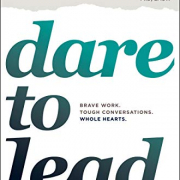
Dare to Lead
Brave Work. Tough Conversations. Whole Hearts.
By Brené Brown
Number-one New York Times best seller.
Brené Brown has taught us what it means to dare greatly, rise strong, and brave the wilderness. Now, based on new research conducted with leaders, change makers, and culture shifters, she’s showing us how to put those ideas into practice so we can step up and lead.
Don’t miss the hour-long Netflix special Brené Brown: The Call to Courage!
Named one of the best books of the year by Bloomberg.
Leadership is not about titles, status, and wielding power. A leader is anyone who takes responsibility for recognizing the potential in people and ideas and has the courage to develop that potential.
When we dare to lead, we don’t pretend to have the right answers; we stay curious and ask the right questions. We don’t see power as finite and hoard it; we know that power becomes infinite when we share it with others. We don’t avoid difficult conversations and situations; we lean into vulnerability when it’s necessary to do good work.
But daring leadership in a culture that’s defined by scarcity, fear, and uncertainty requires skill-building around traits that are deeply and uniquely human. The irony is that we’re choosing not to invest in developing the hearts and minds of leaders at the exact same time as we’re scrambling to figure out what we have to offer that machines and AI can’t do better and faster. What can we do better? Empathy, connection, and courage, to start.
Brené Brown has spent the past two decades studying the emotions and experiences that give meaning to our lives, and the past seven years working with transformative leaders and teams spanning the globe. She found that leaders in organizations ranging from small entrepreneurial startups and family-owned businesses to nonprofits, civic organizations, and Fortune 50 companies all ask the same question:
How do you cultivate braver, more daring leaders, and how do you embed the value of courage in your culture?
In this new audiobook, Brown uses research, stories, and examples to answer these questions in the no-BS style that millions have come to expect and love. Brown writes, “One of the most important findings of my career is that daring leadership is a collection of four skill sets that are 100 percent teachable, observable, and measurable. It’s learning and unlearning that requires brave work, tough conversations, and showing up with your whole heart. Easy? No. Because choosing courage over comfort is not always our default. Worth it? Always. We want to be brave with our lives and our work. It’s why we’re here.”
Whether you’ve read Daring Greatly and Rising Strong or you’re new to Brené Brown’s work, this audiobook is for anyone who wants to step up and into brave leadership.
Recommendation
Click here to add your own text
Takeaways
Click here to add your own text
Summary
Click here to add your own text
About the Author
Click here to add your own text
What To Do When There’s Too Much To Do: Reduce Tasks, Increase Results, and Save 90 a Minutes Day
Reduce Tasks, Increase Results, and Save 90 Minutes a Day
By Laura Stack
Are you tired of productivity consultants—or worse, your boss—pushing you to do more with less? You’re in luck. Laura Stack knows your to-do list is already packed to capacity, so she shows you how to accomplish more by doing less. Yes, you read that right. Stack’s innovative time-management system lets you work less and achieve more.
Following Stack’s step-by-step Productivity Workflow Formula, you’ll organize your life around the tasks that really matter and—this is crucial—let go of those that don’t. Dozens of practical strategies will help you reduce your commitments, distractions, interruptions, and inefficiencies. You’ll shrink your to-do list and save time—around ninety minutes a day—while skyrocketing your results and maintaining your sanity.
Recommendation
Productivity expert Laura Stack offers simple, innovative ways to help you enjoy a more productive and meaningful workday. She shows you how to prioritize your workload and create realistic daily, weekly and yearly work schedules by decluttering your files and inbox, identifying what’s really important, streamlining your workload and making more effective decisions. Some of her suggestions pertaining to health and exercise are extremely helpful, but can be found in other advice manuals. Nevertheless, most of her organizational ideas are novel and worth implementing.
Takeaways
- To do less work – and higher-quality work – each day, follow the six-step “Productivity Workflow Formula”:
- First, “determine what to do.” Clean up your to-do list. Track only goal-related items.
- Separate tasks into what is due today and what you can do later.
- Second, “schedule time to do it.” Assign a realistic deadline to each task.
- Decline colleagues’ requests to do tasks that are not your responsibility.
- Third, “focus your attention.” Don’t gossip or surf the web. Exit meetings that run late. Don’t multitask – you’ll feel busy but be less productive.
- Jot down or voice-record ideas as you think of them to recall them more quickly.
- Fourth, “process new information.” Handle incoming messages, paperwork and other information immediately.
- Fifth, “close the loop.” Bring tasks to a conclusion and stay on top of your priorities.
- And sixth, “manage your capacity.” Take care of your health – eat well and exercise.
Summary
“The Case for Reduction”
More is not better. You can be successful even if you do less. Studies show that a “60-hour work week results, on average, in a 25% decrease in productivity.” To channel your energy more efficiently, use the six-step “Productivity Workflow Formula”:
1. “Determine What to Do”
Examine your to-do list. If it’s filled with tasks with assorted due dates, it’s probably long and overwhelming. If you’ve thrown in some items you couldn’t say no to doing, your list is probably downright frightening! To decide what stays on your list, estimate your “personal return on investment” – that is, the value you offer your company. Demonstrate that you’ve earned or saved your firm “at least three times your base salary” each year. If you can’t determine a financial value, find a way to show how your company would suffer from your absence. Evaluate each task you do based on your personal value:
- What tasks are most important? – List your 10 most important responsibilities. Does your list match your boss’s perception of your priorities and value? If the two accounts differ, you are not giving your organization your best efforts.
- What do you care about? – Retain and follow through on tasks that you must complete by the end of the workday to feel satisfied.
- Keep tasks that further your goals – “Cut, cut and cut” all items that don’t move you forward. Delegate tasks that don’t benefit you.
“Do less, not more, so you can do better, more focused work.”
Drop time-wasters from your day, such as repeated email checks and Internet visits. Gossip is time consuming and poisons the work environment. Make a “not-to-do list” of tasks you “simply refuse to do.” Prioritize desired items on a “high-impact task list” of today’s work or a “master list” of future work.
2. “Schedule Time to Do It”
Assign a realistic deadline to each task. Do most of your work when you feel focused and energized. Exit meetings that run late or veer off topic. Don’t accept work that should go to someone else; simply refuse such chores in a positive way. Say, “I’d love to but just can’t take that on right now!” or “But please keep me in mind for any further projects.” Be gracious but, when you decline a request, never explain why. Don’t schedule unnecessary meetings. Estimate the hourly salary of everyone who’s coming to a meeting to see if its cost makes financial sense.
3. “Focus Your Attention”
Workers typically waste 28% of their day handling interruptions.
- Discourage your colleagues from chatting near your desk.
- Play calming music to drown out distracting noise.
- Limit discussions with co-workers.
- Excuse yourself from office politics.
- Come to work on time and take shorter lunch breaks.
- Don’t multitask.
“The true source of productivity isn’t nonstop ouput; it’s a refreshed and energized mind.”
You waste several seconds each time you move from one chore to another. Those seconds quickly add up to hours of lost time. To avoid procrastination, break big tasks down into smaller jobs and set deadlines for each one. Jot down or voice-record your ideas so you don’t waste time trying to remember them later. Sort ideas into “memory lists” by topics, such as “article ideas, blog topics, birthdays” or “books to read.”
4. “Process New Information”
Reduce the amount of daily data you receive. If you can, have staffers sort your email and delete time-wasters. Unsubscribe from nonproductive mailing lists. If it takes more than 60 seconds to locate an item, consider using the “6-D Information Management System”:
- “Discard” – Don’t keep paper or emails because you think you’ll need them later. Heed the “start-to-finish rule”: scan the data, make any required decisions and act.
- “Delegate” – Reassign any item that does not help you advance toward your goals.
- “Do” – Act on the item now.
- “Date” – If you need to put off a task, assign it a realistic due date.
- “Drawer” – File important items that don’t require immediate action.
- “Deter” – Stop unwanted messages from coming again.
“Reducing your commitment load to the bare minimum, so you can most effectively use your time at work…makes you more valuable to the organization.”
Process inbox items immediately. Don’t use your inbox as a to-do list or filing system. Instead, make a “tickler file” – a chronological file to check at regular intervals for date-specific reminders, notes and messages. A tickler file is a “rotating annual calendar for paper,” though you can set it up on your computer as well.
5. “Close the Loop”
Be on top of your tasks. Focus on your goals, make your deadlines and transmit information clearly. The president of an automotive parts manufacturing corporation once contacted his finance department to request a cost quote for a talk he planned to give. He wanted a ballpark value, a number that would take only a few minutes to compute. Unfortunately, the staff member misinterpreted the assignment and thought the president needed an accurate quote. He spent hours putting an estimate together. Their misunderstanding wasted time and money. When you speak to your team or to co-workers, be clear and concise.
“If one of your tasks properly belongs to someone else, hand it back to them – even if they don’t want it. Your work must come first, so stop being so darn nice.”
Micromanagers waste your time. You can’t increase your efficiency if your boss hangs around repeating directions and demanding frequent updates throughout the day. If you can’t move to the purview of a new supervisor or change your boss’s behavior, then confront the boss or consider changing jobs. If all else fails, then do everything a micromanager asks. It’s time consuming, but complying may be the most functional solution. You might try “micromanaging the micromanager.” Bombard your boss with so many details that they finds the interactions unbearable. Anticipate your boss’s needs and provide information before they ask for it. Regardless of which option you choose, protect yourself: Document your encounters with a controlling boss and insist on receiving all directives in writing. These steps will help you defend yourself if a manager tries to blame you for any mishap.
“In recent surveys, workers have admitted to wasting an average of two hours per workday, and approximately an hour of it is online.”
Don’t tolerate time-wasting processes. For example, author Laura Stack had a problem with her smartphone, which would display her email only when the battery was fully charged. She had to charge her phone every night without fail. If she forgot, which inevitably occurred, she would miss important messages the following day. She knew she needed a new phone but wasn’t due an upgrade for a year. If she bought one immediately, she would have to pay top dollar. After missing several crucial messages, Laura decided to bite the bullet and get a new phone. Even though she spent more, she became more efficient and rid her life of a time-wasting and worrisome issue.
6. “Manage Your Capacity”
Your health comes first. If you don’t take care of yourself, you won’t have the capacity to work efficiently. When you overwork, your productivity wanes. Set realistic expectations. You’ll perform at your best when you are rested. Take a morning and an afternoon break. Eat often. You might feel light-headed if you go longer than six hours without food. Skipping meals is unhealthy and can cause your blood sugar level to drop. When it’s lunchtime, leave the office. Don’t eat at your desk. Also, savor your big breaks – “weekends, holidays and vacations.” It isn’t enough to sit in front of the television and think about work. To adequately recharge your batteries, leave work behind. Do something you love to do.
“If you don’t already, learn to love what you do – or change careers. You can’t maximize your productivity if you don’t enjoy your work.”
Don’t underestimate the regenerative power of sleep. When you lack sleep, you are “basically slamming a wrecking ball through your energy levels.” Sleep resets your natural circadian rhythms on a daily basis. The brain’s hypothalamus, which regulates these rhythms, is in charge of your physical status, “energy, activity and how you feel.” Researchers who studied 500 million Twitter messages found that, regardless of where people live, the messages they post during the mornings and evenings tend to be more upbeat; those they submit during the afternoon or at night are far less positive. Researchers say that poor sleep habits cause these emotional changes.
“You aren’t a robot. Long hours lead to physical and mental fatigue, which results in slower work, more mistakes and wasted time.”
If you adhere to Ben Franklin’s wise words, “Early to bed, early to rise,” you’ll stay on the right track. An early bedtime helps you “supercharge your adrenal glands,” which produce adrenaline, cortisol and DHEA. Cortisol wakes you up, and DHEA calms you down. The more sleep you get, the greater the amount of DHEA your body produces. If you stay up late, rest by sleeping late the following morning. To sleep better, follow these guidelines:
- “Control the thermostat” – Keep your bedroom between 68˚F and 72˚F [20˚C-22˚C].
- “Shut out the snoring” – If your bedmate snores, get earplugs.
- “Take a power nap” – According to a study in Nature Neuroscience, a daytime nap of an hour or less can improve your performance afterward.
- “Keep your bedroom sleep-related” – Do your work, texting and computer tasks in another part of your home – never in your bed.
“Never confuse activity with productivity.”
Eat healthy. Weighing too much will cut your energy. To eat less so you work more effectively throughout your day, follow these tips:
- “Put only two things at a time on your plate” – According to experts at Cornell University, individuals who only took “two items at a time” consumed 21% less food.
- “Cut 500 calories per day out of your diet” – It takes 20 minutes for your brain to get the “‘I’m stuffed’ signal.” Slow down as you eat or build a break into your meal. For example, go to one eatery for your main course and another restaurant for dessert. Chances are, your appetite will drop by the time you get to the next location, and you will order a smaller treat.
- “Eat a salad before your meal” – Experts at Penn State say folks who eat salad first lower their caloric intake by 12%.
- “Change your dinnerware to reflect correct portions” – Eat your meals on a smaller plate. You will take smaller portions and think twice before getting more.
- “Automatically ask for a box” – When you eat out, ask your waiter to pack up a portion of your food as soon as it comes to the table. Don’t wait until the end of the meal. If you want to split your meal with a friend, have the waiter divide the portions onto separate plates before bringing the meal to your table.
- “Always eat your morning meal” – Don’t forget to eat breakfast. Skipping meals interrupts your body’s “steady flow of glucose.”
“Stop multitasking. It just dilutes your attention and fools you into thinking you’re productive, when you’re really just busy.”
Be active. If you move less, you will have less energy.
- A 10-minute energetic walk revs up your engine and keeps your energy up for a couple of hours.
- To pack more physical activity into your day, park further away from work and walk.
- Take a stroll at lunchtime.
- Don’t message co-workers; walk to their offices.
- Walk back and forth when using a speakerphone; pace as you talk on your cellphone.
- Take the stairs instead of the elevator.
- Invite your family to walk with you after supper.
- Watch your favorite television program while you use a treadmill or stationary bicycle.
- Use the copier or bathroom on another floor of your office building and take the stairs.
- If you take a subway to work, trot up and down every staircase – never walk.
- Don’t use the moving walkway at the airport.
“At the end of every workday, take a moment to ask yourself: ‘Was I productive today, or did I just stay busy?’”
To bring more joy to your life, take these measures:
- “Make empowered choices” – Eeyore, the mopey donkey in the Winnie the Pooh series, always saw the dark side of life. His glass was permanently half empty. On the other hand, Tigger, another Winnie the Pooh character, bounced around with zest for life. Be like Tigger. Stop thinking that bad things happen only to you. The choices you make can change the direction of your life. Hang around with folks who have positive attitudes.
- “Spend more time with your family” – When you spend time with those you love, you recharge your energy level. This quality time is a “balm for your soul.”
- “Do something nice for someone” – Benefit from the “helper’s high.” When you act kindly toward someone else, your body circulates mood-lifting endorphins.
About the Author
Laura Stack, head of The Productivity Pro, is a keynote speaker and author of Leave the Office Earlier, Find More Time, and three other books.
The Hard Thing About Hard Things
Building a Business When There Are No Easy Answers
By Ben Horowitz
Ben Horowitz, cofounder of Andreessen Horowitz and one of Silicon Valley’s most respected and experienced entrepreneurs, offers essential advice on building and running a startup—practical wisdom for managing the toughest problems business school doesn’t cover, based on his popular ben’s blog.
While many people talk about how great it is to start a business, very few are honest about how difficult it is to run one. Ben Horowitz analyzes the problems that confront leaders every day, sharing the insights he’s gained developing, managing, selling, buying, investing in, and supervising technology companies. A lifelong rap fanatic, he amplifies business lessons with lyrics from his favorite songs, telling it straight about everything from firing friends to poaching competitors, cultivating and sustaining a CEO mentality to knowing the right time to cash in.
Filled with his trademark humor and straight talk, The Hard Thing About Hard Things is invaluable for veteran entrepreneurs as well as those aspiring to their own new ventures, drawing from Horowitz’s personal and often humbling experiences.
Recommendation
Ben Horowitz guided Loudcloud through life-or-death struggles before selling it to Hewlett-Packard for $1.65 billion. He argues that no formula can promise entrepreneurial success. Horowitz is a first-rate storyteller and a refreshingly irreverent teacher who uses allusions ranging from Jay Z to Clint Eastwood to Dr. Seuss. Any business leader will find worthy guidance in this exhortation to persist through “the Struggle.” getAbstract recommends Horowitz’s part autobiography, part tip sheet to anyone building a company.
Takeaways
- You may start a company with high hopes, but eventually – like Ben Horowitz at Loudcloud – you’ll experience “the Struggle.”
- Horowitz didn’t struggle alone; he enlisted the best minds in order to address his company’s problems.
- His advice: Put your people first, then your products, and then your profits.
- People with “the right kind of ambition” care about the team’s success.
- Don’t convey only optimism; be honest about threats to the company.
- Managers should deliver news of firings to their people with compassion; never outsource this task to HR.
- Minimize politics about pay, promotion and territory with well-designed processes.
- Company culture drives behavior that moves the firm toward its goals.
- Build your knowledge daily through small interactions with customers and employees.
- The founders of successful start-ups like Loudcloud share one quality: They don’t quit.
Summary
Loudcloud, Opsware and “the Struggle”
Every start-up encounters the Struggle. Your product turns out to have costly flaws. Your cash runs low, and your venture capitalist tells you fund raising seems unlikely. A loyal customer leaves you. A valuable employee walks away.
There’s no way around the Struggle and no formula for fixing your problems. Your company might not make it. Entrepreneurs who make it share one characteristic: They don’t quit.
“Hard things are hard because there are no easy answers or recipes…They are hard because you don’t know the answer and you cannot ask for help without showing weakness.”
Netscape veterans Ben Horowitz and Marc Andreessen founded Loudcloud, a cloud services provider, in 1999 and soon hit a rocky road. Seven months after they launched Loudcloud – its name marked the first time “cloud” had been used popularly to describe a computing environment – Horowitz and Andreessen had booked $10 million in contracts. They were hiring so fast – 30 employees a month – that workers had to sit in the hallways.
“There are no shortcuts to knowledge, especially knowledge gained from personal experience.”
Then came the dot-com crash of 2000; the NASDAQ fell by 10%. Loudcloud needed capital but faced long odds. After Horowitz pitched one set of prospective backers, a colleague told him the skeptical investors “thought you were smoking crack.” Loudcloud raised a total of $120 million, but with so many start-ups collapsing, the company’s bookings fell far short of its forecasts.
“The Struggle is when you wonder why you started the company in the first place. The Struggle is when people ask you why you don’t quit and you don’t know the answer.”
Horowitz and his board, seeing few prospects for investment from the private market, decided to take Loudcloud public. It was a risky move, with just six weeks of cash remaining in the worst possible environment for a technology IPO. The company took a pounding in the press: BusinessWeek called it “the IPO from hell.” The offering debuted at $6 a share and the company raised $162.5 million, but nobody celebrated. As the dot-com downturn worsened, the company laid off 15% of its workforce and its stock fell to $2.
“Every great entrepreneur from Steve Jobs to Mark Zuckerberg went through the Struggle…so you are not alone. But that does not mean that you will make it.”
Horowitz engineered a deal to sell the cloud business to EDS for $63.5 million and remake Loudcloud as a software company built around its intellectual property, Opsware. Investors balked: Its share price plummeted to 35 cents before slowly recovering.
As Horowitz built the software business, he again responded to crises with bold moves. When a key customer threatened to defect, Opsware bought a North Carolina company that provided the client the software he wanted. When a major new competitor began pummeling Opsware in the marketplace, Horowitz launched the Darwin Project, during which staffers worked 14 hours per day, seven days per week, for six months.
“Managers must lay off their own people. They cannot pass the task to HR…if you hired me and I busted my ass working for you, I expect you to have the courage to lay me off yourself.”
After Herculean labors, Opsware’s software business “approached a $150 million revenue run rate,” and its stock sometimes traded at a market capitalization of more than $800 million. Horowitz decided to entertain offers for Opsware, but only at $14 or more a share. Eventually, Hewlett-Packard agreed to acquire the company for $14.25 a share or $1.65 billion in cash.
“The first thing that any successful CEO must do is get really great people to work for her.”
Selling the company was wrenching, but Horowitz came to regard it as the smartest move of his career. “We’d built something from nothing, saw it go back to nothing again and then rebuilt it into a $1.65 billion franchise.”
Getting Through the Hard Times
As he guided Loudcloud and then Opsware through difficult days, Horowitz drew strength from the lessons he learned:
- “Don’t put it all on your shoulders” – As CEO, you can’t share everything, but remember that you don’t have to bear every burden alone. Muster as many brains as possible to attack a problem.
- Remember “there is always a move” – Running a company is like playing chess: When you think you’re out of moves, think again. You always have a move.
- “Play long enough and you might get lucky” – The technology environment changes so fast that you might find the elusive answer another day, if you can just hang on.
- “Tell it like it is” – At first, Horowitz thought his role as CEO required him to set a positive tone and avoid letting the workforce know the gravity of the company’s problems. Instead of motivating the troops, that approach compromised his credibility. As CEO, you’re better off sharing information about your firm’s problems with those who can harness their energy toward solving them.
Dealing with Layoffs and Firings
Horowitz’s company went through three separate layoffs involving a combined 400 employees. Few start-ups recover from consecutive layoffs of that magnitude, because they break the trust of those left behind. Horowitz believed Loudcloud was able to keep its best employees after multiple layoffs because “we laid people off the right way.”
“Even with all the advice and hindsight in the world, hard things will continue to be hard things.”
If you must cut staff, begin the layoffs as soon as possible after deciding to do so, because word about dismissals leaking out may cause further and even greater problems. Have managers deliver the news to their own people; never outsource it to human resources. Managers should explain that the layoffs stem from a company failure, not the employees’ personal failures. They should make clear the decisions are nonnegotiable and should explain severance packages fully.
“Build a culture that rewards – not punishes – people for getting problems into the open where they can be solved.”
When you fire an executive, the first step is figuring out why you hired the wrong person in the first place, or you’ll be firing another executive soon. Maybe you hired “for lack of weakness rather than for strengths.” Or maybe you didn’t define the position correctly at the outset.
The Three P’s
Jim Barksdale, Horowitz’s old boss at Netscape, once said, “We take care of the people, the product and the profits – in that order.” If people like working for your company and you look out for them, they will reward you with loyalty and hard work. If you don’t take care of your people, the product and the profits won’t matter.
“The most important thing I learned as an entrepreneur was to focus on what I needed to get right and stop worrying about all the things that I did wrong or might do wrong.”
Taking care of people means training them well and having managers regularly meet one-on-one with their direct reports. It also means avoiding “management debt.” That accumulates when you make a short-term management move that has costly, long-term consequences. Examples would be overcompensating an employee who has a competing job offer or putting two people in the same job because you want to keep both in the company. The best CEOs avoid acquiring management debt. Faced with cutting a popular project that’s not in the company’s long-term plans or keeping it for morale purposes, they’ll cut it every time. They make hard decisions that “ruffle the feathers.”
Running Your Growing Company
If you’re fortunate enough to see your company reach 1,000 employees, it will be a profoundly different organization than when you employed 10 people. You must cope with new challenges:
- Minimizing company politics – Political behavior can seep into a variety of corporate activities, including performance reviews, pay, organizational structure, territory and promotions. Curtail political behavior by designing strict processes and following them relentlessly. Be sure everyone understands your promotion process. When you decide to reorganize, do it quickly, without leaving time for lobbying.
- Hiring employees with the “right kind of ambition” – Go for candidates who see through a “team” lens and whose ambition focuses on being part of a winning company.
- Promoting a strong culture – Some start-ups boast about letting employees bring pets to work or offering yoga classes. Those are perks, not culture. True culture drives behavior. Consider Amazon: To keep costs down, Jeff Bezos declared that the company would make all its desks out of cheap doors from Home Depot.
What Makes a Leader?
A CEO should have some combination of the following traits:
- “The ability to articulate the vision” – Steve Jobs persuaded Apple employees to believe in his vision even when the company was near bankruptcy.
- “The right kind of ambition” – A leader creates an atmosphere of shared ambition and trust, a quality Bill Campbell exemplified at Intuit and other organizations.
- “The ability to achieve the vision” – This quality helped Andy Grove win the trust of Intel employees as he led them through a brilliant gambit: moving from the memory business to the microprocessor business.
“Every really good, really experienced CEO…tend[s] to opt for the hard answer to organizational issues…They’ll ruffle the feathers.”
As CEO, work on all three qualities, even though you might be stronger in one or two. Each quality enhances the others. If you can persuasively articulate a vision, for example, employees will trust you and be patient with you as you lead them toward it.
Ask three questions to judge how well a CEO performs: 1) “Does the CEO know what to do?” 2) “Can the CEO get the company to do what she knows?” and 3) “Did the CEO achieve the results against an appropriate set of objectives?”
“Peacetime CEO focuses on the big picture…Wartime CEO cares about a speck of dust on a gnat’s ass if it interferes with the prime directive.”
Knowing what to do involves using strategy and sharp decision making. Acting strategically takes courage, because you’ll never have enough time to gather all the information you really need. That’s why you must keep acquiring knowledge, day by day, from many small interactions with customers and employees. When you must make a decision, you’ll be better prepared to answer questions like: How might our competitors respond? What’s the financial risk? How will employees take this?
“Focus on where you are going rather than on what you hope to avoid.”
To get the company to “do what you know,” build a workplace where employees can get things done. “The employees must be motivated, communication must be strong, the amount of common knowledge must be vast and the context must be clear.” The scale of your objectives should align with the scale of your company’s opportunities.
“If you don’t want to be great, then you should never have started a company.”
During the toughest times, take care of your own psychological state. “Techniques to calm your nerves” include recruiting trusted confidantes, putting your thoughts on paper, and focusing on your destination rather than on what might go wrong.
When to Sell Your Company
One of your toughest decisions may be when to sell. Consider two questions: Are you very early in a potentially large market? Do you stand a good chance of reaching number one in that market? If the answer to either question is no, you should consider selling. When Google was young, the company received multiple purchase offers for more than $1 billion. But Google did not sell. Its answer to both questions would have been yes. Google was very early in a market that would be larger than all the markets the would-be buyers owned. And Google had built a high-quality product that would be number one.
When Horowitz first fielded inquiries about selling Opsware, the company had fewer than 50 customers. Horowitz believed Opsware had at least 10,000 potential customers and could reach number one. By the time Opsware had attained several hundred customers, it became clear that a company called BMC was going to acquire either Opsware or a competitor, BladeLogic. In order to be number one, Horowitz concluded, Opsware would have to beat BMC and BladeLogic together. A new technology, virtualization, was transforming the market, which would push the company into a costly R&D race. In the end, Horowitz decided to sell.
Andreessen Horowitz
After selling Opsware to Hewlett-Packard, Horowitz joined with Andreessen to form a venture capital firm that would aid technology entrepreneurs. Besides investing in companies, their firm, Andreessen Horowitz, advises CEOs on the skills that company founders sometimes lack – managing executives, designing an organization and running a sales force. The most important lesson Horowitz tries to convey to entrepreneurs is that running a company is hard, a tough process with no easy answers. “The only thing that prepares you to run a company is running a company.” The solutions lie in the executive’s instinct, in the confidence that comes from experience and in the performance of this vital duty: “Embrace the struggle.”
About the Author
Ben Horowitz is a co-founder and general partner of Silicon Valley venture capital firm Andreessen Horowitz.
The Five Dysfunctions of a Team
A Leadership Fable
By Patrick Lencioni
In The Five Dysfunctions of a Team Patrick Lencioni once again offers a leadership fable that is as enthralling and instructive as his first two best-selling books, The Five Temptations of a CEO and The Four Obsessions of an Extraordinary Executive. This time, he turns his keen intellect and storytelling power to the fascinating, complex world of teams.
Kathryn Petersen, Decision Tech’s CEO, faces the ultimate leadership crisis: Uniting a team in such disarray that it threatens to bring down the entire company. Will she succeed? Will she be fired? Will the company fail? Lencioni’s utterly gripping tale serves as a timeless reminder that leadership requires as much courage as it does insight.
Throughout the story, Lencioni reveals the five dysfunctions which go to the very heart of why teams even the best ones-often struggle. He outlines a powerful model and actionable steps that can be used to overcome these common hurdles and build a cohesive, effective team. Just as with his other books, Lencioni has written a compelling fable with a powerful yet deceptively simple message for all those who strive to be exceptional team leaders.
Recommendation
Patrick Lencioni offers a fable about an executive wrestling to take hold of a company and create a smoothly functioning executive team. The novel is interesting, and you can read through it easily, getting to know the characters and participating in their business decisions. However, if you just want to learn about better teamwork quickly and leave, skim to the final chapters where the author outlines a detailed model for diagnosing the five dysfunctions of a team and provides exercises and techniques to ameliorate those dysfunctions. The advice is complete and concrete.
Takeaways
- Everyone talks about teamwork but hardly anyone does it effectively.
- Five pitfalls prevent most companies or organizations from achieving teamwork.
- The first pitfall is a lack of trust.
- The second pitfall is a fear of confrontation.
- The third pitfall is an absence of commitment.
- The fourth pitfall is absence of accountability.
- The fifth pitfall is a failure to focus on goals.
- Building trust, courage, commitment, accountability and a proper focus does take time and effort.
- Written goals and standards and regular performance reviews can help.
- Leadership is indispensable.
Summary
The Story, in Brief
The new CEO of Decision Tech, Kathryn Peterson, is trying to cope with an executive team in chaos. She must muster her personal strength to diagnose what has gone wrong with her top staff members and try to fix it before the bottom line bottoms out. She learns some valuable lessons on the way to creating a functional team. In fact, team building is conceptually simple, uncluttered and straightforward. Two things are critically true about teams: most organizations fail to achieve teamwork and those which try run into five common pitfalls. Those five pitfalls, labeled “the five dysfunctions of a team,” are:
- Lack of trust — When they don’t trust each other, team members are afraid to communicate honestly and openly. They hide their real thoughts and feelings. They are unwilling to take responsibility for fear of making mistakes. If team members cannot communicate honestly, they cannot possibly build a platform of trust.
- Fear of confrontation — When they don’t trust each other, teammates are reluctant to confront each other. Because they hide their feelings and do not communicate, they cannot engage in constructive conflict and debate. Discussion is muted, indirect and vapid. Ideas don’t get worked through. Progress stalls and the team is ineffective.
- Absence of commitment — When team members are not committed to the team and the project, they just go through the motions of attending meetings and appearing to follow up. They do not seize opportunities. Progress stalls.
- Absence of accountability — When team members don’t trust each other, won’t discuss things honestly and aren’t committed, they don’t hold each other to a standard of accountability. Thus, efforts lack focus, energy dissipates and everything unaccountably, but predictably, falls apart.
- Failure to focus on goals — Members of a dysfunctional team pursue personal or departmental agendas instead of the team’s goal. They may be out to score ego points or undercut a rival, but whatever their object is, it isn’t what the team needs to do.
“Organizations fail to achieve team – work because they unknowingly fall prey to five natural but dangerous pitfalls.”
In contrast, the members of successful teams trust each other. They bat ideas around, debating and discussing without reservation. They make decisions and resolve to act according to plans. They hold each other to account, thereby showing that each individual is an important part of the team and does work that is valuable to the team. And, members of successful teams keep their eyes on the prize: meeting the team’s goal.
Dysfunction 1: Lack of Trust
Trust is a hard word because it can mean so many different things. In the context of a team, trust means confidence that each member has good intentions and a sense you do not need to be overly cautious or apprehensive in the company of your teammates. In this context, trust does not mean confidence in one’s ability to predict how teammates will act in a given situation or circumstance. Trust is not confidence in a teammate’s performance. Trust is confidence that teammates will not slip a knife in your back as soon as you turn it.
“Teamwork deteriorates if even a single dysfunction is allowed to flourish.”
This kind of trust allows teammates to be honest about their deficiencies and shortcomings, to admit to mistakes and errors, and to ask for help when needed. Because they trust each other, teammates can put all their attention on the task at hand, without worrying about what political game or Machiavellian maneuver might be unfolding just out of sight.
“Remember teamwork begins by building trust.”
Achieving this level of trust is difficult in a business context because business teaches people to compete and to project a bold, invulnerable front.
Use these exercises to help the people on your team reach this stage of trust:
- Personal history — Team members take turns answering a few basic and unthreatening questions about their lives and experiences, such as: How many brothers and sisters do you have? Where did you grow up? What was your first job? What is your most memorable experience? This exercise allows team members to get to know each other as human beings with personal lives.
- Team effectiveness — Team members point out the most important talent, skill or aptitude that each member brings to the work of the team, and the one thing that each individual must improve to help the team even more.
- Personality profile — Some tests, such as the Myers-Briggs Type Indicator, profile personality and behavior. Insight gained from using these tests can be quite helpful to the team.
- 360-degree evaluations — These are risky and difficult to use where trust is low in a team because they require people to pass judgment on each other and offer useful criticism.
- Rope courses and such — These can be a useless waste of time, but if they are properly layered into team development, they may contribute to cohesion and trust.
Dysfunction 2: Fear of Confrontation
Confrontations and conflict are necessary goods, not necessary evils. In confrontation, people struggle together toward truth, not only in business but also in marriage, friendship and politics. But good and bad confrontations are very different. Good confrontations are honest, open and goal-directed. Bad confrontations are underhanded contests for ego or political advantage. Even in a constructive conflict, people may lose their tempers, but if they step over the line and say something hurtful or offensive, they are quick to make amends. To make confrontations more useful and more frequent, get everyone to accept the idea that confrontation and conflict are, in fact, necessary goods.
“Teammates must get comfortable being vulnerable with each other.”
To do that you should consider:
- Digging for disagreements — Team members agree to look for areas of disagreement, point them out and force each other to work through them.
- Give permission to engage — Team members who are unaccustomed to conflict may shy from it. Recognize when a conflict is beginning. Interrupt and remind the conflicting parties that what they are doing is good, useful and necessary.
- Tests — The Thomas-Kilmann Conflict Mode Instrument may be a useful test to help team members make more informed decisions about conflicts.
Dysfunction 3: Absence of Commitment
Teams work effectively when every member clearly understands, endorses and commits to the goals. Without commitment, efforts dissipate. The team’s work is not teamwork. Members may focus elsewhere.
“Commitment is a function of two things: clarity and buy-in.”
The following techniques and tools can help build commitment:
- Decision by consensus — Consensus decision-making involves everyone. Naturally, if people disagree about an action or direction, some may be less than elated with the eventual decision. But a consensus decision allows everyone to be heard and demands that everyone endorse and commit to the final decision. The leader should not put forth a solution and demand assent. Instead, while recognizing areas of disagreement, team members should work out a solution to which everyone can agree.
- Reliability — Understanding that having “no decision” is the worst possible outcome, team members rely on the decision, whatever it is, as a better alternative. A clear, certain and reliable decision beats procrastination or deferral, so members commit.
- Wrap-up — Use a short wrap-up at the end of each meeting to summarize each decision or resolution so that members can understand and communicate to others. Often, the wrap-up reveals a disagreement or a difference in understanding about what the team has agreed to do. Addressing those discrepancies helps build commitment.
- Set deadlines — Establishing a certain date for task completion is one way of making sure that people commit (especially if the team has a spirit of accountability).
- Scenario analysis — Members discuss various scenarios as they try to solve a problem. Seeing the worst possible scenario can help them commit to something better.
- Commitment in small things — Making and committing to decisions when the stakes are low helps build the commitment muscle to attack bigger, weightier issues.
Dysfunction 4: Absence of Accountability
When team members are uncomfortable holding each other to commitments and pointing out problems or deficiencies, the team cannot progress. A team member may be unaware of a problem, and may need some feedback. Properly directed and expressed, peer pressure is a source of support and encouragement.
“One of the best tools for ensuring commitment is the use of clear deadlines for when decisions will be made.”
To build accountability you should do the following for your team:
- Make goals and responsibilities clear — Leave no doubt about what the team is trying to achieve and who needs to do what tasks to achieve it.
- Do regular check-ups — Progress reviews and reports help motivate performance and establish a venue where team members can hold each other accountable.
- Offer team-based rewards — Build cohesion and common purpose by basing rewards on team achievements rather than individual performance.
Dysfunction 5: Failure to Focus on Goals
When members don’t pursue the team’s agenda or when they focus on personal objectives instead of the team’s objective, the team loses. To improve performance, have the members publicly commit to achieving the team’s objectives. To help them focus on the team’s goals, make results public and tie any rewards to those results. Pay a bonus and reward team members well when they achieve their goals, but do not reward them if the goals aren’t met.
Diagnostic Questionnaire
Use this questionnaire to check your team’s health. Have each member grade each statement. If the answer is, “as a general rule,” give three points, “occasionally,” two points and “infrequently,” one point.
- Team members talk about ideas without abandon or reservation.
- Team members point out each other’s shortcomings or problems.
- Team members understand each person’s task and know how it adds to the team’s work.
- Team members sincerely say they are sorry when they offend each other or inadvertently undercut the team’s work.
- Team members give things up to forward the goals of the team, even power, personnel, money or perks.
- Team members freely admit when they have made an error or have a weak skill.
- Team meetings are interesting, not dull.
- After each meeting, team members are sure that they’ve reached agreement, even after debate, and that everyone has signed on to the mission.
- If the team does not attain its objectives, morale suffers.
- Team meetings tackle critical issues, even if they are difficult to discuss.
- Team members worry about disappointing their teammates.
- Team members are aware of each other’s home lives and talk about them easily.
- Team members finish discussions with firm decisions and actionable tasks to perform.
- Team members question and argue with each other to determine tactics and blueprints.
- Team members freely praise each other, but demur about claiming individual credit.
“The enemy of accountability is ambiguity.”
To determine if a certain dysfunction is a problem for your team, score each person’s exam by adding up the answers to the set of questions for each area.
- For lack of trust, add questions number 4, 6 and 12.
- For fear of confrontation, add 1, 7 and 10.
- For absence of commitment, add 3, 8 and 13.
- For absence of accountability, add 2, 11 and 14.
- For failure to focus on goals, add the answers to 5, 9 and 15.
“Sometimes strong leaders naturally create an accountability vacuum within the team, leaving themselves as the only source of discipline.”
In each area, a score of 8 or 9 means your team does not have a problem with this dysfunction; a score of 6 or 7 suggests the possibility of a problem and a score of 3 to 5 is a blinking yellow light calling attention to this dysfunction.
About the Author
Patrick Lencioni is president of The Table Group, a San Francisco consultancy. He is the author of The Four Obsessions of an Extraordinary Executive and The Five Temptations of a CEO.
The One Minute Manager
The Quickest Way to Increase Your Own Prosperity
By Kenneth Blanchard
A revised edition of the timeless business classic—updated to help today’s readers succeed more quickly in a rapidly changing world.
For decades, The One Minute Manager® has helped millions achieve more successful professional and personal lives. While the principles it lays out are timeless, our world has changed drastically since the book’s publication. The exponential rise of technology, global flattening of markets, instant communication, and pressures on corporate workforces to do more with less—including resources, funding, and staff—have all revolutionized the world in which we live and work.
Now, Ken Blanchard and Spencer Johnson have updated The One Minute Manger to introduce the book’s powerful, important lessons to a new generation. In their concise, easy-to-read story, they teach readers three very practical secrets about leading others—and explain why these techniques continue to work so well.
As compelling today as it was thirty years ago, this classic parable of a young man looking for an effective manager is more relevant and useful than ever.
Review
This little book from the early 1980s was a phenomenon at the time. It sold 10 million-plus copies, inspiring updates and spinoffs like The One Minute Entrepreneur, and opening the door to countless other business parables. Prolific authors Kenneth Blanchard and Spencer Johnson – who co-wrote the best-seller Who Moved My Cheese? – keep the writing and structure purposeful. The story explores “One-Minute Management” principles with surprising charm. Blanchard and Johnson effectively use a parable to present their basic management advice. A bright young man who wants to become a manager in the future sets out to find an effective boss. After hunting high and low, he hears of a great manager who has a reputation for producing stellar results by working with his employees. He finally meets the manager, who shares his secrets. Blanchard and Johnson wrote this classic as a quick, easy-to-read story, using a novelistic framework as a dramatic way of highlighting their management ideas. This approach brings their description of commonsense business principles to life. Blanchard returned to the allegory form in 1998’s Gung Ho!, which he co-wrote with Sheldon Bowles. While some readers may want to get to the core of the lessons, which could be wrapped up in a few pages, the allegory tactic has proven very popular. getAbstract recommends this condensed, readable and accessible classic to everyone in business. It’s Management 101.
The Premise
A young man seeking effective managers meets “tough” bosses who emphasize results over people and “nice” supervisors who emphasize people over results.
He’s frustrated until he meets the actual “One Minute Manager,” who supports both “people and results.” The one-minute manager explains core ideas like, “People who feel good about themselves produce good results.”
The one-minute manager offers three management secrets to “help people reach their full potential.” He suggests using “One Minute Goal Setting” to boil goals down to one page (plus the applicable standards); “One Minute Praising” to give workers clear, brief compliments; and the “One Minute Reprimand” to tell workers quickly how they’ve erred while letting them know you value them as people and as employees. To help people reach their top performance, the mythical minute manager suggests, “catch them doing something right” and offer immediate praise. He tells his young protégé not to feel threatened when he encourages other people to reach their potential. The greater your employees’ successes, the higher you will climb in your company.
Blanchard and Johnson suggest praising your staff members as soon as they do something right. Make sure their colleagues know you praised them. When you praise people, look them directly in the eye and tell them exactly what they did right. Tell them how good you feel about their accomplishment. This helps employees become more aware when they do things right, so they will start praising themselves.
Setting and Meeting Goals
Goal-setting follows the 80/20 principle, which means that 80% of your desired results will come from only 20% of your goals. The authors say to prioritize the 20% of your goals that will bring the greatest returns. Select three to six goals, and communicate them to your employees. Ensure they understand that you consider these goals their main responsibilities and will hold them accountable. Once you set job responsibilities for your employees, clarify your expected “performance standards.” Honor those who reach them.
Spencer and Johnson urge encouraging your employees to identify and solve their own problems. If they need help, don’t focus on their attitudes or feelings. Help them analyze what’s happening in observable, measurable terms. If they can’t perceive and explain the problem, they’re just complaining. The authors assert that a real problem exists only when there is a difference between what an employee wants to happen and what is happening. Your employees, they say, should be able to create different solutions and devise possible outcomes to determine the best action.
Managers who set clear goals and guide their people by praising and reprimanding as per the three secrets must master honest communication, respect their workers, and commit to expending the time and energy to watch new staffers closely for significant periods of time. This advice marks where The One Minute Manager’s real-world problems begin.
Pat Homilies
Six staffers report to the book’s one-minute manager, who apparently only supervises and counsels. The book never addresses strategy, planning, corporate organization or company policies. Blanchard and Johnson indulge in disingenuous management-speak and use pat homilies that would cause modern workers to roll their eyes like laundry dryers, for example, “Nobody ever really works for anybody else” and “I don’t make decisions for other people.” This can’t be true even in the universe of the book’s fictitious firm. Someone has executive and veto power and makes decisions for other people. One-minute magic seems best designed for established businesses and fast action. Even 30 years ago, this wouldn’t work for a disrupted business, during periods of rapid technological change or in any industry where results take years to unfold.
Feedback
The advice that consistent, objective feedback shows your concern for your employees seems more durable. Correctly presented, feedback can boost employees’ dedication, commitment and performace. Improving your employees pays off financially. The most productive minute you can put in, Blanchard and Johnson explain, is the one you spend “investing” in your people. Feedback about results is “the number one motivator.” Receiving high-quality feedback enables people to adjust their behavior. For example, when someone is bowling, he or she needs to see the pins. As the pins fall or remain standing, a bowler understands instantly the results of his or her effort. That is instant feedback.
“NIHYSOB”
The authors caution against the common, unfair mistake of not telling people what you expect of them and then telling them they did something wrong when they didn’t do what you expected. This is the NIHYSOB (or gotcha) approach to employee management. The acronym means “Now I have you, you SOB!” Insecure or incompetent managers revel in this attitude because taking it always puts an employee on the defensive or in the wrong. NIHYSOB often rears its ugly head when mediocre or easily threatened managers conduct performance reviews. Few tactics irritate employees more or do a better job of spurring them to seek employment elsewhere.
Few moments in The One-Minute Manager date it quite as much as this sort of outdated slang and clumsy acronym. NIHYSOB best illustrates the difference between the era of the authors’ writing and today. But it is handy as a bona fide worst example. If you can read the NIHYSOB section and still recognize this book’s underlying worth and timeless message, then the book’s slightly dated style won’t put you off its better bits of advice.
Conditioning Behavior
The one-minute manager advises reviewing your goals and checking your achievements against those goals. When you think about your objectives, examine your performance and ask yourself if your behavior matches your goals. And now that you’ve checked yourself, check your staff. If an employee’s behavior doesn’t match your goals, apply the principles of conditioning to help the staff member align his or her behavior more closely. The process works like training pigeons. To train a pigeon to walk to a pellet machine in the far corner of a box, you draw a line near the entrance at the opposite corner. Each time the pigeon crosses the line, you reward it with a food pellet and draw new lines further from the entrance and closer to the pellet machine. Eventually the pigeon will run to the far corner to get the pellets. Reward people every time they come closer to their goals. Reward by reward, they will manifest the desired behavior or achieve the set goals.
About the Author
Kenneth Blanchard, PhD, is a writer, speaker, trainer and business consultant. His One Minute Manager sold more than 10 million copies and has been translated into more than 20 languages. He wrote Raving Fan and co-founded Blanchard Training and Development. Spencer Johnson, MD, originated the One Minute System. His bestsellers include The Precious Present and Yes or No: The Guide to Better Decisions. He also co-wrote the bestseller Who Moved My Cheese?
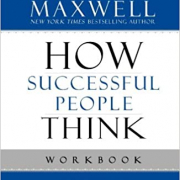
How Successful People Think
15 Ways to Get Ahead in Life
By John Maxwell
Gather successful people from all walks of life — what would they have in common? The way they think! Now you can think as they do and revolutionize your work and life!
A Wall Street Journal bestseller, How Successful People Think is the perfect, compact read for today’s fast-paced world. America’s leadership expert John C. Maxwell will teach you how to be more creative and when to question popular thinking. You’ll learn how to capture the big picture while focusing your thinking. You’ll find out how to tap into your creative potential, develop shared ideas, and derive lessons from the past to better understand the future. With these eleven keys to more effective thinking, you’ll clearly see the path to personal success.
The 11 keys to successful thinking include:
- Big-Picture Thinking – seeing the world beyond your own needs and how that leads to great ideas
- Focused Thinking – removing mental clutter and distractions to realize your full potential
- Creative Thinking – thinking in unique ways and making breakthroughs
- Shared Thinking – working with others to compound results
- Reflective Thinking – looking at the past to gain a better understanding of the future.
Recommendation
Well-regarded pastor and popular speaker John C. Maxwell shares a wealth of knowledge and experience in leadership and management in many of his books. But this time he turns toward personal development and offers 15 principles that can help you grow as a person so you can attain your full potential. Maxwell explains that change fuels “intentional personal growth,” but to achieve positive change, you must do one thing differently every day. “If you do the things you need to do when you need to do them, then someday you can do the things you want to do when you want to do them.” While probably too sweet for anyone with a drop of cynicism, Maxwell’s writing overflows with aphorisms and quotable gems. Give him an ear, and he may well help you change in a more positive direction.
Takeaways
- The measure of a life well lived is not how much you accomplish, but how much you help others.
- Your life’s purpose includes attaining your full potential.
- Reaching it requires “intentional personal growth.”
- You also need character, passion and a positive attitude.
- Personal growth doesn’t occur randomly or by accident. You must make it happen.
- To that end, develop your skills, leverage your strengths and enhance your spirituality.
- More than any other factor, associating with the right people can contribute to your personal growth. The wrong people can discourage you and inhibit your development.
- To grow as a person, you must have faith in yourself.
- Making individual progress is tough and takes time. It requires strong discipline.
- You will evolve as a person when you deal forthrightly with your problems.
Summary
What’s Your Potential?
When you embrace all your possibilities and extend yourself to achieve your full potential, you will become the completely realized person you were meant to be. “Intentional personal growth” is the road to attaining your potential, but it requires making a conscious decision to adopt the right attitude, passion and character to call upon your full strength and develop your special skills.
“Personal growth doesn’t just happen on its own. Once you’re done with your formal education, you must take complete ownership of the growth process.”
Pursuing personal growth will help you enhance your relationships, expand your horizons and become a more effective person. Start by creating a “growth journal” to track the way you develop. To reach your goals and your potential, apply 15 principles of intentional growth:
1. “Become an Intentional Learner”
Personal growth doesn’t occur automatically or by accident. You must plan the steps to achieving intentional growth. Take full ownership of your own progress. Don’t fall prey to common misperceptions, such as:
- “I don’t know how to grow” – Start by thinking about who you want to be. Write down steps you can take beginning today to help you become that person.
- This is “not the right time to begin” – Right now is always the best time to start a self-improvement program.
- “I’m afraid of making mistakes” – Everyone makes mistakes; learn from them.
- “I have to find the best way before I start” – To discover the best way to grow, first you must start on that path.
- “I don’t feel like doing it” – Growing is better than stagnating. Commit to spending at least a year on self-development.
- “Others are better than I am” – That’s fine; but you can learn from them.
- “I thought it would be easier” – Nothing good ever comes easy.
“Potential…looks forward with optimism. It is filled with hope. It promises success. It implies fulfillment. It hints at greatness.”
Move beyond these misconceptions and begin to grow. To start, ask yourself where you “want to go.” Answer that question, and then start your journey toward that destination.
2. “Develop Self-Awareness”
You can’t grow if you don’t know who you are, or can’t identify your strengths, weaknesses and passions. Begin a process of self-discovery. Think deeply about who you are and where you want to go. “Do you like what you’re doing now?” If not, risk trying something new. Ask yourself, “What would you like to do?” You can’t attain your destiny if you work at a job you detest. So decide what you want to do, examine why you want to do it and set out on that path.
3. “Believe in Yourself”
Many people never attain their full potential because they have poor self-esteem. They don’t believe they deserve to grow. Because they see themselves as flawed, people with low self-esteem cannot imagine ever being any better than they already are – which, according to them, isn’t much. If you feel like this, you’ll have to change your thinking to be able to grow.
“You cannot win if you do not begin! The people who get ahead…look for the circumstances they want, and, if they can’t find them, they make them.”
To improve your self-image, “guard your self-talk.” People constantly have conversations with themselves. Those with low self-image routinely criticize themselves. Don’t engage in negative self-conversations. Become a cheerleader for yourself. “Comparing yourself to others” is a fruitless exercise. Instead, “compare yourself to you.” “Celebrate small victories.” Remind yourself that each good, small step brings you “that much closer to success.” Always be positive with yourself. Be your own best friend.
4. “Set Aside Time to Reflect”
Personal growth requires stepping back, taking a pause and thinking carefully about your life. Find a place where you can stop and reflect, perhaps a secluded spot outdoors or a quiet room where no one will disturb you. Set aside 10 to 30 minutes each day to consider your life quietly and think about the kind of personal growth you want to achieve. Plan to spend regular periods of introspection one to two hours each week, a half-day several times a year, and a full day – or up to a week – annually. Think carefully about the areas where you most need to develop and grow.
5. “Embrace Discipline Daily”
Personal improvement requires time, hard work and consistency. Without discipline, you can’t grow or accomplish anything of value. It takes significant effort. Consider several facets of personal growth:
- “What” – Having a purpose is not enough. You must know “what you need to improve.”
- “How” – Deciding how to move ahead has four aspects: 1) Make sure your personality matches your motivation, 2) initially plan to “win small,” 3) demonstrate patience and 4) “value the process” by enjoying every minute of your growth journey.
- “Why” – Use your “why-power” to supplement your willpower.
- “When” – Right now. That’s the best answer.
6. “Seek Out a Positive Environment”
To establish a setting for intentional growth, seek “conducive surroundings.” Take a hard look at your current environment to see if it is going to help or hinder your personal-growth efforts. If negativity surrounds you, remove yourself from your current environment and seek a positive one.
“You cannot change your destination overnight, but you can change your direction overnight.” (Jim Rohn, entrepreneur and motivational trainer)
Your environment goes beyond location. It encompasses the people around you. Social psychologist David McClelland explains that the people you spend time with “determine as much as 95% of your success or failure in life.” So keep people around you who prop you up and don’t knock you down. Enlist “an accountability partner” who believes in you and your success.
7. “Become Highly Strategic”
Some people take control of their lives; others let life happen to them. Instead of choosing, try to develop a “strategic mind-set” so you can operate with a clear sense of urgency about leading a fulfilling life. Understand that life requires a proactive approach to be rewarding. Being strategic means designing what you want your life to be, just as you plan your career.
“Few things are better for cultivating character and developing humility than serving others.”
When you design a plan, double the time and money you allocate for everything. For example, if you estimate that a project will cost $1,000, put $2,000 aside. Thinking strategically calls for using “specific, orderly, repeatable principles and practices.” As you develop strategies and systems, keep them as simple as possible.
8. “Turn Negatives into Positives”
Everyone has troubles. But some people who’ve gone through bad times report that dealing with their problems made them a better person. In the process, their negative experiences became positive. Follow five steps “to turn your pain into gain”:
- “Choose a positive life stance” – Make optimism your basic frame of reference.
- “Embrace and develop your creativity” – For thorny problems, you may need unorthodox solutions.
- “Embrace the value of bad experiences” – Treat each trial as an opportunity to learn and grow.
- “Make good changes after learning from bad experiences” – Let traumas serve as turning points.
- “Take responsibility for your life” – Only you can be in charge of your own existence, no one else.
9. “Grow from the Inside Out”
Most people devote far more time and attention to developing their skills than to developing their character, but lack of character is the greater problem. Don’t worry about how you look on the outside; what counts is how you shape up on the inside. Your “inside victories” always matter more than your outside triumphs. Often, you can’t control what happens in your exterior space, but you can control what takes place in your interior space. When it comes to character issues, never take the easy road. “Hard-fought personal choices are not easily made, and they are not easily managed.” Yet, that’s when some of the most meaningful personal growth occurs.
10. “Get Used to Stretching Yourself”
“Rubber bands are useful only when they are stretched.” People are like rubber bands. To reach your full potential, expand your boundaries – “physically…mentally, emotionally and spiritually.” Many people don’t stretch themselves. They accept the status quo and remain stuck in their comfort zones. That makes it harder for them to achieve personal growth. To stretch, be ready to change. Be willing to try things that have frightened you in the past. Think about the goals you want to achieve, then motivate yourself to do what it takes to attain them.
11. “Make Smart Trade-Offs”
You can’t find the time and energy to grow if you aren’t willing to make some trade-offs. They may involve changing your job, forgoing the security of a comfortable salary, leaving your community or making other necessary sacrifices. Ask two questions when you consider making a trade-off. First, determine “the pluses and minuses.” Weighing the pros and cons might help you see how you exercise the natural tendency to overvalue what you already have and to undervalue what you could possibly gain through a trade-off. Second, decide if you will “grow through this change.” Don’t be timid. Try to view the trade-offs you must make to get ahead with enthusiasm. See them as special opportunities to grow.
12. “Learn to Ask More Questions”
Intentional growth depends in part on acquiring additional knowledge. The more you learn, the more you can grow. Don’t try to be an expert. Take on a “beginner’s mind-set,” like people who consider themselves “apprentices instead of experts.” This will give you a “humble, teachable posture.” Approach new knowledge with wonder, amazement and curiosity, like a child. Be inquisitive and always ask “why.” Don’t worry about looking silly or foolish. Try to gain a bit of new knowledge or a fresh experience every day: Take an art or dance class, or learn a martial art.
13. “Find a Good Mentor”
People with solid experience can teach you a great deal, whether you know them or learn from reading the books they write. When you line up a personal mentor, carefully select someone you respect. Find someone worth emulating who is available to assist you regularly. Your mentor should have excellent experience and knowledge. Seek a “next-step mentor,” someone a rung or two further up the career ladder ahead of you. Your mentor doesn’t have to be in your organization.
14. “Focus on Enlarging Your Potential”
Have you reached your full capacity as a person? Could you grow more? Of course, people can always increase their capacity by developing their ideas and actions. To change your thoughts, don’t ask, “Can I?” Instead, think, “How can I?” The first question limits you but the second one opens you up to amazing possibilities. To change your actions, break out of your mold. Start doing things you’ve never done before.
15. “Help Others Reach Their Potential”
The more you give to others, the more you will get in return. And, the more you grow, the more you will be able to give. Pitch in with your time and effort to help others realize their full potential. Whether at home or on the job, put other people ahead “of your own agenda. Put your family ahead of your own desires…Serve others instead of yourself.”
“If you can believe in yourself and the potential that is in you, and then focus on growth instead of goals, there’s no telling how far you can grow.”
To achieve this goal, be a giver, not a taker. Opt for significance over success. Don’t expect anything in return for your good deeds. Be intentional in your selfless efforts. “The measure of success is not the number of people who serve you, but the number of people you serve.” You will grow best when you help other people grow.
About the Author
John C. Maxwell is a leadership expert, speaker, coach and #1 New York Times best-selling author who has sold more than 25 million books. He is the founder of The John Maxwell Company, The John Maxwell Team, and EQUIP.
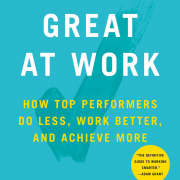
Great at Work
How Top Performers Do Less, Work Better, and Achieve More
By Morten Hansen
Wall Street Journal Business Bestseller
A Financial Times Business Book of the Month
Named by The Washington Post as One of the 11 Leadership Books to Read in 2018
From the New York Times bestselling coauthor of Great by Choice comes an authoritative, practical guide to individual performance—based on analysis from an exhaustive, groundbreaking study.
Why do some people perform better at work than others? This deceptively simple question continues to confound professionals in all sectors of the workforce. Now, after a unique, five-year study of more than 5,000 managers and employees, Morten Hansen reveals the answers in his “Seven Work Smarter Practices” that can be applied by anyone looking to maximize their time and performance.
Each of Hansen’s seven practices is highlighted by inspiring stories from individuals in his comprehensive study. You’ll meet a high school principal who engineered a dramatic turnaround of his failing high school; a rural Indian farmer determined to establish a better way of life for women in his village; and a sushi chef, whose simple preparation has led to his restaurant (tucked away under a Tokyo subway station underpass) being awarded the maximum of three Michelin stars. Hansen also explains how the way Alfred Hitchcock filmed Psycho and the 1911 race to become the first explorer to reach the South Pole both illustrate the use of his seven practices (even before they were identified).
Each chapter contains questions and key insights to allow you to assess your own performance and figure out your work strengths, as well as your weaknesses. Once you understand your individual style, there are mini-quizzes, questionnaires, and clear tips to assist you focus on a strategy to become a more productive worker. Extensive, accessible, and friendly, Great at Work will help you achieve more by working less, backed by unprecedented statistical analysis.
Summary
Business professor Morten T. Hansen launched a massive research project into what “working smarter” actually means. He tracked the practices and performance of 5,000 managers and employees and distilled the data into seven top-performance principles. The principles are simple – for example, winnow your tasks to the important few and focus on them intensely. Putting them into practice amid the pressures of modern business is more difficult. Hansen offers illuminating stories of people who use his principles effectively. The co-author of Great by Choice with Jim Collins, Hansen is an engaging writer who can find the drama in even dry business histories as he explicates the principles that underlie his stories. Anyone in the work world will gain focus and efficiency by reading this manual.
Working Smart
In 2011, Business professor Morten T. Hansen studied the work habits of 5,000 managers and employees to determine how and why some people excel. His team found that the top performers generally don’t work longer hours. Instead, they make each hour count by following seven “work-smart” principles. “Being great at work,” Hansen writes, “means performing in your job, infusing your work with passion and a strong sense of purpose, and living well, too.”
Principle One: “Do Less; Then Obsess”
When people strive to excel, Hansen points out, they often decide they should work more than everyone else. They load up their schedules with every available project and work long hours in hopes of accomplishing it all. Since they don’t have the time or resources to master the intricacies of all these tasks, they’re unlikely to turn in first-rate work on any of them. People who are overwhelmed need to coordinate the way their many tasks relate to each other, but instead they often end up constantly multitasking – that is, shifting their attention among activities, thus reducing their effectiveness at each task.
The best performers, Hansen learned, commit to a smaller range of priorities and concentrate on getting those done right, which means doing less and focusing more. The author provides a striking example of how the power of narrowing your focus affected the 1911 race to be the first to reach the South Pole. One team leader, Robert Scott, kept his options open. He prepared five ways to traverse the Antarctic: dogs, motorized sledges, ponies, skis and manual hauling. By contrast, the rival team leader, Roald Amundsen, focused on just one means of transport: sled dogs. Amundsen obsessed on sled dogs, learning all he could about the best breeds and hiring the best dog drivers for them. Amundsen won, in part because Scott had spread his attention over so many possible methods of transport that he didn’t get any of them right.
Hansen recognizes that narrowing your focus isn’t easy in a complex and fast-moving business environment. He provides these helpful strategies:
- Recalibrate how you measure accomplishment – Instead of calculating how many tasks you can take on, see how many you can eliminate and still reach your overall goal.
- Cut off your access to distractions – Just as Odysseus lashed himself to the mast of his ship to resist the temptations of the Sirens’ songs in Homer’s Odyssey, cut off your access to the digital siren call of email and the web. Remove internet capability from a laptop and designate it as your work-only computer. If your co-workers distract you, Hansen suggests that you arrive at your office an hour early and stay an hour late or commandeer an empty conference room.
- Involve your boss – Streamlining your focus is difficult if your boss sets vague goals or hands you more and more projects. Ask your boss to identify priorities, and make it clear that you want to focus on the most important ones.
Principle Two: “Redesign Your Work”
To prioritize the elements of a complex, unwieldy work flow, Hansen advises streamlining your load to increase your efficiency. Calculate the importance of a task by assessing the value it provides for you, your co-workers or your firm. Value is a more effective metric than conventional quotas or productivity targets. “When you create value for your organization,” the author writes, “you contribute and your work has purpose.”
To measure value, the author recommends considering an activity from an “outside-in view.” Conventionally, businesspeople take an “inside-out view” in which they measure performance by internal targets; that conflates accomplishment with activity. With an outside-in view, the main metric isn’t how fast a task gets done, but how it benefits other stakeholders, such as customers, your colleagues or the business as a whole. As the author writes, “Rapidly toggling between two items – reading emails and listening to a colleague’s presentation for example, renders you less effective at both.”
Principle Three: “Don’t Just Learn; Loop”
Finding the time to practice and refine important skills can be difficult. Unlike an athlete or musician, Hansen understands that you can’t hunker down in a gym or practice room for hours each day. He offers “the learning loop,” which integrates practice into your daily responsibilities. You carry out your tasks, solicit feedback on your performance and tweak your techniques in response. Hansen offers six guidelines for creating a learning loop:
- Set aside 15 minutes a day – Concentrate on one skill at a time, and devote a quarter-hour daily to honing it apart from other tasks. Use coaching and performance analysis to collect feedback.
- Break the skill into micro-behaviors – Say you want to get better at motivating your team to propose more ideas. Begin by practicing one micro-behavior, such as learning how to ask questions that spark creative thinking.
- Develop metrics – Once you’ve learned which questions to ask, track how often you ask them. Monitor growth in the number of new ideas that team members propose.
- Get immediate feedback – Regularly ask a co-worker, a boss or a mentor for concrete evaluations of your performance.
- Expect the “dip” – After improving a skill for a while, you’ll probably see your performance drop a few notches. This is a sign that you’ve moved up to a new level of expertise that you have yet to master. Unless you continually face new challenges, you won’t continue to improve.
- Push past the “stall point” – When you hit a plateau, you don’t struggle with tasks, but you don’t improve, either. When you master a skill, you do it without thinking. You stop trying to improve. Top performers constantly review and improve their skills, even activities that now seem easy. “Small changes in behaviors,” the author points out encouragingly, “can have a disproportionate effect on outcomes.
Principle Four: “P-Squared (Passion and Purpose)”
Passion matters, but Hansen notes that passion can’t guarantee success on its own. He believes you should combine your passion with your purpose (in his terms, that’s P-squared). Passion involves the interesting, enjoyable parts of a task. Purpose describes the benefits it provides to others. P-squared generates energy. You don’t work more hours, but you put more spirited effort into each hour of work. To find P-squared in your work, use these strategies:
- Find or create a new role in your company – Reframe your job, or design a new role for yourself. The author provides the example of Steven Birdsall, who felt stuck after holding various COO positions in his 10 years at the software firm SAP. Birdsall’s great passions were helping customers and pursuing intrapreneurial ventures, such as developing new products and opening new markets. He drew on both passions by proposing and then owning a plan to build a market for an undersold, off-the-shelf version of SAP’s software.
- Look beyond your daily tasks – People rarely love the individual tasks that make up their job; they find more meaning in the results. Such outcomes include feelings of accomplishment, the pleasure of learning new skills and the satisfaction of being competent in your role.
- “Infuse your job with more purposeful activities” – Look for opportunities to generate value and, therefore, meaning. Shift your perspective to appreciate how your work benefits others. Seek new responsibilities that benefit the larger society, like the Scripps Health manager who mobilized a team to help victims of Hurricane Katrina.
Principle Five: “Be a Forceful Champion”
To perform at your best, Hansen knows you need the support of your bosses, teammates and staff. This is particularly true when you’re proposing a new idea. You might think your best bet is to craft a clear, logical explanation of the idea and its benefits. But when you hit opposition – often ill-informed or illogical – you have to redouble your efforts to get your point across.
Successful persuaders, the author relates, combine logical arguments with appeals to emotions. Evoke a contrasting series of “high-arousal” emotions – feelings like fear and excitement – that stimulate a desire to act. For example, paint a picture of your company’s status that makes the audience fearful about its future. Then stimulate excitement by showing how your proposal leads to a brighter future.
To speak directly to people’s emotions, demonstrate your points visually instead of just talking about them. Hansen holds up as an example celebrity chef Jamie Oliver, who worked on a project to motivate West Virginia elementary school students and parents to eat less fat. Instead of using facts and statistics, he had a truck dump a mountain of animal fat into a huge dumpster. When he explained that this represented the amount of fat the school consumed in a year, the members of the horrified group pledged to change their diets.
Inspire purpose, the author coaches, by connecting your proposals to a greater cause. For example, workers at a call center that raised funds for a university’s scholarships faced regular rejection and never saw what happened with money they raised. Then they read letters from grateful scholarship recipients and met a student who described how their work had changed his life. In a month, the team’s weekly fundraising average more than doubled.
Winning support requires perseverance – “smart grit,” not stubborn determination that butts repeatedly against the same obstacles. As you try to persuade your listeners, modify your approach based on what you learn about your opponents. When you understand their perspective and reasoning, you can counter it effectively or make concessions that neutralize it.
“Co-opt” your adversaries, Hansen says, by inviting them to participate in the project. They won’t regard the proposal as a threat if you let them share in its success.
Principle Six: “Fight and Unite”
Bad meetings are a time sink that often produces nothing but a need for more meetings. To make your meetings more effective, Hansen suggests cultivating two contrasting modes:
- Fight – Allow debate in which participants challenge each other’s opinions, dissect assumptions and examine options.
- Unite – Before adjourning, come to a firm decision and have every participant commit to it. At the British firm Reckitt Benckiser, for example, if the team can’t reach a decision in a reasonable amount of time, the most senior member makes the call.
Principle Seven: Avoid the “Two Sins of Collaboration”
When a team with expertise in a certain area solicits help or advice in that area from other departments, Hansen reports surprisingly that it performs worse than when it operates solo. Avoid the sin of “overcollaboration” by seeking help only in areas in which you lack proficiency. Avoid the sin of “underrcollaboration” by breaking down siloes that discourage effective communication.
For “disciplined collaboration,” the author urges you to make a business case for each proposed joint project. Estimate the project’s potential value, subtract the “opportunity costs” (how it will affect each team’s regular work) and the “collaboration costs” (the time and effort needed for coordination). Then determine if the remaining value is worth pursuing.
Establish a unified objective that details the benefits for each side and for the organization as a whole. Avoid vague goals like, “Our objective is to fight malaria in the world.” Establish a concrete, quantifiable goal that includes a deadline, such as, “We want zero deaths from malaria in 20 years.”
Beyond Work
This book is a crucial basic text. Hansen’s comprehensive research provides a treasure trove of counterintuitive and contrary-to-popular-mythology advice. If you read and follow only his urging to work fewer, more productive hours, you will gain great value from his prose. It’s hard to argue with a man who has gathered so much evidence behind his suggestions and it’s hard not to take great pleasure from the clarity with which he describes both his research and what he and others learned from it. Hansen offers knowledge not in the form or self-help or exhortations or slogans, but as a meticulous, common sense plan to garner greater success and pleasure from your labors. His awareness of the natural human tendency to self-contradictory thoughts and actions makes his advice all the more valuable.
About the Author
Morten T. Hansen, PhD, is a management professor at the University of California, Berkeley and is on the faculty at Apple University. He also wrote Collaboration and co-authored the New York Times bestseller Great by Choice with Jim Collins.

Eat That Frog
21 Great Ways to Stop Procrastinating and Get More Done in Less Time
By Brian Tracy
It’s time to stop procrastinating and get more of the important things done! After all, successful people don’t try to do everything. They focus on their most important tasks and get those done. They eat their frogs.
There’s an old saying that if the first thing you do each morning is eat a live frog, you’ll have the satisfaction of knowing you’re done with the worst thing you’ll have to do all day. For Tracy, eating a frog is a metaphor for tackling your most challenging task—but also the one that can have the greatest positive impact on your life.
Eat That Frog! shows you how to organize each day so you can zero in on these critical tasks and accomplish them efficiently and effectively. The core of what is vital to effective time management is: decision, discipline, and determination. And in this fully revised and updated edition, Tracy adds two new chapters. The first explains how you can use technology to remind yourself of what is most important and protect yourself from what is least important. The second offers advice for maintaining focus in our era of constant distractions, electronic and otherwise.
This life-changing book will ensure that you get more of your important tasks done today.
Recommendation
We all have our frogs – important tasks that we’ve put off for whatever reason. The key to success is to eat your frogs quickly, completely and with focused determination. So says Brian Tracy, the master of hard-nosed time management. You’ll find no touchy-feely personal development pabulum here. The message of this book: Action leads to accomplishment. With that simple rule in mind, Tracy rolls out tools and techniques that will get you off your backside and into motion. getAbstract, while uneager to take up noshing on amphibians (well, maybe just the legs, in plenty of garlic butter), strongly recommends this book to anyone caught in the swamp of procrastination.
Takeaways
- If you want to gain control of your life, change the way you work.
- Action is the key to accomplishment.
- People who do better do things differently. They do the right things right.
- Eating the frog means identifying your most important task and tackling it with single-minded focus until it is completed.
- Launch directly into your most important tasks.
- Your ability to focus on your most important task will determine your success.
- People fail because they aren’t absolutely clear about their goals.
- The best rule for success is to think on paper. Write down your goals.
- Every night, make a list of what you want to accomplish the next day. Have a master list, a monthly list, a weekly list and a daily list.
- Identify the one skill that, if you developed it, would have the biggest impact on your career success.
Summary
Amphibian on Toast
If you eat a live frog each morning you will know that you have already experienced the worst thing that will happen to you that day. You probably have frogs hidden on your desk and on your to-do lists. Your frogs are the tasks that you know are priorities, but that you’ve put on the back burner for whatever reason. It’s time to learn how to snack on those difficult problems. The good news is — it’s a high-protein diet.
“An average person who develops the habit of setting clear priorities and getting important tasks completed quickly will run circles around a genius who talks a lot and makes wonderful plans but gets very little done.”
OK, you don’t need to eat real frogs to be a success in business. But you do need to tackle critical projects and problems creatively and effectively. Here’s a plain and simple truth: The ability to focus in a single-minded fashion to accomplish the most important task before you is the prime determinant of your success. It’s that clear. The complication comes in, however, when you lack clarity about your true goals and objectives.
“The ability to concentrate single-mindedly on your most important task, to do it well and to finish it completely, is the key to great success.”
Lack of clarity can be a killer, because it impairs action, and action is the secret to success. Like everyone, you probably feel overwhelmed at times with too much to do and not enough time to get it all done. Select the most important challenge — that big, old frog slobbering in your in-basket — and address it effectively. Successful people launch directly without hesitation into the major task that confronts them at any point in the day.
“Simply put, some people are doing better than others because they do certain things differently and they do the right things right.”
How do you develop this clarity? Well, it’s impossible without developing good work habits. Indeed, about 95% of your success in life will depend on the habits you cultivate. Good habits will be your best friends and bad ones will be your worst enemies.
Winning is a Habit
You require three qualities to develop successful habits. You will need to make choices. You will need discipline and you will need determination. For example, one essential habit is learning to think on paper.
“The key to success is action.”
Would you be surprised to learn that only about 3% of adults have bothered to put their goals on paper?
Here’s how you can get what you want out of life:
- Decide precisely what you want.
- Write this goal down.
- Set a deadline by which you plan to achieve it.
- List what you will need to do to achieve your goal.
- Turn the list into a plan. Organize it by priority and sequence.
- Take action immediately. Do anything, but don’t hesitate.
- Promise yourself to make some small step toward your goal each and every day.
“You can get control of your time and your life only by changing the way you think, work and deal with the never-ending river of responsibilities that flows over you each day.”
After that, it’s mostly a matter of continuing to push forward until you attain your goal. While acting is better than procrastinating, action without planning leads to failure and disappointment, so learn to plan daily.
Always work from a list. Draft your list the night before work so your subconscious mind will work on it all night long while you sleep. Create different lists for different purposes. Have a master list. Create a list for the coming month at the end of each month, make a weekly list in advance for the coming week and, of course, you need a daily list.
“Many people confuse activity with accomplishment.”
Remember the 10/90 rule: investing 10% of your time in planning before beginning a project will help you use the other 90% of the time more effectively.
Time-Management, Pareto Style
In 1895, Italian economist Vilfredo Pareto realized that 20% of people made 80% of the money, while 80% of the people had little money. He soon discovered that this ratio applied to all economic activity. The top 20% of your activities will generate 80% of your profits. Twenty percent of your customers will account for 80% of your sales. This pervasive fact is now known as Pareto’s Rule. The rule means that if you have a to-do list of 10 items, two of those items will generate 80% of the return you get from your entire list. Now, when you look at your list, you will be tempted, of course, to clear up a few small things first so you can check them off and have a sense of accomplishment. However, those items may not be significant to your economic activity. And that’s a problem.
“Clarity is the most important concept in personal productivity.”
What to do? Well, remember that the hardest part of any task is getting started. Time management is really just taking control of the sequence of events that affect your life. Effective people discipline themselves to address the most important task first, always. That is, they discipline themselves to eat that frog. Ummmmmmmm, good!
Long-Term Thinking
To succeed, think for the long term. Before you begin a project, ask yourself, “What is the consequence of not doing this task?” Be willing to delay short-term gratification in order to achieve better long-term results. Of course, reconsider if taking on a task causes you more trouble in the long run. As motivational speaker Dennis Waitley puts it, “Failures do what is tension-relieving while winners do what is goal-achieving.” Keep in mind, the root word for motivation is motive. To succeed, you must give yourself a motive for the choices you make.
The ABCs of Success
Is success really as simple as ABC? Well, no. You have to add a “D” and “E” as well. Use the ABCDE method as a powerful tool for establishing your daily priorities.
“Clearly written goals have a wonderful effect on your thinking. They motivate you and galvanize you into action.”
Here’s how it works:
- Make your list.
- Place an A, B, C, D or E before each item on that list.
- Complete the tasks in alphabetical order.
An “A” task is one that you must do as soon as possible or face serious consequences. “B” items are tasks you should do, but ones that carry mild consequences. A “C” task would be nice to do, but carries absolutely no consequences at all. A “D” task is something you can delegate to someone else, so your goal is to delegate all of them to free your time for things only you can do. An “E” task is one you can eliminate altogether. It may have seemed important once, but it isn’t any more. Yes, you may have more than one “A” task. That’s fine. Simply number them sequentially…A-1, A-2, A-3 and so forth. Practice the ABCDE method daily, and you will be surprised by its positive impact on your work life.
Key Result Areas
To become more effective, ask yourself why you’re on the payroll. Most people aren’t sure. Obviously, you have been hired to get results. Most jobs have key results, specific things that must be done. To improve your performance, identify your job’s key result areas. Here, for example, are the key result areas for a salesperson at a typical organization:
- Prospecting.
- Making presentations.
- Closing business.
- Sales service for existing accounts.
- Administrative duties and paperwork.
“The hardest part of any important task is getting started on it in the first place.”
Identify your key result areas and make sure you allocate the appropriate resources to handle them. Then, grade yourself in each key result area. Your weakest performing key result area defines the ceiling of your performance of your other skills (a manager who cannot delegate will find that impairs his or her ability to move forward in other skills). Your weakest key result area is an anchor that keeps you from sailing on with your other skills and assets.
“Time management is really life management.”
However, if you improve your weakest key result area, you will improve your overall performance. Everyone has weaknesses. Identify yours and strengthen them. Ask yourself, “What is the one skill area I could improve that would have the greatest impact on my career?” Becoming more computer savvy? Learning a new language? All business skills are learnable, simply target the area in which you need improvement and move forward.
The Law of Forced Efficiency
You probably don’t like the idea of forcing things. The Law of Forced Efficiency relates to the idea that any job will expand to fill the time you allow for it. If you have two days, it will take you two days (or perhaps more). However, the flip side is also true: If you have only one day to complete a two-day job, somehow you find the time to do it. One corollary to the Law of Forced Efficiency is the realization that you will simply never have enough time to do everything you want to do. To cope with this sad circumstance, continually ask yourself:
- What is my highest value activity?
- What is it that only I can do that, if done well, will have a significant impact?
- What is the highest and best use of my time, right now?
The answers to these questions will help you to manage your time. As Goethe said, “The things that matter most must never be at the mercy of the things that matter least.”
Identify Your Key Constraints
You have goals and you haven’t achieved them yet. So what is holding you back? Answering that question can be a critical building block for a more successful tomorrow.
In fact, you must determine the answer.
Constraints always affect the completion of a job. Identify these limiting factors, your key constraints, and the rest of your work will go much more smoothly. If you can resolve your choke point, you can make every other process flow more naturally.
Here, the 80-20 rule applies: 80% of your problems will stem from 20% of the obstacles that you face. So which ones should you concentrate on? Ask, “What within me is holding me back?” Don’t blame someone else. Take responsibility, identify what you need to do to improve.
Becoming Your Own Cheerleader
Change is always a challenge; to meet the challenge of becoming more effective, you will need support from the world’s greatest cheerleader — you! So grab your pom-poms, do a cheer and remember:
- Become an eternal optimist — When you really rely on yourself, you no longer have the luxury of moping, feeling sorry for yourself or copping an attitude. Respond positively to other people’s behaviors, words and actions. Steer a steady course, unaffected by the countless, maddening, trivial setbacks of daily life.
- Always talk to yourself positively — Say things like, “I like myself”, “I am confident”, “I am strong”, over and over again creating positive affirmations that become self-fulfilling prophecies.
- Resolve to remain cheerful and upbeat — Optimists look for the good in any situation, they search for the lesson and believe that difficulties come not to obstruct them, but to instruct them.
- Visualize your goals —Imagine yourself sitting in that corner office, with your name on the door.
Eating the frog means having the positive attitude and the will to do the most difficult task first. Because you can’t do everything, indulge in creative procrastination — put off the things that do not carry a consequence. Break large tasks down into a series of simple ones. Work with a sense of urgency. And remember that all you have to do to succeed in business and in life is learn to eat that frog every day.
About the Author
Brian Tracy talks to about 250,000 people each year about personal and professional development. His careers ranged from sales and marketing to investments and real estate development prior to founding his own firm, Brian Tracy International. He is the author of Get Paid More and Promoted Faster, Maximum Achievement and other books, as well as numerous best-selling audiocassette programs, including How to Start and Succeed in Your Own Business.
Exceptional Service, Exceptional Profit
The Secrets of Building a Five-Star Customer Service Organization
By Leonardo Inghilleri
In a tight market, your most powerful growth engine and your best protection from competitive inroads is this: put every thing you can into cultivating true customer loyalty. Loyal customers are less sensitive to price competition, more forgiving of small glitches, and, ultimately, become “walking billboards” who will happily promote your brand. In Exceptional Service, Exceptional Profit insiders Leonardo Inghilleri and Micah Solomon reveal the secrets of providing online and offline customer service so superior it nearly guarantees loyalty. Their anticipatory customer service approach was first developed at The Ritz-Carlton as well as at Solomon’s entertainment and technology company Oasis, and has since proven itself in countless companies around the globe from luxury giant BVLGARI to value-sensitive auto parts leader Carquest, and everywhere in between. Now, readers can take the techniques that minted money for these brands and apply them directly to their own businesses. As Ken Blanchard writes, “Leonardo and Micah’s philosophies, rules, and winning examples of service excellence will make you want to implement their suggestions immediately in your own organization.” Filled with detailed, behind-the-scenes examples, the book unlocks a new level of customer relationship that leaves your competitors in the dust, your customers coming back day after day, and your bottom line looking better than it ever has before.
Recommendation
What Apple is to innovation and Rolex is to quality Ritz-Carlton is to service. Consider the luxury hotel chain’s famous $2,000 customer-satisfaction pledge. This remarkable program, now in place for decades, allows any Ritz-Carlton employee, regardless of rank, to decide alone to spend up to $2,000 to resolve any customer problem. To date, no Ritz-Carlton employee has felt it necessary to spend the full amount on behalf of a customer, but many take creative action to address problems promptly. This policy sends a powerful signal to Ritz-Carlton clients and employees about how much the company values quality and service. In their book, service experts Micah Solomon and Leonardo Inghilleri teach you how to plan and implement an exceptional service program. It is a pleasure to read and it explains exceptional service clearly.
Takeaways
- Loyal customers aren’t concerned about price and are largely immune to your competitors’ enticements.
- Sustain customer loyalty by delivering outstanding products on time, providing excellent service and quickly resolving any problems.
- Put your money into quality, service, training and problem solving.
- The Ritz-Carlton Hotel Co., known for great service, empowers every employee, at any level, to spend up to $2,000 on the spot to solve a client concern.
- Train your staffers to care; make sure everyone commits to exceptional service.
- Teach them to use warm, friendly, customer-oriented terminology.
- To establish customer loyalty, learn everything you can about your clients.
- Track information about their likes and dislikes.
- Provide “anticipatory service” by solving problems before they happen. When problems do erupt, apologize first and ask questions later.
- The benefits of exceptional service far outweigh the costs.
Summary
Service that Anticipates Customers’ Needs
Picture this situation: A hotel’s maintenance engineer perches on a ladder in the lobby, changing a lightbulb. He notices a guest coming in from the adjacent pool area. She is wet, wrapped in towels and carrying numerous beach bags. With her hands full, she has trouble opening the door to the lobby. When he sees her “fumbling” with the latch, he climbs down from the ladder to help her. “Welcome back to the hotel, ma’am,” he says. “Let me help you with your bags. How was the pool?” He then carries her bags to the elevator and punches the button to her floor. Admirable service? Yes, but what if the engineer had climbed down to assist the guest immediately, when he first saw her coming and realized her plight? Then, instead of providing “reactive service,” which involves spotting a negative customer experience and fixing it, he would have provided “anticipatory service,” which prevents the negative experience from happening in the first place. You want your employees to anticipate what your customers need.
“The single best thing you can do for your business is to build true customer loyalty, one customer at a time.”
Providing this level of “customer satisfaction” has four pivotal aspects:
- “Perfect product” – Unless your product or service is as flawless as possible, customers will always feel the need to keep seeking an alternative.
- “Caring delivery” – If your employees don’t interact with your customers in a caring manner, their bad attitudes will color your clients’ feelings about your products or services, no matter how ideal they may be.
- “Timeliness” – If you don’t deliver on time, you’re already in the wrong.
- “Effective problem resolution” – Problems sometimes occur in even the most polished organization. How your company handles them makes all the difference.
“Loyalty makes customers less price sensitive, more willing to spend money with you, more willing to take a chance on extensions to your product line…and much more immune to competitive entreaties.”
To build loyalty among your customers, deliver top quality service all the time to cultivate truly devoted clients who stop looking for alternatives to your firm. Even though customer loyalty is that pivotal, many managers don’t know how to foster dedicated followers. To begin, learn what makes your customers tick, and use that knowledge to build sustaining relationships. Without that connection, clients may view your goods or services as easily replaceable commodities.
“Language Engineering”
To engender customer loyalty, teach your employees what type of terminology to use. The kind or language they employ is far more important than the words in your marketing materials – and think how carefully your promotional professionals select those terms. Your employees’ conversations with clients have tremendous power to make your customers’ experiences rewarding, reinforcing and positive.
“Humans appear to be wired to respond appreciatively to anticipatory service.”
The right words can make service breakdowns bearable, just as the wrong words can quickly dismay even the most satisfied customers. Establish a preferred speech style within your firm. Train employees to use the right words at the right time, a practice that works well for Ritz-Carlton. To illustrate, consider these examples: Telling a customer “you owe…” is bad usage, but saying “Our records show a balance of…” is better. Saying “you need to” is abrupt; to be more courteous, say instead: “We find it usually works best when…” Saying, “please hold” is curt, but saying, “May I briefly place you on hold?” is gracious. Of course, words will only take you so far. Your actions must be equally solicitous.
“The primary threat to a business today is the perception by customers that all you offer is a replaceable, interchangeable commodity.”
Follow these easy rules:
- Don’t screen calls – This practice alienates current and potential customers.
- Answer the phone quickly – Unanswered rings create anxiety, then anger.
- Make sure customers can reach you easily – Putting “please do not reply to this message” at the bottom of a mass email is not the way to win friends.
- Back up your website with personable people – Having your telephone staffer initiate a call by saying, “Hi! This is Jane at Company X” is impersonal. Personalize your interactions with clients by using full names. “Hi, this is Jane Chang-Katzenberg.”
- Include salutations in all emails – You would not send out a standard letter without a “Dear” or a “Hi.” Be as polite in your emails as you would be in a letter.
“Service Recoveries”
Ensure that everyone in your firm is dedicated to resolving problems or complaints.
“Pricing is a major issue because pricing, like service, is one of the elements of value…Pricing must be presented appropriately, with sensitive language, without surprises, in a way that engenders trust.”
Follow these four steps to get things back in shape for your customers:
- “Apologize and ask for forgiveness” – Make your regret personal, believable and sincere. Acknowledge the customer’s grievance. Be careful with your phrasing. For example, the client will hear “If what you say is correct, I certainly apologize,” as “You’re lying.” Don’t rush your apology. Stretch it out so it registers with the customer.
- “Review the complaint with your customer” – To find out exactly what happened, you will need to ask some pertinent, basic questions, along the lines of “Did you plug it in?” That’s called a “DYPII” question, and it will help you discover if the client took the necessary, first steps to make a product function. Before asking DYPII queries, be sure people have already accepted your apology. Otherwise, asking will just irritate them.
- “Fix the problem and then follow up” – Use this opportunity to establish a tighter bond by offering the client something additional, for example, a free upgrade. This will restore a feeling of justice to the customer, who currently feels wronged. Once you have resolved the problem, follow up to show your concern.
- “Document the problem” – This is the way to learn from any mistakes and to track the causes of a problem.
“Never attack employees for the problems that your continuous improvement system reveals. You need employees…who are open about revealing defects.”
To keep on top of the details about your customers, develop a tracking system listing their main preferences and traits. Update it after each interaction.
Here are some “noting and sharing” principles:
- “Keep your systems simple” – Don’t track everything. Focus on major attributes.
- “If it’s important to your customer, it belongs in your system” – Record “service preferences” and personal data. Include pertinent information on any previous missteps on your company’s part concerning this customer.
- “The information you gather needs to be available in real time” – Make sure all front-line employees have immediate access to the tracking system.
- “Preferences change; assumptions are tricky” – Just because a customer once ordered tea before dinner does not mean that he or she will always want tea before dinner.
- “Moods change” – So, “track them.” Servers at The Inn at Little Washington score the mood of their customers before they eat, using a one-to-ten scale. The Inn’s goal is to elevate the “mood of customers to at least nine” before they leave the restaurant.
- “Don’t blow it with a wooden delivery” – Use the person’s name on a liberal basis, always with a sincere, engaged manner.
- “Using technology to ask for information? It’s a fine line between clever and creepy” – Employ your database information discreetly. Don’t sound like Big Brother. You don’t want customers to think you spy on them.
“A Ritz-style vocabulary now pervades the hospitality industry.”
To provide exceptional service, employees must “think like” your buyers. Have your staffers shop at your store or eat in your restaurant. Heed their feedback on what it is like to be your customer. Typical feedback, say, for a restaurant, might include observing that patrons who eat alone like to have something to read, so you might provide magazines for solitary diners. This is a perfect example of the kind of anticipatory service that turns ordinary customers into loyal fans.
The Ritz-Carlton’s “Mr. BIV”
Mr. BIV, the name a group of Ritz-Carlton employees gave to their quality-control program, stands for: “breakdowns, inefficiencies [and] variation in work processes” – recurring problems, like unattended repairs, that you want to avoid. Employees who find a Mr. BIV issue immediately inform the person who can solve it. To learn why missteps happen, keep asking “why” until you find the core problem. Then solve that issue. For example, when a customer complains that room service was late, ask the waiter why. His waiter’s elevator was delayed. Why? Housekeeping held it while seeking more linens. Why? The hotel doesn’t have enough linens. Solution? Buy more linens. Mr. BIV wants to know why all the time; it’s the pivotal question in your drive for continuous improvement. To gather more customer input use occasional “in-depth surveys” and more frequent “in-house ‘quizzes’” or mini, three-to-seven-question surveys. Secret shoppers also can give valuable information. However, the best way to ensure quality service is to hire the right people.
“Well-trained, well-equipped and well-treated personnel have longer company tenures, lower accident rates and fewer behavior problems.
Look for these traits:
- “Genuine personal warmth” – Everyone wants to deal with welcoming, kind people.
- “Empathetic skill” – Employees who can relate to people will deliver better service.
- “An optimistic, upbeat attitude” – No one wants to be around a pessimist.
- “A team orientation” – People should have a positive impact on their work groups.
- “Conscientiousness” – Seek employees who are proud of their work, strive to do it well and follow through on all tasks. Staffers who are not conscientious will cause trouble.
“Never ever say, ‘And the purpose of this call is?’ ‘Who are you?’ ‘Will she know what you’re calling about?’ or other insulting questions…Instead, say, ‘You bet – may I get your name so I can pass it on to him?’”
Exceptional service also demands capable leadership. Seek top executives who have:
- “Vision” – “Great service leaders” ponder what the future should hold for their firms.
- “Alignment” – These leaders get their workforce to understand and support their vision.
- “Standard setting” – Good bosses set high standards and hold employees to them.
- “Support” – Thoughtful leadership includes making sure people have the resources they need to reach their organizational goals.
- “Motivation, recognition and reward” – To spur performance, make it worthwhile; offer incentives and recognize your team’s hard work.
“We aren’t just selling a product. We are paying attention to our clients.”
Even some managers who support high-quality service still object to its cost. This is shortsighted. Building in exceptional service may increase your operational expenses, but you can’t put a price tag on the value of superbly satisfied customers who speak glowingly about your firm. Additionally, the best staffers prefer to work for companies with positive consumer relationships based on quality products and exceptional service. Companies with elevated “loyalty-building standards” have lower turnover of both employees and customers. They may qualify for better insurance rates and can worry less about negligence lawsuits than other firms.
Online Considerations
The internet is a magical medium. However, its great power and amazing capabilities can push you toward behavior that is antithetical to consumers. Do not fall prey to the web’s “dark side.” The web may sway you to commoditize your online customers. For example, providing answers to frequently asked questions (FAQs) on your website is fine, but don’t assume that listing the replies to a series of stock questions completes your online customer service. Some visitors to your website may not find the answers they need in your FAQs, so post additional information in two formats: short – for customers with brief attention spans – and long – for people who want all the details. Let your consumers choose what type of data they want. Always treat your customers – including online clients – as individuals, not as commodities.
Hello and Goodbye
How you greet your customers and send them off is extremely important. A nice hello automatically puts someone in a good mood. A fond farewell makes people think positively about their experience with you. And since hellos and goodbyes initiate and end interactions, they are highly memorable. Consider assigning your most outgoing, cheery, friendly employee to be your firm’s receptionist; the person in this job is your “first and last impression creator.” Be just as solicitous on the phone as in the reception area. Take the time to communicate warm hellos and caring goodbyes on the telephone.
“Go the extra mile, for free and with a smile.”
Be extra considerate toward people with any form of physical challenge. For example, people who have difficulty seeing and who want to use your website may not be able to decipher the distorted code words some sites use to ward off hackers. Be customer-friendly in all you do.
About the Author
Leonardo Inghilleri is managing partner and executive vice president at West Paces Consulting in Atlanta. Micah Solomon runs Oasis Disk Manufacturing in Manhattan and Washington, D.C.